 Tampa Roofing
 Board & Batten Siding in Brandon: What the Climate Actually Demands
Brandon sits inland from Tampa Bay in Hillsborough County, which changes the exterior equation a little compared to homes right on the water — but not as much as some homeowners assume. You still get the same subtropical heat load, the same summer humidity that never really breaks, and the same afternoon thunderstorm pattern that drives rain sideways against west- and south-facing walls almost daily from June through September. Add in the wind exposure that comes with being in a named-storm corridor, and you have a climate that is genuinely hard on exterior materials, even a few miles from the bay.
Board and batten siding — vertical wide boards with narrower battens covering the seams — is a strong architectural choice for Brandon's mix of ranch, farmhouse-style, and craftsman homes. The vertical lines and deep shadow reveals give a house real curb presence. But the style only holds up long-term if the material underneath can handle sun, moisture, and wind without warping, swelling, or losing its finish. That's the part that gets skipped when contractors treat board and batten as a look instead of a system.
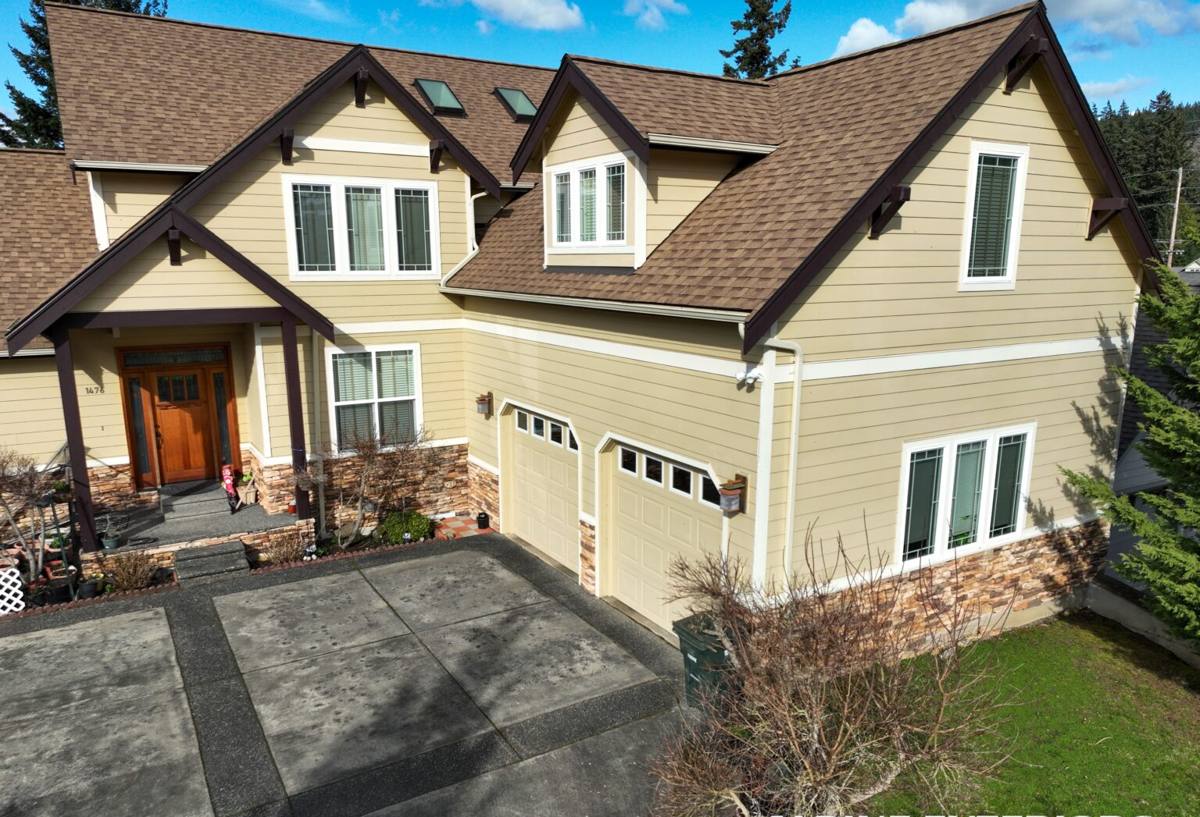
What Board & Batten Siding Actually Is
Board and batten is a siding pattern, not a specific material. It can be built from wood, vinyl, engineered wood, or fiber cement, and the pattern is achieved in one of two ways:
- True board and batten: wide flat panels installed vertically with narrower battens fastened over the seams between them.
- Reveal panel systems: a single engineered panel manufactured with the batten lines built in, installed as one continuous piece per section.
Both approaches can look nearly identical once painted, but they behave very differently in Florida weather depending on what the boards and battens are actually made of. That's the decision that matters far more than the pattern itself.
Why We Only Install It in James Hardie Fiber Cement
We install James Hardie fiber cement exclusively — not vinyl board and batten, not engineered wood panels, not primed spruce or cedar boards. Board and batten in particular exposes the weaknesses of the wrong material fast, because the vertical boards and the many batten seams create more edges and more exposure than a standard horizontal lap profile.
Vinyl board and batten is affordable and low-maintenance, but it's a thin extruded plastic that expands and contracts noticeably in Florida's heat swings, and it can warp or sag over time, especially on sun-baked south and west elevations. Engineered wood panels use wood fiber with a resin binder; they perform reasonably well when the factory sealed edges stay intact, but any cut edge, fastener hole, or gap left exposed to Brandon's humidity and rain is an entry point for moisture and eventual swelling. Primed spruce or cedar boards are the traditional look, but raw wood in this climate needs repainting and caulk maintenance on a tight cycle, and the many batten seams in this siding style multiply the number of joints that can fail.
James Hardie fiber cement is cement, sand, and cellulose fiber — it doesn't absorb water the way wood-based products do, it won't warp or sag under heat, and it's non-combustible. For a pattern with as many seams and vertical joints as board and batten, that stability matters more than it does on other siding styles.
Hardie Products Used for Board & Batten
Board and batten look is typically achieved with HardiePanel vertical siding combined with HardieTrim battens, or with a true board-on-board configuration using HardiePlank or panel stock cut to width. All of it comes with the factory-applied ColorPlus finish, which is baked on and warranted against fading and peeling — a real advantage on Brandon's sun-exposed elevations, where field-painted materials fade unevenly within a few years.
What a Correct Board & Batten Installation Involves
Board and batten is less forgiving of shortcuts than standard lap siding because there are more seams and more places for water to get behind the cladding if it's rushed. A correct installation includes:
- A continuous, properly lapped weather-resistant barrier behind the siding — not just housewrap stapled up quickly.
- Correct furring or panel spacing per Hardie's engineered installation instructions, allowing for drainage and airflow behind the panels.
- Batten spacing and fastening pattern that matches Hardie's published specs, not "close enough" spacing eyeballed on site.
- Proper clearance from grade, roof lines, decks, and patios — a common failure point on Florida homes where siding is installed too close to the ground or hardscape and wicks moisture.
- Flush, sealed flashing at every window, door, and roof intersection, since board and batten's vertical run crosses more of these transitions per linear foot than lap siding does.
- Factory-finished cut edges sealed with the manufacturer-approved product wherever a board or batten is field-cut.
- Fastener placement that avoids over-driving or under-driving, both of which compromise the panel's water resistance at that point.
Skipping any one of these doesn't usually show up as a problem in year one. It shows up two or three storm seasons later, as staining, soft spots, or paint failure at the seams — after the labor is long done and harder to trace back to the install.
Local Considerations Specific to Brandon
Brandon's distance from the immediate coastline means salt air is a smaller factor here than it is for homes directly on Tampa Bay — that's a real difference, and we won't pretend otherwise. What Brandon homes deal with instead is a heavy dose of three other things: intense, sustained summer UV exposure on south- and west-facing walls; frequent wind-driven rain from the daily thunderstorm pattern; and full exposure to hurricane-force winds when a storm tracks through the region, since inland location reduces storm surge risk but does not meaningfully reduce wind exposure.
That combination puts the emphasis on two things for board and batten specifically: a finish that won't fade or chalk under years of direct sun, and a fastening and flashing job that holds up under wind-driven rain hitting vertical seams at an angle. ColorPlus finish addresses the first. Correct installation — furring, batten spacing, flashing, fastener schedule — addresses the second. Neither one substitutes for the other.
Our Process for Brandon Homeowners
- On-site assessment: we look at your home's current siding condition, elevation exposure, trim and window details, and any moisture or rot already present before quoting anything.
- Removal of existing siding: old material comes off down to the sheathing so we can check for hidden damage before it's covered up again.
- Weather barrier installation: a continuous, correctly lapped moisture barrier goes on before anything else.
- Furring and layout: panel and batten spacing is laid out to Hardie spec and to the proportions of your home's elevation.
- Panel and batten installation: HardiePanel and HardieTrim (or true board-on-board Hardie stock) go up with the correct fastening pattern.
- Flashing and trim details: windows, doors, corners, and roof intersections are flashed and sealed.
- Finish and touch-up: factory-cut edges are sealed, and any field-applied caulk or touch-up paint matches ColorPlus color.
- Final walkthrough: we go over the finished job with you before calling it done.
Cost Factors for Board & Batten Siding
Board and batten generally costs somewhat more than standard lap siding per square foot, mainly due to the added batten material and labor for the extra fastening and seam work. Actual pricing depends on your specific home, but these are the main variables that move the number:
| Factor | Why It Matters |
|---|---|
| Total square footage | Larger elevations mean more panels, more battens, and more labor hours. |
| Removal of existing siding | Tear-off and disposal of old material adds labor beyond a straightforward install. |
| Sheathing or moisture repair | Rot or water damage found underneath old siding needs to be repaired before new siding goes on. |
| Trim and architectural detail | Gables, dormers, and multiple roof intersections add cutting and flashing time. |
| Full house vs. accent application | Board and batten used as a full siding versus an accent on gables or a porch changes material quantity significantly. |
| Color and finish selection | Standard ColorPlus colors versus premium or custom finishes affect material cost. |
Why It Matters That We Already Work in Brandon
A crew that already works Brandon regularly knows the practical things that don't show up in a spec sheet: how local permitting and inspection tends to run in Hillsborough County, how to sequence a siding job around Florida's storm season so a house isn't sitting open to weather, and what wind and rain exposure actually looks like on Brandon's mix of open and tree-covered lots. That local pattern recognition is part of what keeps an installation from becoming a callback.
It also means warranty follow-through is realistic. James Hardie's product warranty and any workmanship warranty we provide are only worth something if the company that installed it is still around and still working in your area years later — not a crew that was in town for one storm-repair season and gone.
Questions Worth Asking Before You Hire Anyone for This
- Do you install fiber cement exclusively, or do you also sell vinyl or engineered wood — and why?
- Will you remove old siding down to the sheathing and inspect it before installing new material?
- What furring, batten spacing, and fastening pattern do you follow, and is it Hardie's published spec?
- How do you handle flashing at windows, doors, and roof intersections on a vertical siding pattern?
- What warranty covers the product, and what warranty covers your labor, separately?
- Can you show examples of board and batten work you've done in this area?
If you're weighing board and batten for a Brandon home, we're glad to take a look at your house in person, walk you through what a correct installation involves for your specific elevations, and put together a straightforward, no-pressure estimate using the form below.