 Tampa Roofing
 Why Siding Fails Faster in Brandon Than It Should
Brandon sits inland from Tampa Bay, but "inland" doesn't mean "protected." Homes here still take the full brunt of a Hillsborough County summer: months of intense, nearly overhead UV that bakes exterior finishes, afternoon thunderstorms that drive rain sideways into wall assemblies, and stretches of humidity that keep moisture sitting against siding longer than it should. When a tropical system or a strong squall line comes through, hurricane-force gusts add wind-driven rain and flying debris to that list. Even this far from the immediate coastline, the broader Tampa Bay airshed still carries salt-laden moisture on onshore breezes, and salt residue accelerates corrosion on fasteners, trim, and any metal accessories tied into the siding system.
None of these stresses show up as one dramatic event. They compound. A hairline gap at a butt joint lets in a little water during one storm. UV keeps drying out and expanding the material around it. The next storm gets in a little further. By the time a homeowner notices a soft spot or a stain, the damage has usually been building for a season or two. That's the pattern we see over and over on siding repair calls in this area, and it's why "small" siding problems in Brandon rarely stay small for long.
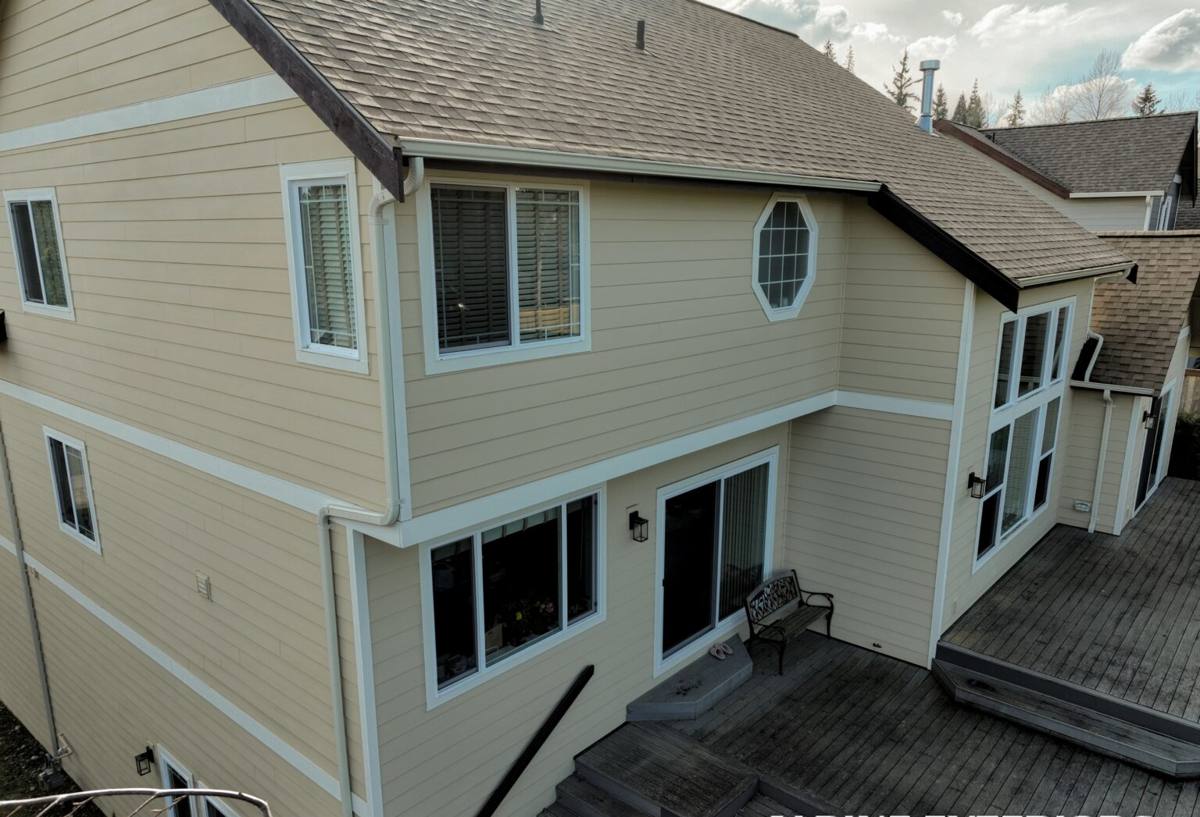
Signs Your Siding Needs Attention Now, Not Later
Most siding repair calls we get started as something the homeowner noticed weeks or months earlier and hoped would wait. Some of these issues genuinely can wait a little; others get expensive fast if ignored through another wet season.
- Visible cracking, chipping, or splitting along panel edges or at butt joints
- Soft, spongy, or discolored spots when you press on the siding (a sign of moisture behind it)
- Paint or factory finish that's peeling, bubbling, or chalking unevenly in patches
- Gaps opening up around windows, doors, or corner trim
- Visible warping, buckling, or panels pulling away from the wall
- Streaking or dark staining below seams, which usually points to water tracking behind the siding
- Small impact damage from storm debris, ladders, or lawn equipment
- Insect activity or soft wood trim near the base of the siding
If you're only seeing one or two isolated spots and the rest of the siding is sound, targeted repair is usually the right call. If the damage is spread across multiple walls, concentrated at a north- or west-facing exposure that takes the worst weather, or paired with soft sheathing underneath, that's usually a sign the whole section needs a closer look before we talk about a patch.
When Repair Makes Sense vs. When It Doesn't
Repair is the right answer when the damage is localized, the underlying wall sheathing and moisture barrier are intact, and the siding material can be matched closely enough that the fix doesn't stand out. Repair stops being the right answer when the siding itself is failing as a system — widespread moisture damage, siding well past its expected service life, or a product (like aging vinyl or untreated wood) that's simply reached the point of diminishing returns. We'll tell you honestly which category your home falls into rather than selling a patch job on a wall that needs more.
What a Correct Siding Repair Actually Involves
A repair that actually holds up in Hillsborough County weather is more than swapping a damaged board for a new one. Done right, it involves:
Diagnosing the Real Cause
Damaged siding is usually a symptom. Before any repair, we look at what let water or damage in — a failed caulk joint, a flashing detail that was never installed correctly, a fastener that backed out, or trim that's been trapping moisture against the wall. Replacing the visible damage without fixing the cause just buys a year or two before the same spot fails again.
Checking What's Behind the Siding
Once a section is opened up, we check the water-resistive barrier and sheathing underneath. In Florida's humidity, moisture that's been sitting behind siding for months can soften sheathing or promote mold growth that isn't visible from outside. A repair that skips this step and just re-covers a compromised wall isn't a real repair.
Matching Material and Finish
This is where a lot of repairs go wrong. Mismatched panel profiles, mismatched exposure reveals, or a paint color that's close but not exact all leave a repair that's structurally fine but visually obvious from the street. Matching factory-finished fiber cement siding takes attention to batch, color line, and installation detail — not just ordering "the same product" and hoping it lines up.
Sealing and Fastening to Spec
Every seam, joint, and fastener penetration is a potential entry point for wind-driven rain. Correct repair means proper fastener placement and spacing, manufacturer-approved sealants at joints and penetrations, and flashing details that shed water rather than trap it — all of which matter more here than in a drier, calmer climate.
Why We Repair and Install Only James Hardie Fiber Cement
We don't do vinyl siding repair, and we don't patch wood, LP SmartSide, or other fiber cement brands with anything other than what's already there if we can avoid it. Here's the honest reasoning behind that standard, not a sales pitch.
Vinyl siding softens and warps in direct, sustained heat, and Florida's summer sun delivers exactly that kind of heat for months at a time. It also becomes brittle with age and UV exposure, so a repair patch on ten-year-old vinyl often doesn't match the surrounding panels' color or flexibility even when it's the "same" product. Untreated or improperly maintained wood trim and siding are vulnerable to the rot and insect pressure that Florida's humidity encourages, and they demand a repainting and caulking schedule most homeowners don't keep up with. Other fiber cement brands and engineered wood products vary in how they handle moisture at cut edges and how consistently their factory finishes hold color over time — some hold up fine, others don't age as gracefully in this climate.
James Hardie's fiber cement is non-combustible, engineered specifically for high-humidity, high-UV climates through its HZ5 product line, and finished with a factory-applied ColorPlus coating that resists fading and chipping far better than field-applied paint. When we do have to replace a section of aging vinyl or wood siding rather than patch it, Hardie is what we put up in its place — for the same reasons it's the only product we install new.
Our Brandon Siding Repair Process
| Step | What Happens |
|---|---|
| 1. On-site inspection | We examine the damage, check surrounding areas for related issues, and look behind affected sections when needed |
| 2. Honest diagnosis | We tell you plainly whether this is a repair, a larger section replacement, or something in between — and why |
| 3. Written scope and estimate | Clear description of the work, materials, and price before anything is touched |
| 4. Remove and assess | Damaged material comes off, sheathing and barrier are checked, and any hidden issues are addressed |
| 5. Repair and match | New material is installed to manufacturer spec, matched for profile and finish, and properly sealed and fastened |
| 6. Final walkthrough | We review the completed work with you before calling the job done |
Repair vs. Replacement: What Actually Drives the Decision
| Factor | Leans Toward Repair | Leans Toward Replacement |
|---|---|---|
| Extent of damage | Isolated to one or two areas | Spread across multiple walls or elevations |
| Age of existing siding | Well within expected service life | At or beyond typical lifespan for the material |
| Moisture behind siding | None found on inspection | Soft sheathing or trapped moisture discovered |
| Material match availability | Close, clean match possible | Discontinued profile or badly faded surrounding panels |
| Underlying cause | One-time impact or isolated failed joint | Systemic issue (missing flashing, chronic water intrusion) |
Why a Crew That Already Works in Brandon Matters
Siding repair isn't just a materials question — it's a local-conditions question. A crew that regularly works Hillsborough County jobs already understands how the local permitting process handles exterior repair work, knows which wall orientations in this area tend to take the worst weathering, and has already seen how Tampa's storm season stresses different siding details over multiple summers. That experience shows up in small ways: knowing which caulk formulations actually hold up through a full humid season, recognizing early signs of wind-driven rain intrusion before they become structural problems, and being able to respond quickly after a storm rather than making a homeowner wait behind a backlog of contractors from outside the area.
It also matters for response time. After a significant wind event, siding repair requests spike across the whole Tampa Bay region. A crew already established in Brandon and the surrounding Hillsborough County communities can prioritize local calls instead of driving in from across the metro every time.
Keeping Repaired Siding in Good Shape
A correct repair should last, but a little upkeep protects the investment:
- Keep gutters and downspouts clear so water isn't overflowing onto siding walls
- Trim back landscaping so it isn't holding moisture against the siding surface
- Do a visual check after major storms for new cracks, gaps, or loosened panels
- Have caulking at joints and trim inspected every couple of years — sealant wears out well before the siding does
- Address small issues right away; in this climate, small gaps don't stay small
Get an Honest Look at Your Siding
If you're seeing cracks, soft spots, staining, or storm damage on your Brandon home's siding, it's worth getting an honest, no-pressure assessment before the next round of Florida weather makes the problem bigger. Fill out the form below and we'll take a look and tell you plainly what your siding actually needs.