 Tampa Roofing
 Carrollwood's Siding Problem Isn't Cosmetic — It's Climate
Carrollwood is a well-established part of the Tampa area, with a mix of home ages ranging from decades-old construction to newer builds, many sitting under mature tree canopy near the neighborhood's lakes. That mix means a mix of siding conditions: some homes are still wearing whatever went up when they were built, and much of it is showing its age faster than it should. That's not bad luck. It's Hillsborough County's climate doing exactly what it does to exterior materials that weren't built for it.
Between the intense, near year-round UV exposure, the humidity that never really lets up, wind-driven rain that gets forced sideways into seams and laps during storms, and the salt-laden air that reaches well inland from Tampa Bay on a breeze, siding here works harder than siding almost anywhere else in the country. A product that performs fine in a drier or milder climate can fail in ways specific to this one — and that's the gap we built our business around closing.
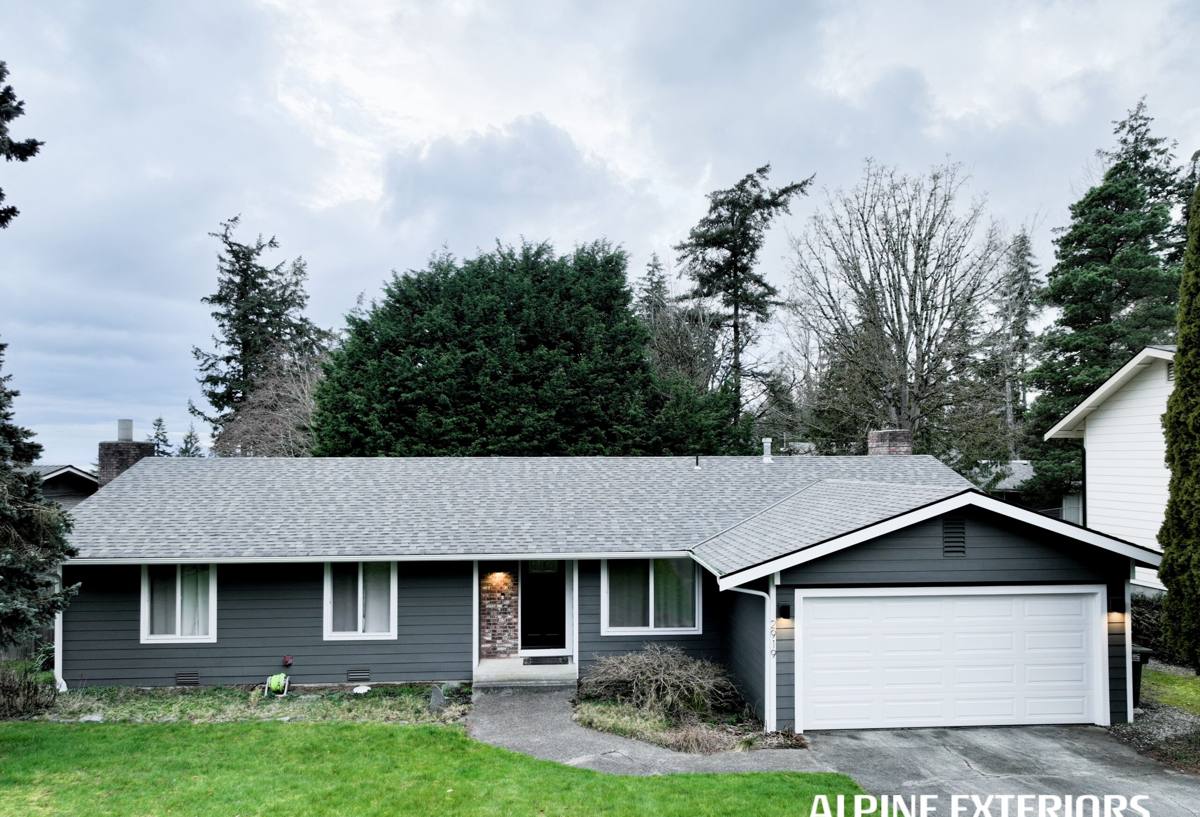
What This Climate Actually Does to Siding Over Time
UV Exposure
Florida sun is relentless. Paints and coatings not engineered for this level of UV bake, chalk, and fade years ahead of their rated lifespan. On siding, that shows up as dull, uneven color and, eventually, a coating that's stopped protecting the substrate underneath.
Wind-Driven Rain
Regular rain falls straight down and sheds off a wall. Storm-driven rain in Tampa doesn't fall — it's pushed sideways under wind loads that can reach hurricane force during the season. That means water gets forced into any gap, seam, or improperly lapped joint that a calmer climate would never test. Siding that isn't installed with the right laps, flashing, and clearances will eventually let that water behind it.
Humidity and Moisture Cycling
Tampa's air stays humid most of the year, which means siding materials are constantly absorbing and releasing moisture. Products that swell, warp, or hold water when wet are fighting a losing battle in a climate that rarely gives them a chance to fully dry out.
Salt Air
Carrollwood isn't beachfront, but Tampa Bay's influence on air quality reaches well inland. Salt exposure accelerates corrosion on fasteners and hardware and adds another layer of stress to any coating system that isn't built to resist it.
Why We Only Install James Hardie in Carrollwood
We made a decision as a company to install James Hardie fiber cement siding exclusively — not vinyl, not LP SmartSide, not Cemplank, Allura, primed spruce, or cedar. That's not a marketing angle; it's a standard we hold because of what we've seen this climate do to alternatives over the years.
Fiber cement is non-combustible, dimensionally stable, and doesn't expand and contract with heat and humidity the way wood-based or vinyl products can. James Hardie backs its siding with a factory-applied ColorPlus finish baked on under controlled conditions — a more consistent, UV-resistant result than field-applied paint can reliably match in this climate. And Hardie engineers specific product lines for specific climate zones, which matters a great deal in a place that sees this much sun, moisture, and wind in the same year.
We're not going to tell you every other product on the market is worthless — vinyl and engineered wood sidings have real uses and real advantages elsewhere. But for what Hillsborough County puts a wall through, we settled on one product we're willing to warranty our work on, and we install that one correctly, every time.
The HZ5 Product Line and What It Means Here
James Hardie makes region-specific formulations, and homes in Florida's humid, high-moisture climate zone call for the HZ5 line, engineered to resist moisture-related damage in exactly these conditions. This isn't a marketing distinction — it affects how the product handles the humidity cycling and rain exposure described above over the long run.
Beyond the base material, Hardie's ColorPlus Technology finishes are formulated to resist Florida-grade UV fading better than standard field-applied paint, and the color range gives Carrollwood homeowners real options without sacrificing the performance side of the equation.
What a Correct Installation Actually Involves
James Hardie siding is only as good as the installation behind it. The material is engineered well; a lot of the failures we get called out to inspect on other contractors' work trace back to installation shortcuts, not the product itself. A correct job in this climate includes:
- Proper starter strips and clearances — Hardie siding needs to sit above grade, decking, and roofing at manufacturer-specified gaps to avoid wicking moisture
- Correct fastener type, spacing, and corrosion resistance suited to a salt-air-influenced climate
- Weather-resistant barrier and flashing details at every window, door, and penetration, since these are exactly where wind-driven rain finds its way in
- Proper lap and joint treatment, including sealant only where Hardie's specifications call for it — over-caulking traps moisture rather than shedding it
- Field-cut edges primed or sealed per manufacturer instructions so raw fiber cement isn't left exposed to weather
- Manufacturer-approved installation practices that keep the ColorPlus warranty and the substrate warranty both intact
Skip any one of these and you can end up with a wall that looks right for a year or two before moisture finds the weak point.
Installation Mistakes We See on Older Jobs
| Detail | What Correct Looks Like | What We Often Find Instead |
|---|---|---|
| Ground clearance | Siding held above grade per Hardie spec | Siding installed flush to or below grade, wicking moisture |
| Flashing at openings | Continuous flashing tied into the weather barrier | Caulk used in place of flashing at windows and doors |
| Fasteners | Corrosion-resistant, correctly spaced and set | Standard fasteners overdriven or under-driven |
| Joints | Properly lapped and sealed per manufacturer detail | Butt joints left uncaulked or over-caulked |
| Cut edges | Sealed with manufacturer-approved product | Raw, unsealed edges left exposed |
Our Process, Start to Finish
We approach every Carrollwood siding project the same structured way, because consistency is what keeps a job from becoming a callback:
- On-site assessment — we look at your home's current siding, moisture history, and trim details before quoting anything
- Written estimate — a clear scope covering material, prep work, and any repairs to sheathing or trim uncovered along the way
- Substrate prep — removing damaged material, checking for rot or moisture intrusion, and correcting the weather barrier before new siding goes up
- Installation to Hardie specification — fasteners, clearances, flashing, and laps done to manufacturer standard, not shortcuts
- Final walkthrough — checking trim, caulk lines, and finish consistency with you before we call the job done
Cost Factors for a Carrollwood Siding Project
Every home is different, so we don't quote a number until we've seen the house, but the main variables that move the price are consistent:
| Factor | Why It Matters |
|---|---|
| Home size and wall complexity | More corners, gables, and cutouts mean more labor and material waste |
| Existing siding removal | Tear-off adds time versus installing over a prepared surface |
| Substrate repairs | Rot or moisture damage found underneath old siding has to be fixed first |
| Hardie product line and profile | Lap width, panel type, and trim style all carry different material costs |
| ColorPlus vs. primed product | Factory-finished ColorPlus costs more up front but skips a field paint job |
Maintaining Hardie Siding in This Climate
Fiber cement is low-maintenance compared to wood, but "low" doesn't mean "none," especially with what Tampa's air and storms put a wall through. A simple annual routine keeps a correctly installed job performing for the long haul:
- Rinse the exterior periodically to clear salt residue, pollen, and grime buildup
- Inspect caulk lines at trim and openings for cracking or separation after storm season
- Check for any impact damage after major wind events and address it before moisture gets behind the panel
- Keep gutters and downspouts clear so water isn't sheeting down the siding face
- Trim back vegetation and irrigation spray that keeps a section of wall wet longer than the rest of the house
Why a Crew That Already Works Carrollwood Matters
Siding installation isn't uniform across climates, and it isn't even uniform across a metro area. A crew that's worked in Carrollwood knows what the tree canopy and lake-adjacent moisture in parts of this neighborhood tend to do to a wall, what the older housing stock here is typically built on, and how to sequence a job around Tampa's storm season instead of getting caught mid-project by it. That local pattern recognition doesn't replace following the manufacturer spec — it's what makes following that spec correctly, every time, second nature instead of a checklist.
If you're weighing a siding replacement in Carrollwood, we're happy to take a look at your home, walk you through what we'd do differently, and give you a straightforward, no-pressure estimate — no obligation, just a clear look at your options.