 Tampa Roofing
 Why Davis Islands Decks Wear Out Faster Than Inland Decks
A deck on Davis Islands lives a harder life than one ten miles inland. The neighborhood sits surrounded by water, which means every board, fastener, and support post is exposed to salt-laden air around the clock. That salt air accelerates corrosion in metal hardware and speeds up the breakdown of wood fibers, even on decks that get regular maintenance. Add in Tampa's intense, nearly year-round UV exposure and you have a combination that fades finishes, dries out and cracks wood, and makes lesser-grade composite boards chalky and brittle well before their rated lifespan.
Then there's the wind. Hillsborough County sits squarely in a hurricane-prone region, and wind-driven rain during storm season doesn't just fall on a deck — it drives sideways and upward, working its way into ledger connections, under flashing, and into any gap where water shouldn't be. A deck that was built correctly sheds that water. A deck built to minimum spec, or one that's simply aged past its useful life, starts trapping moisture in places you can't see until the damage is already structural.
None of this means a deck can't hold up well near the water — it means the deck has to be built and replaced with these specific stresses in mind, not with generic techniques borrowed from a dry, inland climate.
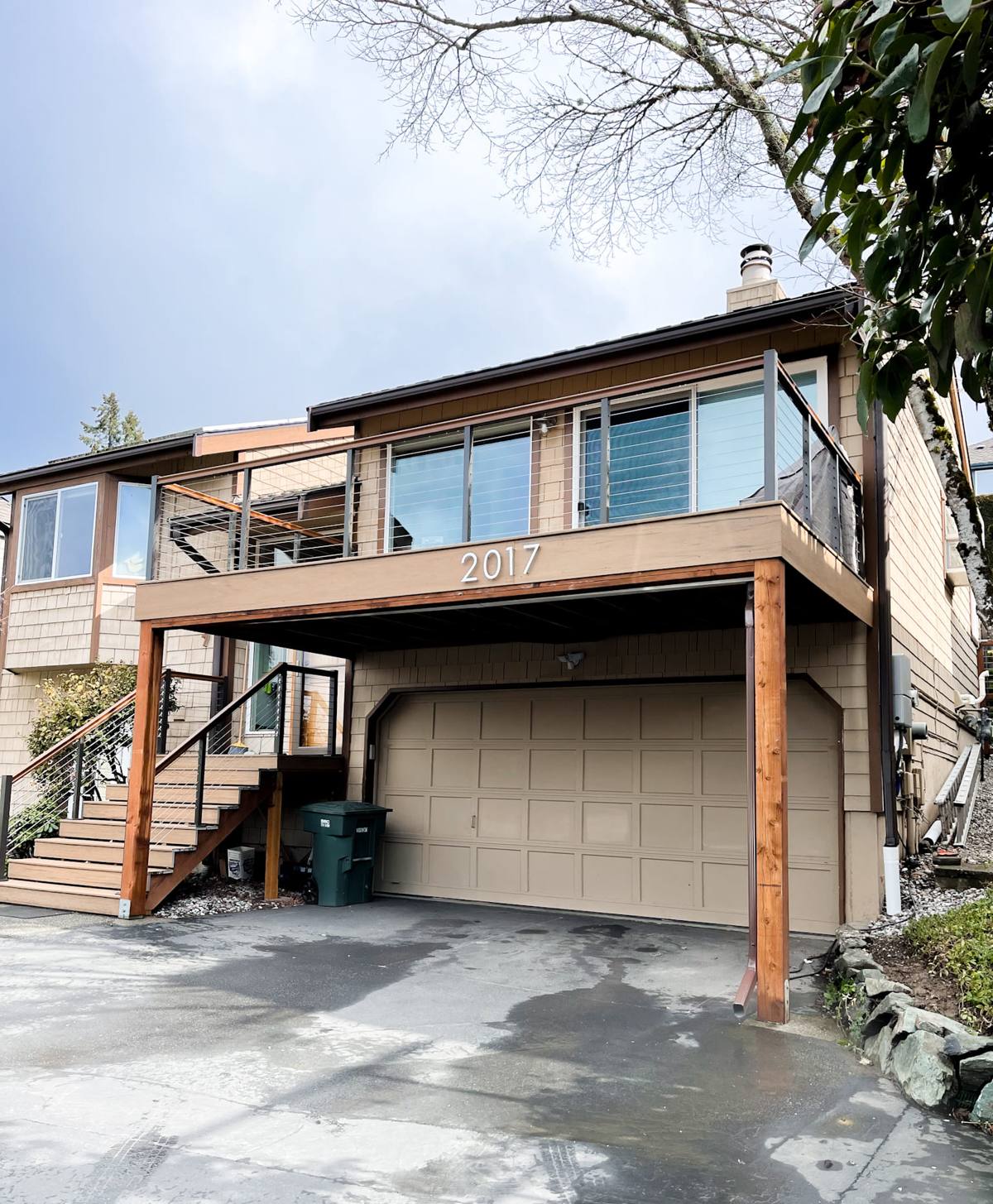
Signs Your Deck Has Reached the End of Its Life
Homeowners often ask whether their deck needs a full replacement or just a repair. Repair makes sense when the damage is isolated — a few soft boards, a loose railing, surface graying. Replacement is the honest answer once the problems are systemic. Here's what tells us a deck is done:
- Soft, spongy, or spring-loaded decking in multiple areas, not just one board
- Visible rot or discoloration at the ledger board where the deck meets the house
- Rusted, corroded, or failing fasteners and connectors — common on older salt-exposed decks
- Posts that wobble, shift, or show rot near ground contact or below the frost/moisture line
- Railings that flex noticeably under normal pressure
- A deck that's more than 15-20 years old and has never had structural components replaced
- Persistent moisture staining on siding or fascia directly below or behind the deck
If you're seeing two or more of these, patching individual boards is usually a short-term fix that delays the real cost rather than avoiding it.
What a Correct Deck Replacement Actually Involves
A deck replacement done right is not just "new boards on the old frame." That approach is common with lower-cost crews and it's one of the main reasons decks near the water fail again within a few years. A proper replacement addresses the whole system.
Framing and Structural Work
The substructure — ledger board, joists, beams, and posts — takes the real abuse over time, especially the ledger connection where moisture tends to collect against the house. On a full replacement, we inspect and typically replace the ledger board with proper flashing behind it, confirm joist spacing and sizing meet current load requirements, and check post footings for adequate depth and condition. In a coastal-influenced setting like Davis Islands, we favor pressure-treated lumber rated for ground contact and salt exposure, or all-composite/PVC substructure systems where the budget allows, specifically because standard framing lumber degrades faster here than it would inland.
Fasteners and Hardware
This is where a lot of decks quietly fail. Standard zinc-coated screws and joist hangers corrode faster near salt air, and once a fastener starts rusting, it loses holding strength long before it looks obviously bad. We use stainless steel or coated fasteners rated for coastal/high-corrosion environments throughout the structure, not just on the visible surface boards.
Flashing and Water Management
Wind-driven rain finds any gap in flashing, and a deck ledger without proper flashing is one of the most common sources of hidden rot in this region. Correct flashing directs water away from the house structure instead of letting it wick into the rim joist or wall sheathing behind the deck.
Choosing the Right Decking Material for This Climate
There's no single "best" decking material — there's a best material for your budget, your maintenance appetite, and how much sun and salt exposure your specific deck gets. Here's how the common options actually compare in a Tampa Bay coastal setting:
| Material | UV/Sun Performance | Salt Air Resistance | Maintenance |
|---|---|---|---|
| Pressure-treated wood | Fades and can crack without regular sealing | Moderate — needs sealing to resist salt-driven decay | Annual cleaning and resealing |
| Tropical hardwood (e.g., ipe-type) | Very good, naturally dense | Good, but still benefits from oiling | Periodic oiling to maintain color |
| Capped composite | Excellent — capped layer resists fading | Excellent, resists moisture absorption | Occasional washing, no sealing/staining |
| Uncapped composite | Fair — can fade and chalk faster | Fair — more prone to moisture uptake over time | Low, but shows wear sooner near the coast |
| PVC decking | Excellent, does not absorb color-fading UV the way wood fibers do | Excellent, non-organic material | Very low |
For a home this close to the water, we generally steer clients away from uncapped composite and toward either capped composite or PVC for the decking surface, purely on a maintenance-and-longevity basis — not because the product is bad, but because the ongoing upkeep to keep it looking good in salt air and full sun outweighs the modest upfront savings for most homeowners.
Permitting and Code Considerations in Hillsborough County
Deck replacement isn't a cosmetic project as far as the building department is concerned — it's structural work, and in Hillsborough County that typically means a permit is required, along with inspections at key stages of construction. This matters even more on a barrier or island community where wind load requirements and, in some cases, flood zone considerations affect how the structure needs to be built, including post depth, connector hardware, and attachment methods.
Skipping the permit process might save a little time up front, but it creates real problems later: unpermitted structural work can complicate a home sale, cause issues with insurance claims after storm damage, and in some cases require the deck to be torn out and rebuilt to code anyway. We pull permits as a standard part of every deck replacement and coordinate inspections so the job is documented and defensible if it's ever questioned.
Our Deck Replacement Process
1. On-Site Assessment
We start by physically inspecting the existing deck — probing for soft spots, checking the ledger connection, evaluating post and footing condition, and looking at how the current deck has held up against sun and moisture exposure in its specific spot on the property. This tells us whether full replacement is actually necessary and what the new structure needs to account for.
2. Material and Design Discussion
We walk through decking material options, railing style, and layout with you, being upfront about the real trade-offs in cost, appearance, and maintenance for each option given the site's sun and wind exposure.
3. Permitting
We handle the permit application and documentation with Hillsborough County so the project meets current structural and wind load requirements from the start.
4. Demolition and Disposal
The old deck is removed down to a clean slate, including hauling away old decking, framing, and hardware — we don't build new structure on top of compromised old framing.
5. Construction
New framing, flashing, and structural connections go in first and get inspected before decking is installed. Decking, railings, and any finishing details follow, with fasteners and hardware matched to the material and environment.
6. Final Walkthrough
We walk the finished deck with you, check that everything is secure and level, and go over any material-specific care — for example, whether a wood species needs periodic oiling or a composite just needs occasional washing.
What Affects the Cost of a Deck Replacement
Every deck is different, so we don't quote sight-unseen prices, but these are the main variables that move the number up or down:
| Factor | Why It Matters |
|---|---|
| Square footage and shape | Larger decks and multi-level or curved layouts require more material and labor |
| Decking material chosen | Pressure-treated wood costs less upfront than capped composite or PVC, which cost more but need far less upkeep |
| Height and access | Elevated decks or decks with limited equipment access require more framing and labor time |
| Substructure condition | If posts or footings need to be relocated or reinforced to current code, that adds work beyond surface replacement |
| Railing and stair complexity | Custom railings, multiple stair runs, or built-in features add both material and labor |
| Permit and inspection scope | Structural changes near flood zones or with specific wind load requirements can add engineering or documentation steps |
A Practical Checklist Before You Replace a Deck Near the Water
- Confirm whether the issue is isolated (repairable) or systemic (replacement territory)
- Ask any contractor whether they pull permits for deck work in Hillsborough County — this should be a yes without hesitation
- Ask what fastener and hardware grade they use, specifically for salt air exposure
- Get clarity on ledger flashing and how water will be directed away from your home
- Compare decking materials on maintenance over time, not just sticker price
- Confirm post and footing depth meets current code, not just what was there before
- Ask how debris and old decking material will be removed and disposed of
Why It Matters to Hire a Crew That Already Works This Neighborhood
A contractor who regularly works on Davis Islands understands, without being told, why standard fasteners fail faster here, why flashing details around ledger boards can't be an afterthought, and why decking material choices that work fine in a dry inland subdivision don't hold up the same way a few hundred feet from open water. That experience shows up in the small decisions — hardware grade, fastener spacing, flashing overlap, footing depth — that don't show up on a proposal sheet but determine whether the deck is still solid in ten years or needs major work in three.
It also means we're familiar with Hillsborough County's permitting process for this type of neighborhood, so there are no surprises mid-project. We build decks meant to actually hold up against Tampa Bay's wind, sun, and salt air, not decks that merely look finished on installation day.
If your deck is showing its age or you're planning a full replacement, we're happy to take a look and give you a straightforward, no-pressure estimate — just fill out the form below to get started.