 Tampa Roofing
 Why Seminole Heights Decks Wear Out Faster Than You'd Expect
Seminole Heights is one of Tampa's older, more established neighborhoods, and that shows in the housing stock — a mix of early-1900s bungalows and mid-century homes, many with decks that were added on later rather than built with the house. Combine that with the mature oak canopy the neighborhood is known for, and you get a set of conditions that are genuinely tough on outdoor wood and hardware.
Shade from mature trees keeps decks damp longer after rain instead of drying quickly in the sun, which is exactly the environment rot and fungal decay need to take hold. At the same time, the parts of a deck that do get full sun face intense, near year-round UV that dries and cracks wood fiber and breaks down sealants faster than in most parts of the country. Add Hillsborough County's wind-driven summer storms and the general salt-laden air that comes with living in the greater Tampa Bay area, and you've got a structure that's being attacked from multiple directions at once — moisture underneath, UV on top, and corrosion on every metal fastener holding it together.
None of that means a deck in Seminole Heights is destined to fail early. It means the parts, fasteners, and construction details matter more here than they would in a drier, milder climate — and repairs done with generic materials or shortcuts tend to fail again quickly.
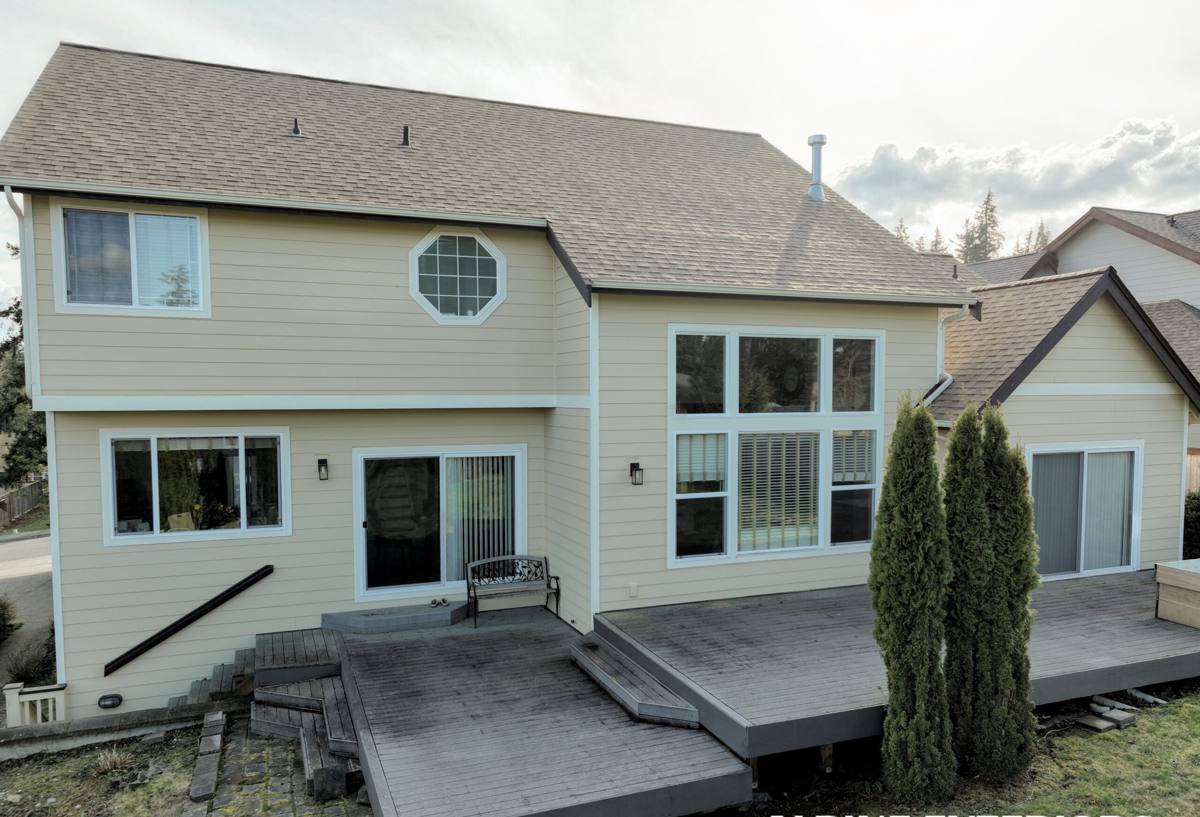
The Deck Problems We See Most Often in This Neighborhood
Ledger Board and Rim Joist Rot
The ledger board — where the deck attaches to the house — is the single most common failure point we find. If it wasn't properly flashed when installed, water gets trapped between the ledger and the house siding and rots the wood from the inside out, often long before it's visible from underneath.
Post and Footing Movement
Older decks in this area were sometimes built on posts set shallow, or on footings that have shifted slightly over the decades. Combined with soil that holds moisture near the base of the post, this leads to wobble, uneven decking, and posts that have rotted at the point where they meet the ground or a concrete footing.
Fastener and Hardware Corrosion
Nails, screws, and joist hangers that aren't rated for treated lumber and coastal-influenced air will corrode, stain the wood around them, and eventually lose their holding strength. This is one of the most common reasons a deck that "looks fine" is actually unsafe to walk on.
Sun-Damaged and Splintering Decking Boards
Boards on the sunnier side of a deck often crack, cup, or splinter well before the structural frame underneath shows any problem. This is usually a surface-level repair, but it's worth catching before splintered boards become a safety issue for bare feet and pets.
What an Actual, Correct Deck Repair Involves
A repair that holds up in Tampa's climate isn't just swapping a board or tightening a screw. A proper repair starts with understanding why the damage happened in the first place, so the same failure doesn't repeat in two or three years.
- Checking the ledger board connection and flashing, not just the boards around it
- Probing joists, beams, and posts with an awl to find soft, rotted wood that isn't visible from the surface
- Inspecting footings for movement, cracking, or inadequate depth
- Confirming joist hangers, post bases, and structural fasteners are rated for treated lumber and exterior exposure
- Checking railing posts and connections, which take direct lateral load and are a common weak point
- Verifying proper drainage and airflow underneath the deck so moisture doesn't get trapped again
Skipping any of these steps is how you end up paying for the same repair twice. A board replaced over a rotted joist, or new decking screwed into corroded hangers, is a short-term fix at best.
Repair or Replace? How We Help You Decide
Not every deck problem calls for a full rebuild, but not every problem should be patched either. The right call usually comes down to how much of the structural frame is affected versus how much is cosmetic.
| Factor | Leans Toward Repair | Leans Toward Replacement |
|---|---|---|
| Extent of rot | Isolated to a few boards or one section | Widespread through joists, beams, or multiple posts |
| Age of structure | Under 10-15 years, built to a decent standard | Original construction unknown or decades old |
| Footings and posts | Solid, no movement or shifting | Undersized, shifted, or set too shallow |
| Hardware condition | Fasteners intact, minor surface corrosion | Widespread rust, hanger failure, or missing hardware |
| Code compliance | Meets current railing and connection standards | Missing modern safety connections (common on older decks) |
We'll always tell you honestly when a repair makes sense and when it doesn't. Sinking repair money into a frame that's failing in multiple places usually costs more over a few years than doing it right once.
Our Deck Repair Process
1. On-Site Inspection
We walk the entire deck, probe suspect areas, and check the ledger, posts, footings, and framing — not just the parts that look worn on the surface.
2. Straightforward Written Estimate
You get a clear breakdown of what's being repaired, what materials and hardware we're using, and why — no vague line items.
3. Permitting, When Required
Structural repairs and anything touching the ledger, framing, or railings may require a permit through Hillsborough County or the City of Tampa depending on the scope of work. We handle that process rather than leaving it on you.
4. The Repair Itself
We replace what's actually compromised, correct the underlying cause where we find one (flashing, drainage, undersized hardware), and match new material to the existing deck as closely as practical.
5. Final Walkthrough
We check the repaired area is solid, sealed where appropriate, and safe before we consider the job finished — and we'll point out anything else worth keeping an eye on down the road.
Materials and Hardware: Why the Details Matter Here
In a climate this demanding, the materials used for a repair matter as much as the workmanship. Our standard on Seminole Heights deck repairs is to use hardware rated for treated lumber exposure — typically hot-dip galvanized or stainless steel, depending on the application — because standard fasteners corrode noticeably faster given the area's heat, humidity, and salt-influenced air.
For decking material itself, both pressure-treated wood and composite have a place, and the right choice depends on the homeowner's priorities:
| Pressure-Treated Wood | Composite Decking | |
|---|---|---|
| Upfront cost | Lower | Higher |
| Maintenance | Periodic sealing/staining needed to handle UV and rain | Minimal sealing, but surface can fade over time |
| Repair matching | Easier to blend new boards with old | Harder to match exactly if the original product is discontinued |
| Heat underfoot | Stays cooler in direct sun | Can get noticeably hot in full Florida sun |
We'll walk you through the trade-offs for your specific deck rather than pushing one product as a default — the right answer depends on how much sun the deck gets, your maintenance appetite, and your budget.
Keeping a Repaired Deck in Good Shape
A repair is only as good as the upkeep after it. These are the basics we recommend to every Seminole Heights homeowner once repairs are done:
- Rinse off leaf litter and debris regularly, especially under heavy tree canopy where it holds moisture
- Re-seal or re-stain wood decking on the schedule your product calls for — Florida sun breaks down sealant faster than milder climates
- Keep gutters and downspouts near the deck clear so runoff isn't dumping directly onto framing or footings
- Check railings and stairs for looseness at least once a year, especially before hurricane season
- Look underneath the deck occasionally, not just at the walking surface — that's where problems start
Why Hiring a Crew That Already Works in Seminole Heights Matters
A contractor who regularly works in this neighborhood already knows what to expect from its housing stock — older framing methods, additions that weren't always built to current code, and the specific way tree cover and shade affect moisture retention on a deck. That means less time spent diagnosing surprises and more accuracy in the initial estimate.
It also means familiarity with the local permitting process through Hillsborough County and the City of Tampa, so structural repairs get handled correctly rather than becoming a problem when the home is sold later. A deck repair that skips required permits or inspections can turn into a real headache during a real estate transaction, even years down the line.
If you've got a deck in Seminole Heights that's showing soft spots, wobble, corroded hardware, or sun-damaged boards, we're glad to take a look. Reach out for a free, no-pressure estimate using the form below — we'll tell you honestly what needs attention and what can wait.