 Tampa Roofing
 Why Hyde Park Decks Take Extra Punishment
Hyde Park is one of Tampa's older, tree-lined neighborhoods, and that history shows up in its outdoor living spaces. A lot of homes here have decks and elevated porches that have gone through decades of Gulf Coast weather, sometimes with repairs that were never brought up to current standards. Add in the neighborhood's mix of mature tree canopy, proximity to the water, and older framing lumber, and you get decks that look fine from a distance but are quietly failing underneath.
Hillsborough County sits squarely in a hurricane-exposed part of Florida, and Hyde Park gets the full range of what that means for an exterior wood or composite structure: sustained high humidity almost year-round, intense UV exposure that breaks down wood fibers and fades or chalks lesser decking materials, wind-driven rain that finds its way into every gap and seam, and salt-laden air that accelerates corrosion on any fastener or connector that isn't rated for it. None of these forces cause a dramatic, obvious failure overnight. They work slowly, at the joints and connection points you can't see from the surface, which is exactly why so many deck problems in this area get discovered only after a board flexes, a railing wobbles, or a contractor pulls up a section and finds the framing underneath in far worse shape than the decking on top.
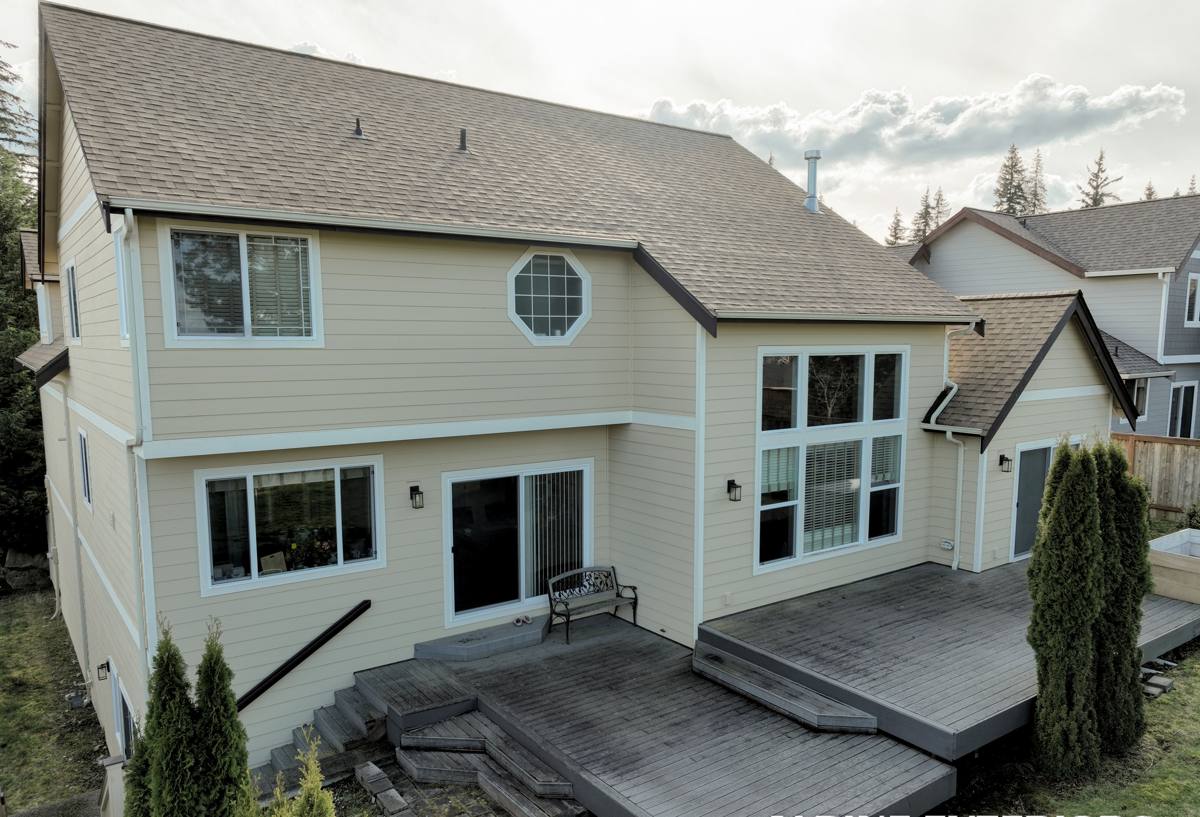
Signs Your Hyde Park Deck Needs Attention
Most deck failures give warning signs long before they become a safety issue. The trouble is that homeowners often read these signs as cosmetic when they're actually structural. Here's what we tell Hyde Park homeowners to watch for between inspections:
- Boards that feel spongy, springy, or noticeably softer underfoot than the rest of the deck
- Railings or posts that wiggle, lean, or have more play than they did a year ago
- Rust streaks bleeding out from screws, nail heads, or metal joist hangers
- Gaps opening up where the deck meets the house, or daylight visible under the ledger board
- Stairs that feel bouncy or steps that have started to separate at the stringers
- Discoloration, dark staining, or a musty smell near the base of posts or under the deck
- Peeling or bubbling on painted or stained surfaces, especially on the underside
- Any visible sagging along the deck's edge or where it attaches to the house
Any one of these on its own might be minor. Several at once, or anything involving the ledger board or main support posts, is worth a professional look before you put weight on the structure with confidence.
What a Correct Deck Repair Actually Involves
Deck repair gets treated as a cosmetic trade more often than it should be. Swapping a few gray boards for new ones without checking what's underneath is how decks that "look repaired" end up failing again within a couple of seasons. A repair done right in this climate touches four areas, not just the surface.
The Ledger Board Connection
The ledger board — the piece that attaches the deck directly to the house — is where the majority of serious deck failures start, and it's almost always hidden from view. Water gets trapped between the ledger and the house siding, especially on older homes where the original flashing was minimal or has since failed. We check this connection on every repair, not just when it's the obvious complaint, because a compromised ledger board is a structural issue, not a cosmetic one.
Framing and Joists
Joists and beams take on rot and insect damage from the inside out, so a board that looks solid on top can be hiding a joist that's lost real strength underneath. We check for soft spots with a probe, not just a visual look, and any framing member that's compromised gets sistered or replaced — not just covered over.
Fasteners and Hardware
This is where Tampa's coastal air makes the biggest difference. Standard steel screws, nails, and joist hangers corrode faster here than they would inland, and corroded fasteners lose holding strength long before they look obviously rusted through. We use fasteners and connectors rated for coastal/salt-air exposure — typically stainless steel or hot-dip galvanized — on every repair, even when the original hardware was a lesser grade.
The Decking Surface
Only after the structure underneath is confirmed sound does the visible decking matter. Board replacement, gap spacing, and fastening pattern all affect how well the surface sheds water and handles Florida's heat swings without cupping or splitting.
Repair or Replace? What Actually Drives That Decision
Not every deck problem calls for a full rebuild, and not every deck is worth patching. The honest answer depends on a handful of factors we walk through during the inspection, not a blanket rule.
| Factor | Leans Toward Repair | Leans Toward Replacement |
|---|---|---|
| Ledger board condition | Solid, dry, properly flashed | Soft, water-stained, poorly flashed originally |
| Extent of framing damage | Isolated to one or two joists/posts | Widespread rot or insect damage across the frame |
| Age of the structure | Under 10-15 years, built to a reasonable standard | Original construction decades old, undersized framing |
| Fastener condition | Localized corrosion, easily upgraded | Systemic corrosion throughout the structure |
| Code compliance | Meets current railing/attachment standards | Railing height, spacing, or attachment method out of date |
Cost follows the same logic. A localized repair — a few boards, a section of railing, corroded fasteners on an otherwise sound frame — often runs a few hundred to low thousands of dollars. Once the ledger board or a large share of the framing is compromised, a full rebuild is usually the more honest recommendation, both financially and for safety, since patching a failing frame just delays the same problem.
Decking Materials That Hold Up Here
When boards need to be replaced, the material choice matters more in Tampa's climate than it does in a lot of the country. Here's how the common options actually perform under year-round heat, humidity, and salt air.
| Material | Maintenance | Heat/UV Behavior | Moisture & Salt Air |
|---|---|---|---|
| Pressure-treated wood | Needs sealing/staining every 1-2 years | Fades and can splinter without upkeep | Prone to rot if end-cuts and fasteners aren't protected |
| Composite decking | Low — occasional cleaning | Can run hot underfoot in direct sun; quality varies by product | Resists rot well; check core type for moisture absorption |
| PVC/capped decking | Lowest — no sealing required | Stable in heat and UV with a quality cap | Excellent moisture and salt-air resistance |
There's no universally "correct" answer — it's a trade-off between upfront cost, maintenance tolerance, and how long you plan to stay in the home. What we won't do is install a decking product on a structure with an unresolved moisture problem underneath, because no surface material fixes a framing issue, and covering it up just hides the problem until it's worse.
Permits, Codes, and Hyde Park's Historic Character
Deck repair and rebuild work in Hillsborough County is generally subject to permitting, particularly when structural members like the ledger board, joists, posts, or footings are being replaced rather than just the surface boards. Railing height and baluster spacing requirements have also tightened over the years, so an older deck being rebuilt often needs to come up to current code even if the original structure predates it.
Because parts of Hyde Park include recognized historic homes and districts, exterior work — including deck reconstruction visible from the street — can also be subject to additional design review depending on the specific property. We don't guess on this: any project that may touch historic guidelines gets flagged early so you know what to expect before work starts, rather than finding out after the fact.
Our Process for a Hyde Park Deck Repair
- Inspection: We check the ledger connection, framing, posts, footings, and fasteners — not just the visible boards — and probe for soft spots rather than relying on a visual pass alone.
- Written scope: You get a clear explanation of what's structural versus cosmetic, what needs to happen, and why — before any work or cost commitment.
- Permit check: If the scope involves structural work, we handle the permitting conversation so the repair is documented and code-compliant, not just visually finished.
- The repair: Compromised framing is sistered or replaced, flashing at the ledger is corrected, and all hardware is upgraded to fasteners rated for coastal exposure.
- Final check and cleanup: We walk the finished deck with you, confirm it's solid at every connection point, and leave the site clean.
Why Hiring a Crew That Already Works This Neighborhood Matters
A deck repair on a Hyde Park property isn't quite the same job as one in a newer subdivision. The homes tend to be older, which means the original framing and attachment methods vary more than you'd expect from house to house. A crew that has already worked on a number of homes in this neighborhood has a much better sense of what to expect before the first board comes up — original ledger conditions, common trouble spots on homes of a certain age, and whether a given property is likely to fall under additional historic review. That familiarity shows up as fewer surprises mid-project and a more accurate estimate up front, instead of a scope that balloons once the deck is opened up.
It also means someone who's easy to reach if a question comes up after the work is done — not a crew that did one job in the area and moved on to the next county.
Keeping Your Deck Sound After the Repair
A correctly repaired deck still needs basic upkeep to get its full lifespan out of Tampa's climate. A simple seasonal routine covers most of it:
- Sweep debris and standing leaves off the surface regularly, especially after storms and under tree canopy
- Check that gaps between boards stay clear so water can drain instead of pooling
- Look under the deck once or twice a year for new staining, soft spots, or rust bleed at fasteners
- Reseal or restain wood decking on the schedule the product calls for — don't wait for visible fading
- After any major storm, do a quick visual check of railings, stairs, and the ledger connection before assuming everything's fine
Catching a small problem during one of these checks is a lot cheaper and easier than catching it after it's already spread into the framing.
If your deck is showing any of these warning signs, or it's just been a while since anyone looked at it closely, we're happy to come take a look. The estimate is free, there's no pressure to move forward, and you'll get a straight answer about what's actually going on underneath — just fill out the form below to get started.