 Tampa Roofing
 Why Land O' Lakes Roofs Wear Differently Than Roofs Closer to the Bay
Land O' Lakes sits just north of the Hillsborough County line in Pasco County, but the roof over your house answers to the same Tampa Bay climate as the rest of the region. That means long stretches of intense UV nearly every month of the year, afternoon thunderstorms that come in fast and hard, and the wind loads that arrive every hurricane season. The area's mix of established ranch-style homes, newer subdivisions, and heavy tree cover means those forces show up on the roof a little differently than they do on a house sitting right on the water — but they still add up over time.
UV and Heat
Asphalt shingles are an oil-based product, and constant sun exposure slowly bakes the oils out of them. Combine that with attic heat pushing up from below in a Florida summer, and shingles can dry out, curl, or lose granules years before their rated lifespan if the roof isn't ventilated correctly. This is the single biggest reason a "20-year shingle" in this climate often doesn't get anywhere near 20 years without proper attic airflow.
Wind and Storm Season
Land O' Lakes isn't a beachfront community, but it's still squarely inside the wind zones that Florida's building code accounts for, and it still takes tropical storm and hurricane wind gusts most years. Wind doesn't have to be catastrophic to do damage — repeated gusts that lift shingle edges, loosen nails, or work debris under a tab will eventually cause a leak, even in a storm that never makes the news.
Rain and Humidity
Tampa Bay's humid, salt-tinged air spreads well inland through the region's daily weather pattern, and combined with wind-driven rain, it finds any gap in flashing, underlayment, or nailing before it finds a gap in shingles themselves. Most of the leaks we get called out for aren't a shingle failing in the middle of a slope — they're water getting in at a valley, a wall step-flashing, a pipe boot, or a nail that wasn't sealed properly.
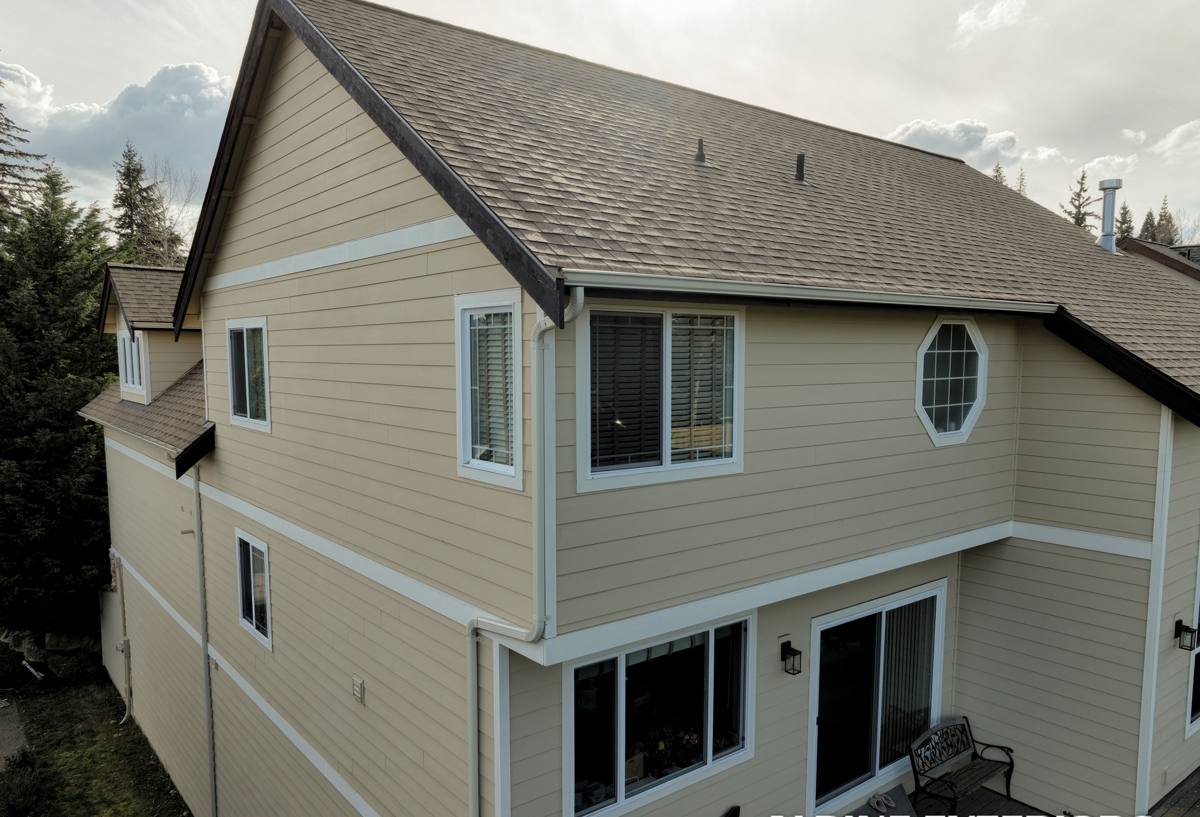
What a Correct Asphalt Shingle Roof Needs to Do Here
A shingle roof built for this climate has to do more than just shed water on a calm, sunny day. For a Land O' Lakes home, we're building toward a specific set of requirements:
- A wind rating that meets or exceeds what Florida's building code requires for this area, not just the manufacturer's minimum-cost option
- A nailing pattern that matches the shingle manufacturer's high-wind installation instructions — six nails per shingle in most cases here, not four
- Self-sealing adhesive strips that actually activate, which depends on installing at the right time of year and temperature
- Upgraded underlayment at eaves, valleys, and around penetrations, since standard felt alone isn't enough insurance against wind-driven rain
- Balanced attic ventilation (intake at the soffit, exhaust at the ridge) to control heat and moisture from underneath
- Algae-resistant granules, since humidity in this region promotes the dark streaking that plain shingles develop within a few years
Skip any one of these and the roof might still look fine from the driveway for a year or two — but it won't perform the way it's supposed to when a real storm tests it.
What a Correct Installation Actually Involves
A quality asphalt shingle job isn't really about the shingle brand — it's about everything underneath and around it. On every Land O' Lakes roof we tear off, the process includes:
Tear-Off and Deck Inspection
We remove the old roofing down to the deck rather than layering over it. That's the only way to actually see the plywood or OSB underneath, catch soft spots or water staining, and replace damaged sections before they're covered up again for another 20 years.
Flashing and Underlayment
New drip edge at eaves and rakes, new step and counter-flashing where the roof meets walls or chimneys, and self-adhering underlayment at the eaves, valleys, and other water-prone areas. This is the layer that actually stops wind-driven rain when a shingle tab lifts in a gust.
Starter Strip, Field Shingles, and Nailing
A proper starter course along eaves and rakes so the first row of shingles has something to seal against, then field shingles installed with the manufacturer's high-wind nailing pattern — placed correctly, not just fast.
Ridge Ventilation and Final Details
Ridge vent (or an equivalent exhaust system) paired with existing or added soffit intake, pipe boots and vent flashing sealed properly, and a full site cleanup with a magnetic nail sweep before we call the job done.
Our Process for Land O' Lakes Homeowners
- Inspection and honest estimate. We walk the roof and attic, document what we find, and explain what's actually needed versus what's optional.
- Material selection. We go over shingle options and wind ratings appropriate for this area based on your budget and how long you plan to stay in the home.
- Permitting. Roofing work here requires a permit through the appropriate local building department, and we handle that paperwork and the required inspections as part of the job.
- Scheduling around weather. Florida roofing has to work around rain and storm season — we plan tear-off days when we can complete dry-in the same day.
- Tear-off and dry-in. Old roofing comes off, the deck gets inspected and repaired as needed, and underlayment goes down before the day ends.
- Installation and inspection. Shingles, flashing, and ventilation go in to spec, followed by the required municipal inspection.
- Cleanup and walkthrough. Full property cleanup, a final walkthrough with you, and paperwork for your manufacturer and workmanship warranties.
Choosing the Right Shingle for This Climate
Not every asphalt shingle product is built the same way, and the right choice depends on your budget, your roof's exposure, and how long you want to go before your next roof.
| Shingle Type | Typical Wind Rating | Algae Resistance | Best Fit |
|---|---|---|---|
| 3-Tab | Lower end of code-compliant range | Varies by product | Budget-focused rentals or short-hold properties |
| Architectural/Laminate | Mid to high, depending on line | Usually available as an upgrade | Most owner-occupied Land O' Lakes homes |
| Impact-Rated | Highest available in asphalt | Usually available as an upgrade | Homes wanting maximum storm resistance or insurance credits |
We don't push a single product on every roof. We'll tell you honestly where a lower-tier shingle makes financial sense and where it's a false economy given how hard this climate is on roofing.
What Affects the Cost of Your Roof
| Factor | Why It Matters |
|---|---|
| Roof size and pitch | More surface area and steeper slopes mean more material and labor time |
| Number of existing layers | Tearing off two layers of old roofing costs more than one |
| Deck condition | Rotted or soft plywood found during tear-off has to be replaced before shingles go down |
| Underlayment upgrade | Self-adhering underlayment costs more than standard felt but performs far better in wind-driven rain |
| Ventilation changes | Adding or correcting ridge and soffit ventilation is an upfront cost that protects the shingle warranty |
| Shingle tier chosen | 3-tab, architectural, and impact-rated products carry different material costs |
| Permit and inspection fees | Set by the local building department, not by us |
Most straightforward asphalt shingle replacements on a typical single-family home in this area land in a broad low-to-mid five-figure range, with the specifics depending heavily on the factors above. We give a firm number in writing after we've actually seen your roof, not a guess over the phone.
Why a Crew That Already Works Land O' Lakes Matters
A roofing job goes smoother when the crew isn't learning the area on your dime. We already know which local building departments handle permitting for this area and what they expect to see at inspection, we're familiar with the HOA architectural guidelines that some Land O' Lakes communities enforce on roof color and material, and we can schedule tear-off days around this region's afternoon storm pattern instead of guessing. When a named storm is approaching or has just passed, having a crew that's already local — rather than one traveling in from outside the area — matters for how quickly a tarp or repair can actually happen.
Maintenance and Warning Signs Between Roofs
A shingle roof in this climate needs periodic attention, not just a call when something's actively leaking. Keep an eye out for:
- Granules collecting in gutters or at downspout outlets
- Shingle tabs that look curled, cupped, or lifted at the edges
- Dark streaking across the roof surface, which is algae growth, not dirt
- Soft spots or sagging when walking the attic on plywood decking
- Daylight visible through the roof deck from inside the attic
- Water stains on ceilings or in the attic after heavy rain, even if they dry out afterward
- Missing or exposed nail heads after a windy storm
- Cracked or missing pipe boot seals around plumbing vents
Catching any of these early is usually a repair. Ignoring them usually turns into a full replacement sooner than the shingle's rated lifespan would suggest.
Get a Straight Answer on Your Roof
If you're not sure whether your Land O' Lakes home needs a repair, a partial re-roof, or a full replacement, we're glad to take a look and give you a straightforward answer — no pressure, no upsell. Use the form below to request a free estimate.