 Tampa Roofing
 Why Riverview Siding Has to Work Harder Than Siding Almost Anywhere Else
Riverview sits in a part of Hillsborough County that gets the full weather package: long stretches of intense, direct UV exposure nearly year-round, sudden afternoon storms that drive rain sideways into wall assemblies, and tropical systems that bring sustained hurricane-force wind loads. Add in the humidity and salt-laden air that moves across the greater Tampa Bay region, and you have a climate that is genuinely tough on exterior building materials. Siding here isn't just cosmetic — it's the first line of defense against moisture intrusion, wood rot, and wind uplift.
A lot of siding problems we see on Riverview homes aren't caused by bad materials. They're caused by materials that were never engineered for this climate in the first place, or by installations that didn't account for wind-driven rain and expansion/contraction cycling. Getting this right starts with picking a product built for the conditions, then installing it the way the manufacturer actually specifies — not the shortcut version.
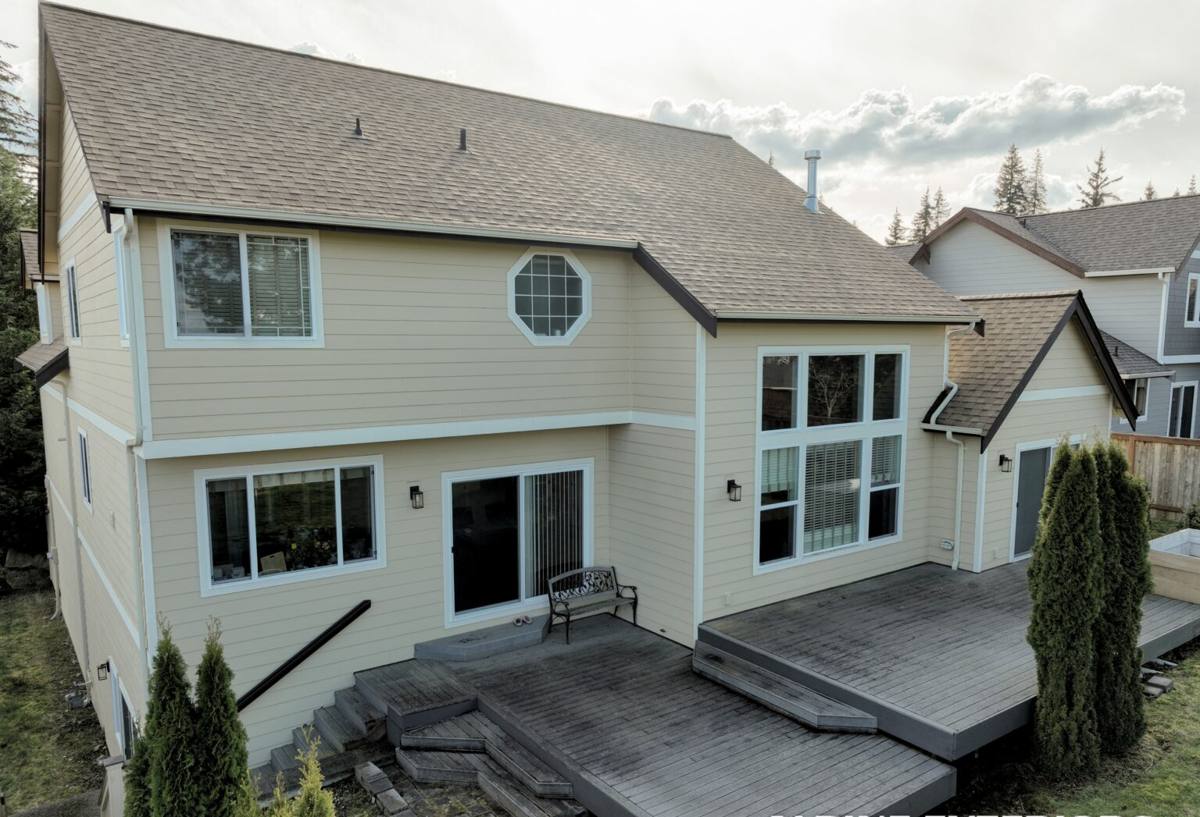
What "Correct" Fiber Cement Installation Actually Requires
Fiber cement siding has a well-earned reputation for durability, but that reputation only holds up when the installation follows spec. In a coastal-influenced climate like ours, a few details matter far more than they would in a drier, calmer region:
- Proper clearances — siding kept off roof lines, decks, and grade at the manufacturer's minimum gap so wind-driven rain and standing water can't wick into the bottom edge
- Correct fastener pattern and type — corrosion-resistant fasteners, spaced and set to the manufacturer's nailing schedule so panels stay secure under sustained wind loads
- Weather-resistant barrier and flashing — a continuous drainage plane behind the siding with properly lapped flashing at windows, doors, and penetrations, so any water that gets past the surface has somewhere to go
- Joint and seam treatment — factory-primed edges caulked or capped per spec, since exposed raw edges are where moisture problems usually start
- Expansion gaps — small but specific gaps at butt joints and trim, because fiber cement moves slightly with heat and humidity and needs room to do it without buckling
None of this is exotic. It's just detail work that takes longer and requires a crew that installs this specific product regularly, not occasionally.
Why We Install James Hardie and Nothing Else
We standardized on James Hardie fiber cement products for every siding job we do, including in Riverview, and we don't install vinyl, LP SmartSide, or other fiber cement brands. That's a deliberate call, not a sales preference. Hardie's HardiePlank and HardiePanel lines are climate-engineered — the HZ5 formulation used throughout Florida is specifically designed to resist moisture, humidity, and the freeze-thaw non-issue we don't have here, while standing up to the intense sun exposure that fades and warps lesser materials over a matter of years, not decades.
The ColorPlus finish system is baked on at the factory under controlled conditions, which gives it better fade and chip resistance than field-applied paint, and it comes backed by a real, transferable warranty. Non-combustibility is another factor we take seriously given how dry and lightning-prone Florida summers can get. We'd rather install one product exceptionally well, understand its behavior in this climate inside and out, and stand behind it, than offer five options and be mediocre at all of them.
| Material | Performance in Riverview's Climate | Where It Falls Short Here |
|---|---|---|
| James Hardie fiber cement | Engineered for humidity, UV, and wind-driven rain; factory finish resists fading | Heavier, requires experienced installation crew |
| Vinyl siding | Low upfront cost, easy to source | Softens and can warp under sustained heat/UV; more prone to wind damage in gusts |
| Primed wood (spruce/cedar) | Natural appearance | Absorbs moisture, needs frequent repainting, vulnerable to rot in humid conditions |
| Other fiber cement brands | Similar base material chemistry | Varies by manufacturer; we don't install or warranty products we haven't standardized on |
Our Process for Riverview Siding Projects
Inspection and Assessment
We start by walking the exterior and checking for the specific failure patterns common to this climate: soft spots near grade, staining or bubbling around windows and doors, and gaps at trim where wind-driven rain has been getting behind the existing cladding. We also check the sheathing underneath once siding comes off — that's often where the real story is, and it's not something you can fully assess from the outside.
Removal and Substrate Prep
Old siding and trim come off, and any damaged or rotted sheathing gets identified and addressed before anything new goes up. Installing new siding over a compromised substrate just hides a problem — it doesn't fix it.
Weather Barrier and Flashing
We install a continuous weather-resistant barrier and properly lap flashing at every window, door, and penetration. This step is the part of the job that's invisible once the siding goes on, but it's the difference between a wall assembly that sheds water and one that traps it.
Hardie Installation to Spec
Panels or planks go up following James Hardie's published fastening schedule, clearances, and joint treatment — not a generic "close enough" approach. This is where crew experience with this specific product shows up most: correct blind-nailing, proper overlap, and clean, caulked seams.
Finish and Cleanup
Trim, caulking, and touch-up finish work get done last, followed by a full site cleanup. We walk the finished job with the homeowner before calling it done.
Signs a Riverview Home Needs New Siding Soon
Some warning signs are obvious; others hide in plain sight until they've been causing damage for a while. Homeowners in Riverview should watch for:
- Soft, spongy, or visibly warped panels, especially near the bottom of walls or under windows
- Bubbling, peeling, or persistent staining on interior walls near exterior corners
- Visible cracking, gaps, or separation at seams and trim joints
- Siding that flexes or feels loose when pressed, which can signal fastener failure or rot behind it
- A noticeable rise in humidity or musty smell in rooms along exterior walls
- Fading or chalking that keeps returning shortly after repainting
Any one of these on its own isn't necessarily an emergency, but a few together usually mean moisture has already gotten behind the cladding, and waiting only lets it spread.
What Affects the Cost of a Fiber Cement Siding Project
Every home is different, so we don't publish flat prices, but the factors that move the number up or down are consistent:
| Factor | Why It Matters |
|---|---|
| Home size and wall complexity | More square footage and more corners, gables, and cutouts mean more material and labor |
| Extent of substrate damage | Rotted sheathing found during tear-off adds repair work before new siding can go on |
| Siding profile and texture | Lap width, panel style, and texture affect material cost and installation time |
| Trim and accessory scope | Full trim replacement, soffit, and fascia work add to the overall project |
| Access and site conditions | Multi-story sections, tight lot lines, or landscaping obstacles affect labor time |
We give straightforward, itemized estimates so homeowners can see exactly what's driving the number, rather than a single lump figure that's hard to evaluate.
Why Hiring a Crew That Already Works in Riverview Matters
Siding installed correctly in a mild, dry climate can still fail quickly here if the crew doesn't account for Hillsborough County's wind exposure, humidity, and storm patterns. A crew that regularly works Riverview and the surrounding Tampa area already knows which details can't be skipped — clearances at grade, flashing at every penetration, fastener spacing that holds under gusting wind — because they've seen what happens when those details get missed on a nearby job. That familiarity also means faster, more accurate estimates, since we're not guessing at how local permitting and inspection processes work.
There's also a practical service side to this: a local crew is easier to reach if a warranty question comes up years down the road, and we're not disappearing after the invoice is paid.
Maintaining Your Siding After Installation
James Hardie siding is low-maintenance, not no-maintenance. In this climate, a simple annual routine keeps it performing as designed:
- Rinse the exterior periodically to remove salt residue, pollen, and airborne grime before it builds up
- Inspect caulking at trim and seams once a year, since Florida's heat cycles can dry out caulk faster than in milder climates
- Check that gutters and downspouts are directing water away from siding, not spilling onto it
- Keep an eye on any spot that's been patched or repaired after storm damage
Done consistently, this kind of upkeep is minor compared to what wood or vinyl siding typically demands in a Florida climate.
If your Riverview home's siding is showing wear, or you're planning ahead for a replacement, we're happy to walk the exterior with you and give an honest, no-pressure estimate — just fill out the form below.