 Tampa Roofing
 Why Temple Terrace Siding Takes More Punishment Than It Looks Like
Temple Terrace sits inland from Tampa Bay, but "inland" in Hillsborough County doesn't mean sheltered. Homes here still take the full brunt of a Florida climate that's hard on exterior building materials year-round: long stretches of intense UV exposure, humidity that never really lets up, sudden wind-driven rain from summer storms, and — a few times a decade — real hurricane-force wind loads. Add in salt-bearing air that drifts inland off Tampa Bay on a sea breeze, and you've got a combination that ages siding faster than most homeowners expect.
None of that means Temple Terrace homes need something exotic. It means they need siding that was installed correctly in the first place, and repair work that respects why it failed rather than just covering up the symptom.
Heat and UV cycling
Direct sun year-round pushes surface temperatures on south- and west-facing walls well above ambient air temperature. Siding expands in the heat of the day and contracts at night, over and over, for decades. Materials that aren't dimensionally stable — or finishes that weren't engineered for UV — chalk, fade, and eventually crack under that constant movement.
Wind-driven rain and humidity
Afternoon thunderstorms in this part of Hillsborough County don't fall straight down — wind pushes rain sideways into wall assemblies, especially around windows, corners, and anywhere two materials meet. If water gets behind the siding and the wall can't dry out between storms because of the ambient humidity, you get rot, mold, and fastener corrosion long before the siding itself looks obviously damaged.
Storm and wind exposure
Even when Temple Terrace is spared a direct hurricane hit, tropical storm-force wind events are common enough to stress siding attachment, loosen panels, and drive debris into wall surfaces. Repeated exposure to these lesser events adds up just as much as one big storm.
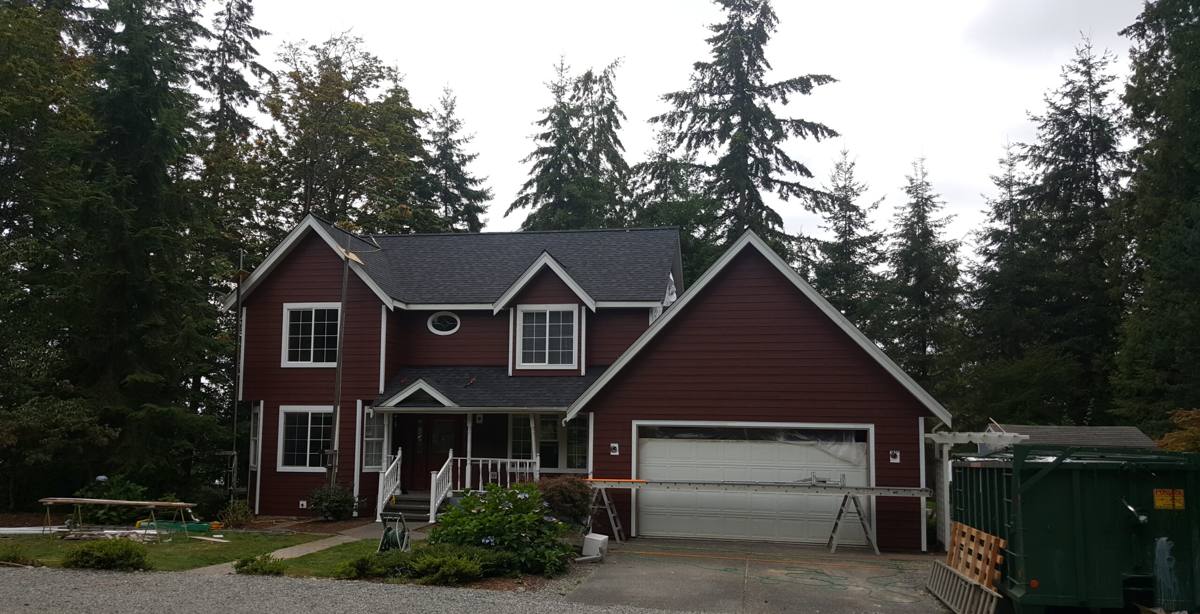
Warning Signs Your Siding Needs Repair
Most siding failures in this area don't show up as one dramatic problem — they show up as a handful of small signs that homeowners notice individually but don't connect. Here's what we look for and what you should watch for between inspections:
- Panels that look warped, bowed, or slightly separated from the wall, especially after a stretch of hot, humid weather
- Cracking or splitting along panel edges or at butt joints, often worse on the sun-exposed sides of the house
- Soft or spongy spots when you press on the siding near the bottom of walls or below windows
- Peeling, bubbling, or chalky paint/finish that keeps coming back even after repainting
- Visible gaps in caulking or trim where the siding meets windows, doors, corners, or the roofline
- Discoloration or dark streaking that suggests water is tracking behind or along the siding
- A musty smell in an interior room along an exterior wall, which often points to moisture already inside the wall cavity
- Nail heads popping or fasteners visibly backing out of the siding
Any one of these on its own might be minor. Several together, or any sign paired with soft wall sheathing, usually means water has already gotten past the siding and needs to be dealt with before cosmetic repair, not instead of it.
What a Correct Siding Repair Actually Involves
A lot of "siding repair" in this market is really just cosmetic patchwork — new caulk, a paint touch-up, maybe a panel swapped out — without anyone checking what's happening behind the siding. That approach might look fine for a season, but in a climate that drives moisture into wall assemblies as often as ours does, it tends to mask the real problem instead of fixing it.
Diagnosis before repair
Before we replace anything, we want to know why that section failed. Was it a flashing detail that was never installed correctly? A caulk joint that dried out and cracked open? A drainage plane that's compromised? Repairing the visible siding without answering that question usually means paying for the same repair again in a few years.
Checking the wall behind the siding
Where we suspect water intrusion, we check the condition of the water-resistive barrier and sheathing behind the damaged siding, not just the siding itself. If the substrate is compromised, patching over it doesn't solve anything — it just hides it until it gets worse.
Matching material and finish
A repair that doesn't match the surrounding siding in profile, thickness, and finish stands out and can also create new water paths at the seams. Matching material correctly, and finishing the repair with compatible, paintable materials and proper caulk joints, matters as much as the structural fix itself.
Flashing and fastening done right
Most of the repeat siding failures we get called out for trace back to flashing that was skipped or installed backward, and fasteners that were driven wrong — too tight, too shallow, or in the wrong location for the material. Getting these details right is what separates a repair that lasts from one that fails again in a year or two.
Repair or Replace? How We Make the Call
Not every damaged section needs a full re-side, and not every "small" repair should be treated as small. We walk every Temple Terrace homeowner through the actual condition of their siding before recommending either path.
| Situation | Usually Repair | Usually Replace |
|---|---|---|
| Damage location | Isolated to one or two panels/areas | Spread across multiple walls or elevations |
| Underlying wall condition | Sheathing and barrier are sound | Rot or water damage found behind siding |
| Age of existing siding | Well within expected service life | Near or past the end of its useful life |
| Cause of damage | Isolated impact, one bad joint, storm debris | Systemic issue — original install, material failure |
| Material availability | Matching material/finish is available | Discontinued product, no clean match possible |
Sometimes the honest answer is that a repair now buys you several more good years, and full replacement can wait. Other times, spending money on repair is just delaying an inevitable, larger cost. We'll tell you which one applies to your house.
Why We Repair — and Recommend — James Hardie Fiber Cement
We install James Hardie fiber cement siding exclusively, and that standard carries into our repair work too. When we're patching or replacing a section of existing Hardie siding, we're working with a product engineered specifically for climates like ours — the HZ5 product line is formulated for high-humidity, high-moisture regions, which describes Hillsborough County for most of the year. It resists moisture absorption, doesn't rot, and is non-combustible, and the factory-applied ColorPlus finish is built to hold up under sustained Florida UV rather than chalk and fade the way some field-applied finishes do.
When a home has other siding types and needs repair, we'll do honest work on what's there. But we're straightforward with homeowners about the trade-offs of continuing to patch materials that are more sensitive to moisture, more prone to warping in heat cycles, or dependent on field-applied caulk and paint holding up perfectly to keep water out. Those aren't reasons to badmouth another product — they're just the practical realities that led us to standardize on fiber cement in the first place, and they're worth knowing before you decide whether to keep repairing or plan a transition.
Why matching matters more with Hardie
Because Hardie's ColorPlus finish is factory-cured and color-matched to specific product lines, a proper repair uses compatible boards and finish rather than an approximate match. Get that wrong and the repaired section will visibly age differently than the surrounding siding within a year or two.
Our Siding Repair Process, Start to Finish
- On-site inspection. We look at the damaged area and the surrounding siding, not just the spot you called about — problems in this climate rarely stay isolated.
- Moisture and substrate check. Where there's any sign of water intrusion, we check what's happening behind the siding before quoting the repair.
- Written scope and estimate. You get a clear explanation of what's damaged, why, and what fixing it correctly involves — no vague line items.
- Material matching. We source siding, trim, and finish that matches your existing exterior as closely as the product allows.
- The repair itself. Proper flashing, correct fastening, and sealed joints — done to the same standard as a full installation, just on a smaller footprint.
- Cleanup and walkthrough. We clear the site and walk the repair with you before we consider the job done.
What Siding Repair Costs Depend On
Every siding repair is different, but the same handful of factors drive the price on almost every job we quote in this area:
| Cost Factor | Why It Matters |
|---|---|
| Extent of hidden damage | Repairs that require opening the wall to address rot or moisture cost more than a surface-level fix |
| Accessibility | Second-story walls, tight side yards, or areas near landscaping take more time and equipment |
| Material match | Matching an older or discontinued siding profile or finish can add cost or limit options |
| Number and location of affected areas | Multiple separate repair sites cost more than one contiguous area |
| Underlying cause | A one-time impact is simpler to resolve than a systemic flashing or drainage issue |
We won't quote a number over the phone without seeing the damage — in this climate, what looks like a small crack from the ground can turn out to be the visible edge of a much larger moisture problem, or it can turn out to be exactly as minor as it looks. An honest quote requires an actual look.
Why Hiring a Crew That Already Works in Temple Terrace Matters
Siding repair isn't just about swinging a hammer — it's about understanding how a specific climate and building environment interact with a specific product. A crew that regularly works Temple Terrace and the surrounding Tampa area already knows how local sun exposure, storm patterns, and humidity levels tend to show up in siding failures, and what repairs actually hold up here versus ones that look fine on installation day and fail again within a couple of seasons.
Local experience also means faster turnaround after a storm event, familiarity with Hillsborough County permitting requirements when a repair crosses into replacement territory, and a crew that isn't learning Florida's wind and moisture demands on your house for the first time. That matters more with siding than with almost any other exterior trade, because so many siding failures trace back to details — flashing, fastening, sealant choice — that only show their consequences months or years after installation.
Keeping Your Siding in Good Shape After the Repair
A correct repair should be close to maintenance-free, but a little attention keeps it — and the rest of your siding — performing the way it should:
- Rinse siding periodically to remove salt residue, pollen, and mildew buildup before it accumulates
- Keep sprinklers from spraying directly on siding, which accelerates moisture exposure at the base of walls
- Trim landscaping back from the house so siding can dry properly after rain
- Walk your exterior after major storms and note any new cracks, gaps, or loose sections
- Recaulk joints around windows, doors, and trim before old caulk fully fails, not after
- Address small issues promptly — in this climate, minor problems compound quickly
If you're seeing any of the warning signs above, or you just want an honest read on whether your siding needs a repair, a full replacement, or nothing at all right now, we're happy to take a look. Reach out for a free, no-pressure estimate and we'll tell you exactly what we find.