 Tampa Roofing
 Temple Terrace homeowners looking into a custom deck are usually weighing two things at once: how they want to use the space, and how long it's going to hold up once Hillsborough County's weather gets its hands on it. Both questions matter, and the second one gets skipped more often than it should. A deck built without Tampa Bay's climate in mind will look fine for a year or two and then start showing problems — cupped boards, rusted fasteners, soft spots at the ledger board — right when you're finally settled in and using it regularly.
We build custom decks for homes throughout Temple Terrace and the surrounding Tampa area, and we treat this stretch of Florida as its own case, not a generic "outdoor space" job. The materials, the fasteners, the flashing details, and the maintenance plan all get chosen with our actual climate in mind, not a national average.
What Temple Terrace's Climate Actually Does to a Deck
It's worth being specific about what a deck in this area is up against, because it changes almost every decision in the build.
Heat and UV Exposure
Temple Terrace gets strong, direct sun for most of the year. UV breaks down the surface fibers of wood decking and degrades the color and flexibility of some composite products over time. Boards that aren't rated for heavy UV exposure will fade unevenly, especially where shade patterns from trees or structures shift throughout the day. Fasteners and connectors also heat up and cool down constantly, which accelerates wear at every joint.
Wind-Driven Rain and Humidity
Between the regular afternoon storms and the threat of hurricane-force winds during the season, decks here deal with rain that doesn't just fall straight down — it drives sideways into railings, stair stringers, and the underside of the frame. Add in year-round humidity, and you've got a structure that's damp far more often than it's bone dry. Any wood-to-wood or wood-to-concrete connection that traps moisture becomes a rot risk within a few seasons.
Salt Air
Temple Terrace isn't oceanfront, but Tampa Bay's proximity still puts a mild salt content in the air that reaches inland neighborhoods, especially during onshore wind patterns. Salt accelerates corrosion on standard fasteners, screws, and joist hangers. Hardware that would be fine in a drier, inland climate can start rusting and staining the decking within a couple of years here.
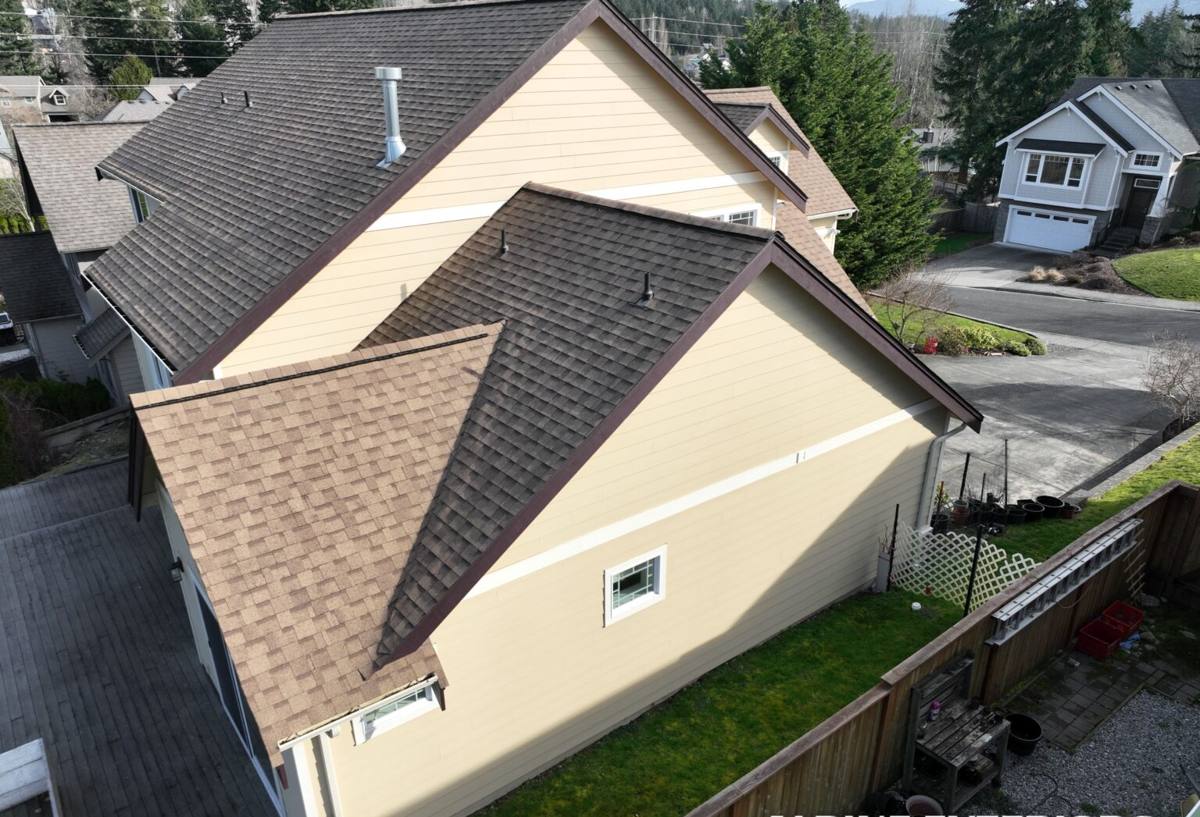
What a Correctly Built Deck Looks Like Here
Given all of that, a deck built for Temple Terrace needs a few things a generic build in a milder climate might skip.
Structural Fasteners and Hardware
We use stainless steel or hot-dip galvanized fasteners and connectors rated for coastal-adjacent, high-moisture environments — not standard zinc-coated hardware that starts corroding once it's exposed to humidity and occasional salt air. This is one of the most common shortcuts we see in older or lower-bid decks in this area, and it's usually the first thing to fail.
Ledger Board Flashing
The ledger board — where the deck attaches to the house — is the single most common failure point on decks anywhere, and wind-driven rain makes it worse here. Proper flashing, correctly lapped with the house's existing water management (siding, house wrap, etc.), keeps water from working its way behind the ledger and rotting the rim joist or sheathing behind it.
Post Bases and Footings
Florida's sandy and often high-water-table soil means post footings need to be sized and set correctly, with post bases that hold the post above grade so it isn't sitting in standing water after a storm. This also matters for wind uplift resistance during hurricane-force gusts — proper post-to-footing and post-to-beam connections are what keep a deck from racking or lifting in a bad storm.
Decking Material Choice
Wood, composite, and PVC all perform differently under intense UV and constant humidity. None of them is universally "right" — it depends on your maintenance appetite, budget, and how much direct sun the deck gets.
| Material | UV/Fade Behavior | Moisture Behavior | Maintenance |
|---|---|---|---|
| Pressure-treated wood | Fades gray without sealing; needs re-sealing to hold color | Resists rot when properly treated and sealed; can cup if sealing lapses | Annual cleaning and re-sealing recommended |
| Composite decking | Fade-resistant but varies by product line and pigment quality | Won't rot, but lower-quality composites can absorb moisture at cut ends if not capped | Periodic cleaning; no sealing/staining needed |
| PVC decking | Strong UV and fade resistance | Fully moisture-resistant, doesn't absorb water | Lowest maintenance; higher upfront cost |
| Tropical hardwoods | Naturally UV-resistant but grays without oiling | Naturally rot- and insect-resistant | Requires regular oiling to maintain color and surface |
We'll walk through these trade-offs honestly based on how you plan to use the deck — a shaded deck under mature trees has very different needs than one that sits in full sun most of the day.
Design Considerations Specific to This Area
Shade and Orientation
Given the intensity of Tampa-area sun, we talk through orientation and shade options early — pergolas, partial roof coverage, or simply positioning the deck to take advantage of existing shade from the house or trees. A deck that's unusable at 3pm in July because there's no shade isn't getting the use it should.
Drainage Away From the House
With how much rain this region gets in a short amount of time, deck framing and any attached grading needs to move water away from the foundation, not toward it. This gets checked as part of our site assessment, not treated as an afterthought.
Railing and Code Compliance
Hillsborough County has specific permitting and code requirements for deck height, railing, stair geometry, and structural spans. Building to code isn't optional, and it's also what keeps your homeowner's insurance and any future home sale from becoming a headache. We handle permitting as part of the project so you're not tracking down inspections yourself.
How Our Process Works
- On-site assessment — we look at your yard's grade, sun exposure, existing structure, and how the deck will attach to the house.
- Design and material conversation — we go over layout options and material trade-offs specific to your budget and how you'll use the space.
- Permitting — we pull the required Hillsborough County permits and schedule inspections as part of the job.
- Framing and structural work — footings, posts, beams, joists, and ledger flashing, all built to the fastener and hardware standards described above.
- Decking, railing, and finishing — surface material installed, railings set, stairs finished.
- Final walkthrough — we go over the finished deck with you, including any maintenance recommendations specific to the material you chose.
Maintenance Checklist for Temple Terrace Decks
Whatever material you choose, a little seasonal attention goes a long way in this climate.
- Rinse off pollen, salt residue, and debris every few weeks, more often near flowering trees or close to the bay
- Inspect fasteners and hardware annually for early rust or corrosion, especially at the ledger board and post bases
- Check for soft or cupped boards after the wet season, particularly on wood decking
- Re-seal or re-stain wood decking on the schedule recommended for the product — usually every 1-2 years in this sun
- Clear leaves and debris from between boards and around post bases so water doesn't pool
- After any major storm, walk the deck and check railings, stairs, and ledger attachment for movement
Why Hire a Crew That Already Works in Temple Terrace
A contractor who mostly builds decks in drier, inland climates will often default to standard hardware, standard flashing details, and standard material recommendations that aren't wrong everywhere — just wrong here. We work throughout Tampa and Hillsborough County regularly enough to know which corners get cut on lower-bid jobs and why they fail early in this specific environment: the corrosion, the wind-driven rain intrusion at ledger boards, the UV fade on the wrong composite line. That local pattern recognition is worth more than it sounds like on paper, because it shows up years later as the difference between a deck that needs a board replaced and one that needs to be rebuilt.
We're also familiar with Hillsborough County's permitting process, which keeps your project moving instead of stalling on paperwork or a missed inspection.
If you're planning a custom deck in Temple Terrace, we're happy to walk your property, talk through material options honestly, and put together a plan that's built for how this climate actually behaves. Reach out for a free, no-pressure estimate using the form below.