 Tampa Roofing
 Deck Building in Westchase: What Local Homes Actually Need
Westchase homeowners ask for decks for the same reasons everyone in Tampa does — more usable outdoor living space, a place to put a grill or a fire pit, a transition between the house and the yard. But a deck built for Westchase has to survive conditions that a lot of national deck-building guides never mention: sustained summer humidity, intense UV exposure nearly every day of the year, torrential wind-driven rain during the June-through-November storm season, and the periodic threat of hurricane-force wind loads. A deck that looks fine on install day but wasn't engineered for those realities will start showing problems — cupping boards, rusted fasteners, soft framing — within a few seasons, not decades.
We build decks in Westchase and the surrounding Tampa area as a dedicated service, not a side job we tack onto roofing work. That matters because deck failures are rarely dramatic — they're slow. A ledger board that wasn't flashed correctly rots quietly behind the siding. Fasteners that weren't rated for coastal humidity corrode from the inside out. By the time it's visible, the fix is bigger than it needed to be.
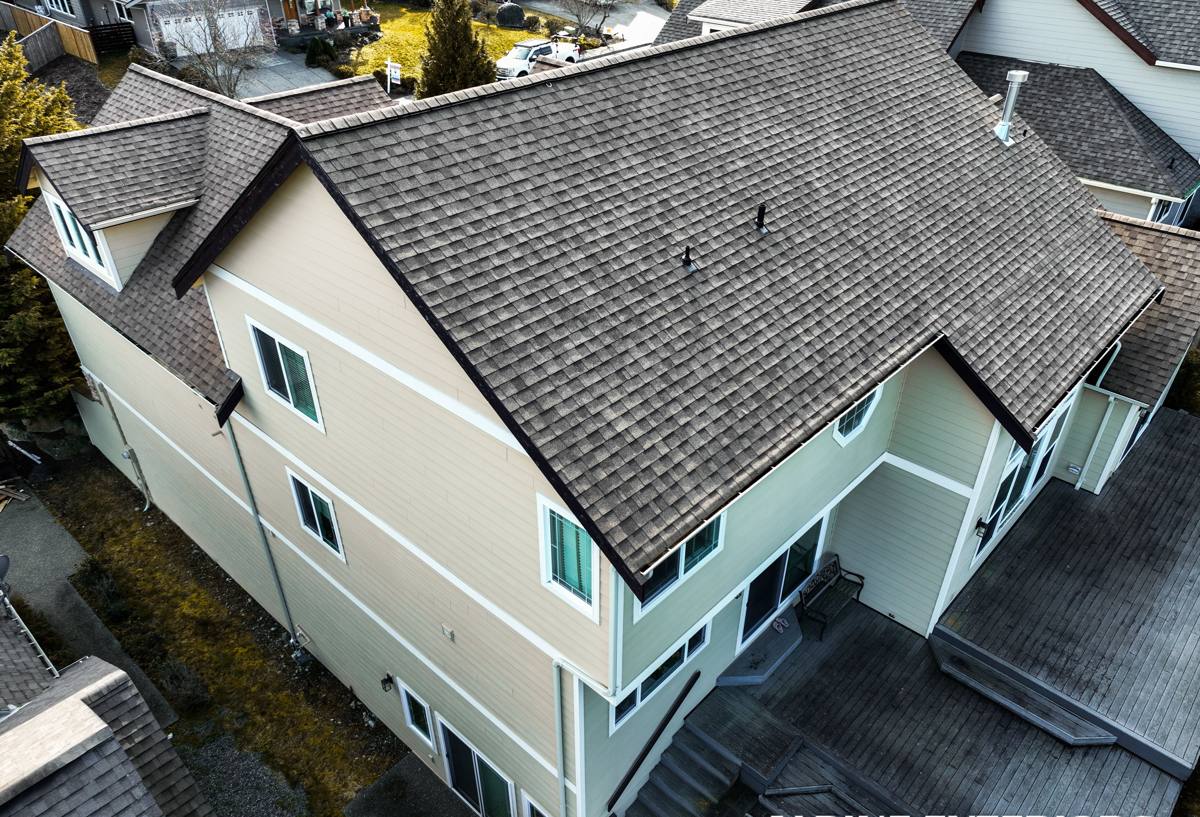
Why Tampa's Climate Changes the Deck-Building Equation
Hillsborough County sits in a climate zone that stresses outdoor structures harder than most of the country. It's worth being specific about what that means for a deck, because it drives almost every material and construction decision below.
- Year-round UV intensity: Untreated or poorly sealed wood grays, splinters, and checks (cracks) faster here than in northern climates because the sun exposure is nearly constant, not seasonal.
- Humidity and wind-driven rain: Moisture gets driven into joints, fastener holes, and end grain during storms, which is exactly where rot and fastener corrosion start.
- Hurricane-force wind loads: Railings, stair stringers, and ledger attachments all need to be engineered and fastened to resist uplift and lateral loads, not just gravity.
- Salt-influenced air: Westchase isn't beachfront, but Tampa Bay's proximity means the air carries more salt content than an inland climate, which accelerates corrosion on standard fasteners and hardware over time.
None of this means a deck in Westchase can't last. It means the build has to account for these forces from the ground up — literally, starting with the footings.
What a Correctly Built Deck Involves
Footings and Framing
Everything above ground is only as good as what's below it. Footings need to be sized and depth-rated for Hillsborough County's soil and frost-line requirements, and the framing lumber needs to be pressure-treated and rated for ground contact where applicable. We use joist hangers, hurricane ties, and structural screws rated for coastal/high-humidity exposure — not the standard galvanized hardware that's fine in drier climates but corrodes faster here.
Ledger Attachment and Flashing
The ledger board — where the deck attaches to the house — is the single most common failure point we see on decks that weren't built correctly the first time. It has to be through-bolted (not just lag-screwed in most applications), properly flashed to shed water away from the house structure, and sealed so wind-driven rain doesn't track behind it. A poorly flashed ledger is a slow leak that can damage the home's structure long before the deck itself shows any problem.
Decking Material Selection
This is where UV and moisture exposure matter most, because it's the surface that takes the most direct sun and rain. We'll walk through the tradeoffs honestly below, but the short version: whatever material you choose, it needs a finish or composition that's rated for sustained high-UV, high-humidity exposure — not just "outdoor use" in a generic sense.
Railings, Stairs, and Fasteners
Code-compliant railing height and baluster spacing, properly anchored stair stringers, and corrosion-resistant fasteners throughout. In a wind event, railings and stairs take real lateral load — they're not just aesthetic.
Decking Material Options for Westchase Conditions
| Material | UV/Sun Performance | Moisture Behavior | Maintenance |
|---|---|---|---|
| Pressure-treated pine | Grays and can check without regular sealing | Absorbs moisture; needs sealing to resist swelling/cupping | Reseal every 1-2 years in this climate |
| Composite decking | Fade-resistant with quality capstock; avoid uncapped composites in high UV | Doesn't absorb water like wood; resists rot | Periodic cleaning; no sealing/staining needed |
| Tropical hardwoods (e.g., ipe-type) | Naturally dense, holds up well to sun if oiled periodically | Naturally rot- and insect-resistant | Occasional oiling to maintain color; low structural maintenance |
| PVC decking | Strong UV stability | Fully moisture-resistant, won't absorb or swell | Low; occasional cleaning |
There's no single "right" material for every homeowner — it's a tradeoff between upfront cost, maintenance tolerance, and how the deck will be used. What we won't do is recommend a low-grade composite or an unsealed softwood without being upfront that it will need more attention in this climate than the marketing suggests. That's a maintenance-burden conversation we have honestly, not a sales pitch.
Hardware and Fasteners: The Detail Most Decks Get Wrong
Standard galvanized deck screws and hangers are built for general-purpose outdoor use, not for the combination of humidity and salt-influenced air that Tampa Bay-area homes see. Over a few years, standard hardware can start to corrode, which weakens joist hangers and fastener holds long before the wood itself fails. For Westchase builds we spec stainless steel or coated fasteners rated for coastal/high-corrosion environments on structural connections — ledger bolts, joist hangers, hurricane ties, and railing posts. It costs more upfront than the hardware-store minimum. It also means the structural connections aren't the thing that fails first.
Fastener and Hardware Checklist
- Ledger board through-bolted and properly flashed, not just lag-screwed
- Joist hangers and hurricane ties rated for coastal/high-humidity exposure
- Stainless or coated structural screws, not standard galvanized, on load-bearing connections
- Railing posts anchored to framing, not just decking surface
- Stair stringers sized and fastened to code for the deck's height and span
- All fastener heads countersunk or capped where exposed to reduce corrosion entry points
Permitting and Code Compliance in Hillsborough County
Most deck construction in Hillsborough County requires a permit, and inspections typically occur at the footing/framing stage and again at final completion. Requirements cover footing depth, railing height, baluster spacing, stair rise/run, and structural attachment methods. Skipping the permit process might save time upfront, but it creates real problems later — unpermitted decks can complicate a home sale, insurance claims, and any future work that touches the structure. We handle the permitting process as part of the build so it's not left for the homeowner to navigate.
Our Process for a Westchase Deck Project
- On-site assessment: We look at the attachment point on the house, the yard's grade and drainage, sun/shade exposure, and how you intend to use the space.
- Design and material selection: We walk through material tradeoffs honestly based on your budget and maintenance preference, not a one-size-fits-all recommendation.
- Permitting: We pull the necessary Hillsborough County permits and schedule inspections at the required stages.
- Footings and framing: Built to code depth and spacing, with corrosion-resistant hardware throughout.
- Ledger flashing and attachment: The step most decks get wrong, done right the first time.
- Decking, railing, and stairs installed: To the material specification and code requirements agreed on upfront.
- Final walkthrough and inspection: We confirm the work with you before calling the job done.
Why a Crew That Already Works Westchase Matters
Westchase's mix of established landscaping, mature trees, and HOA-governed streets means deck projects here often come with practical constraints a contractor unfamiliar with the neighborhood might not anticipate — access for equipment, drainage patterns around existing landscaping, and HOA aesthetic guidelines that can affect material or color choices. A crew that already works in the area knows to check HOA requirements before design, not after a deck is half-built. We also carry direct experience with Hillsborough County's permitting office and inspection expectations, which keeps projects moving instead of stalling on paperwork.
Beyond logistics, familiarity with Tampa's climate patterns — when storm season typically brings the heaviest wind-driven rain, how UV exposure varies by yard orientation — shapes real decisions during the build, like where extra flashing attention matters most or which side of the house sees the harshest sun exposure.
Maintaining Your Deck After It's Built
Even a correctly built deck needs some ongoing attention in this climate. What that looks like depends on the material:
- Wood decking: Inspect and reseal every 1-2 years; check for graying, checking, or soft spots after storm season.
- Composite/PVC decking: Periodic cleaning to prevent mildew buildup in humid months; check railing hardware annually.
- All deck types: Keep gutters and drainage clear near the ledger attachment point, and inspect fastener heads and railing posts once a year for early corrosion signs.
Catching a small issue — a loosening railing post, a spot of surface rot — early is the difference between a minor repair and a section rebuild.
Get an Honest Estimate for Your Westchase Deck
If you're planning a new deck or replacing one that's showing its age, we're happy to take a look and give you a straightforward assessment — what your space allows, what materials make sense for your budget and maintenance preference, and what it'll take to build it right for Tampa's climate. Reach out for a free, no-pressure estimate using the form below.