 Tampa Roofing
 Siding Built for Temple Terrace's Climate, Not Just Its Curb Appeal
Temple Terrace sits inland from the bay but still takes the full brunt of what a Gulf Coast summer and hurricane season throw at a house. Intense, near year-round UV breaks down cheap coatings and lets moisture in behind them. Wind-driven rain during tropical storms and hurricanes finds every gap in a poorly flashed wall system. Even this far from open water, salt air carried on prevailing winds slowly attacks fasteners, trim, and anything not rated to handle it. Siding on a Temple Terrace home isn't decoration — it's the first line of defense between that climate and the framing, insulation, and drywall behind it.
That's why we install James Hardie fiber cement siding exclusively. We don't carry vinyl, LP SmartSide, Cemplank, Allura, primed spruce, or cedar on our trucks, and we won't quote them for your project. This page explains what a correct Hardie installation looks like on a Temple Terrace home, what the local climate demands from the product and the crew, and how our process works from first call to final walk-through.
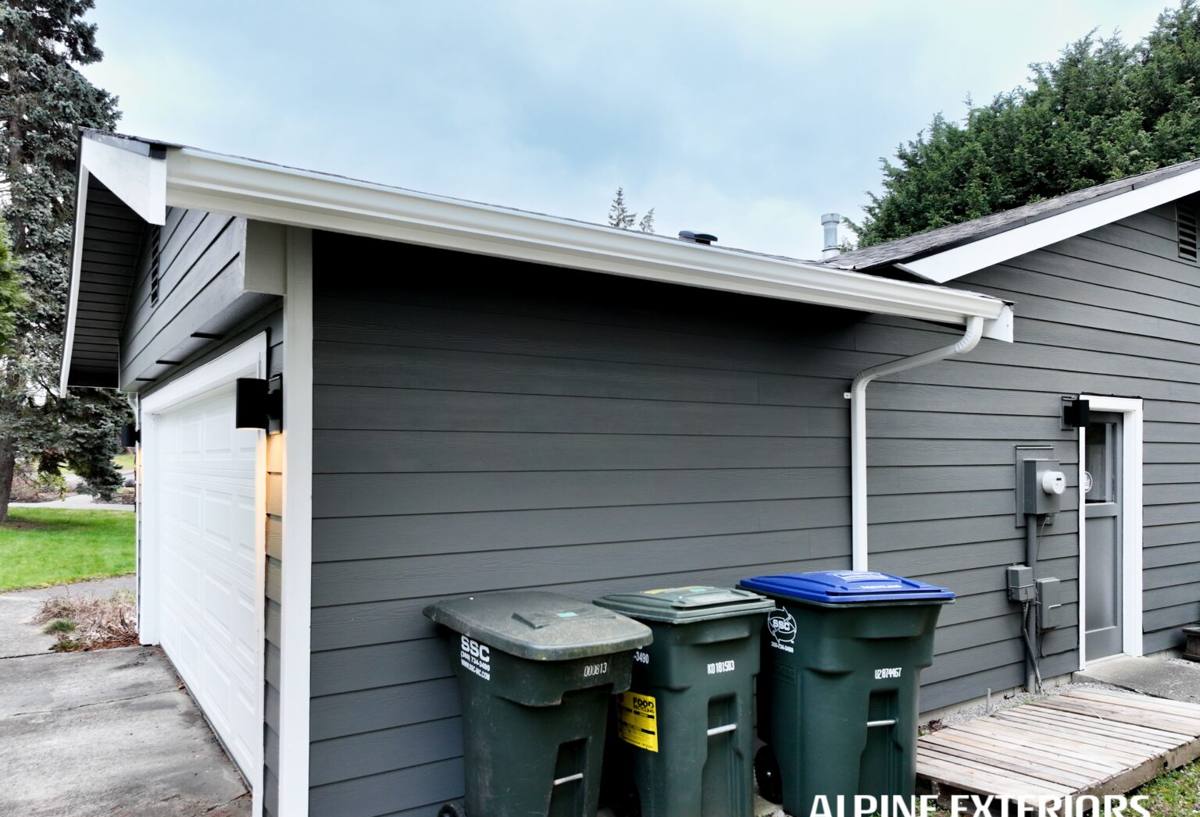
What Hillsborough County Weather Actually Does to Siding
Before talking about the product, it helps to understand the specific stresses a Temple Terrace exterior faces year after year:
- UV degradation: Florida's sun exposure is among the harshest in the continental U.S. Factory-applied finishes hold color and integrity far longer than field-applied paint, which chalks and fades within a few seasons here.
- Wind-driven rain: Hurricanes and the seasonal thunderstorms that roll through Hillsborough County every summer push rain sideways into wall assemblies. Any siding system with weak seams, poor lap coverage, or missing flashing will let water track behind the cladding.
- Humidity and moisture cycling: Tampa's humidity stays high most of the year. Siding materials that absorb and release moisture repeatedly are prone to swelling, cupping, or fastener failure over time.
- Salt-laden air: Temple Terrace is close enough to Tampa Bay that airborne salt reaches fasteners, trim, and any exposed metal, accelerating corrosion on lower-grade hardware.
- Wind uplift: Straight-line winds from thunderstorms and tropical systems put real lateral and uplift load on siding panels, especially at corners and eaves.
Any siding job in this area has to be evaluated against all five of these at once — not just "does it look good going up."
Why We Install Only James Hardie in This Market
James Hardie fiber cement is engineered from cement, sand, and cellulose fiber — it's non-combustible and dimensionally stable in a way that wood-based and PVC-based sidings aren't. For a climate like Tampa's, three things matter most:
ColorPlus Technology
Hardie's ColorPlus finish is baked on at the factory in multiple coats, not brushed or sprayed on site. In a market with this much sun exposure, that's the difference between a paint job that needs touch-ups in five years and a finish that's warrantied against fading and peeling for a much longer stretch. It also means color consistency panel to panel, which field-applied finishes struggle to match.
HZ5 Product Engineering
Hardie engineers its HZ product line specifically for high-humidity, high-moisture climates like ours. It's formulated to resist the swelling, cracking, and moisture intrusion that generic fiber cement or wood-based siding can develop in Gulf Coast conditions. That's not a marketing detail — it's the specific reason the product holds up on a Temple Terrace house the way it doesn't in a dry inland climate.
Fire and Pest Resistance
Fiber cement doesn't feed termites and won't ignite from embers or a neighboring fire the way wood-based sidings can. In a region with a real termite population, that's a practical, ongoing maintenance advantage, not just a spec sheet line.
We've made James Hardie our standard because when it's installed correctly, it holds up to everything on that list above with the least long-term maintenance. That's the whole basis of our business model — one product, installed right, every time.
What "Installed Correctly" Actually Means Here
Fiber cement siding is only as good as the installation behind it. Most of the failures homeowners see with Hardie siding anywhere in Florida trace back to installation shortcuts, not the product itself. On a Temple Terrace home, a correct job includes:
- Proper water-resistive barrier and flashing at every window, door, and penetration — this is what actually stops wind-driven rain from reaching your sheathing, not the siding surface itself.
- Correct fastener spacing and type — corrosion-resistant fasteners driven per Hardie's published fastening schedule, not "close enough."
- Manufacturer-specified clearances from grade, roofing, and decking so the bottom edge of the siding never sits in standing water or constant splash-back.
- Correct joint treatment at butt joints and corners, caulked and sealed to Hardie spec so those seams don't become entry points during a storm.
- Blind-nailing and lap coverage that meets the minimum overlap so wind uplift doesn't work panels loose over time.
- Trim and accessory compatibility — using Hardie trim and accessories designed to move and weather the same way the field panels do, rather than mismatched materials that age differently.
Skip any one of these and you can end up with a house wearing genuinely good siding that still fails early — which is exactly the outcome we're trying to prevent by controlling the whole install ourselves rather than subbing it out piecemeal.
Our Process for a Temple Terrace Siding Project
| Step | What Happens | Why It Matters Locally |
|---|---|---|
| 1. On-site assessment | We inspect existing siding, sheathing, and moisture points, and check for storm or humidity damage already present. | Hidden moisture damage from wind-driven rain is common in Tampa Bay homes and needs to be caught before new siding goes over it. |
| 2. Product and color selection | We walk you through Hardie's plank profiles, textures, and ColorPlus palette suited to Temple Terrace's mix of home styles. | Factory-finish color choices avoid the fade and touch-up cycle that field-painted siding needs in this UV environment. |
| 3. Tear-off and prep | Old siding is removed, sheathing is inspected and repaired as needed, and a compliant water-resistive barrier is installed. | The barrier and flashing work underneath is what actually keeps wind-driven rain out — this step gets as much attention as the visible siding. |
| 4. Installation to spec | Panels, trim, and accessories go up following Hardie's fastening, clearance, and joint-treatment requirements. | This is where wind uplift resistance and long-term moisture performance are actually built in. |
| 5. Final inspection and walk-through | We review the finished job with you, check caulking and trim details, and go over warranty registration. | Gives you a documented record of a correct install for warranty purposes. |
What You Should Have Ready Before We Start
- Any known history of leaks, moisture issues, or prior storm damage on the exterior
- HOA guidelines if your section of Temple Terrace has color or material restrictions
- A general sense of whether you're also planning window, trim, or paint work around the same time, since sequencing matters
Why a Local Crew Matters More Than It Sounds Like It Should
Siding installation isn't uniform across Florida, let alone across the country. A crew that primarily works drier, more temperate markets doesn't build the same habits around flashing details, fastener corrosion resistance, or moisture sequencing that a Tampa-area crew builds by necessity. Working repeatedly in Hillsborough County means:
- We know how local wind exposure and storm patterns affect where extra attention on fastening and flashing actually pays off.
- We're used to sequencing work around Florida's rainy season so open wall sections aren't left exposed longer than necessary.
- We understand how salt air and humidity affect not just the siding but the trim, fasteners, and caulking choices around it.
- We can speak directly to what's realistic for a Temple Terrace home versus a generic national installation guide.
None of that is exotic knowledge, but it's the accumulated difference between a crew that installs siding here regularly and one that doesn't.
Maintenance After Installation
One of the practical advantages of a correctly installed Hardie system in this climate is how little ongoing work it asks for compared to alternatives. That said, a few habits keep it performing as intended:
- Rinse the exterior periodically to clear salt residue and airborne grime, especially on sides facing prevailing wind.
- Inspect caulked joints and trim intersections annually, ideally before hurricane season, and have any cracked or missing caulk addressed.
- Keep irrigation and landscaping from spraying water directly and continuously onto the siding's lower courses.
- After any major storm, do a visual check for cracked panels, loose trim, or displaced fasteners.
This is markedly less than what wood-based or field-painted sidings typically require in this climate, which is part of why we standardized on Hardie in the first place.
Cost Factors for a Temple Terrace Project
Every home is different, but the main variables that move a siding project's cost are consistent:
| Factor | Impact |
|---|---|
| Home size and wall complexity | More linear footage, corners, and architectural detail increase labor time. |
| Extent of tear-off and sheathing repair | Hidden moisture or rot found during removal adds material and labor beyond the base siding scope. |
| Plank profile and texture selection | Different Hardie profiles and textures carry different material costs. |
| Trim and accessory scope | Full trim replacement versus reusing sound existing trim changes total cost. |
| Access and site conditions | Tight lot lines, landscaping, or multi-story sections affect labor and equipment needs. |
We won't quote a number without seeing the house, but we'll walk you through exactly what's driving your estimate line by line so there are no surprises once work starts.
If your Temple Terrace home is due for new siding, or you're not sure whether what's on there now is holding up the way it should, we'll come take a look and give you a straightforward, no-pressure estimate. Use the form below to get started.