 Tampa Roofing
 Custom Decks Built for Town 'n' Country's Climate
Town 'n' Country sits close enough to Tampa Bay that salt-laden air, wind-driven rain, and long stretches of direct sun all factor into how an outdoor deck holds up over time. A deck that would be perfectly fine in a drier, cooler climate can fail here in a few years if the wrong materials or fastening methods are used. We build and repair decks for homes throughout this part of Hillsborough County, and the design choices we make are shaped by what actually survives a Tampa summer and a Tampa hurricane season, not by what looks good in a catalog photo from somewhere up north.
A deck here has to handle intense UV exposure nearly year-round, sudden downpours that soak wood and composite alike, humidity that never fully lets up, and occasional tropical-storm or hurricane-force wind. None of that is exotic — it's just Florida — but it means the "standard" build in a lot of national how-to guides isn't the right build for Town 'n' Country.
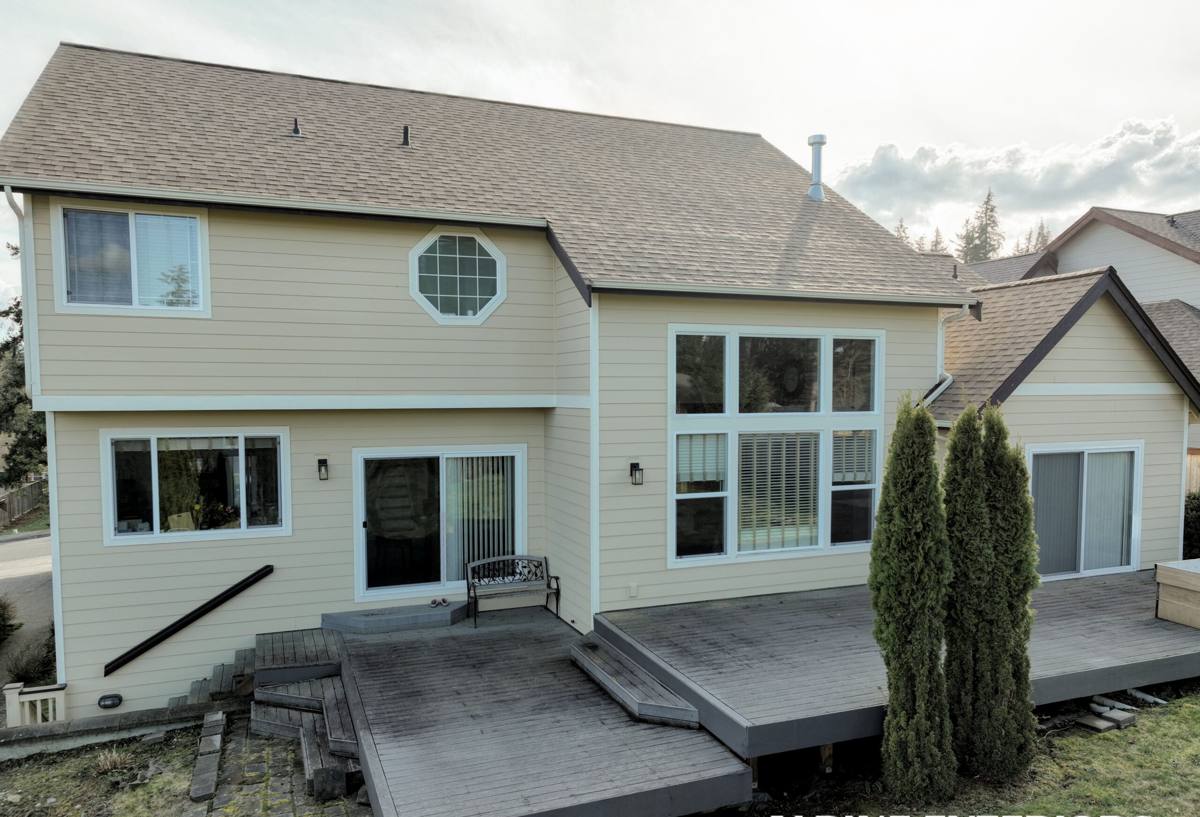
What Local Homes Need From a Deck
Moisture Management First
More decks fail from trapped moisture than from any other single cause. Boards that sit tight against each other, ledger boards without proper flashing, and framing that can't dry out after a storm all lead to rot, fastener corrosion, and warping — usually within a handful of seasons in this humidity. Correct board spacing, ventilated framing, and proper flashing at the house connection matter more here than in most parts of the country.
UV Resistance
South and west-facing decks around Town 'n' Country take a beating from sun exposure for most of the day, most of the year. Untreated or poorly finished wood grays and checks quickly; lower-grade composite boards can fade unevenly or become brittle at the surface. Material choice and finish quality both need to account for this, not just for how the deck looks the first year but how it looks and performs in year five.
Wind and Storm Resistance
Tropical storms and hurricanes bring sustained wind loads and wind-driven rain that push water into places a mild-climate deck was never designed to shed. Railing attachment, post connections, and ledger fastening all need to meet a higher standard here than in a low-wind region, both for code compliance and for genuine safety during a storm.
Salt Air and Corrosion
Being inland of the immediate coastline doesn't fully protect Town 'n' Country homes from salt-laden air moving in off Tampa Bay. Standard steel fasteners and hardware corrode faster here than their ratings suggest. Using stainless or coated hardware rated for coastal exposure is a small cost difference upfront that avoids rust staining, weakened connections, and premature hardware failure down the line.
What a Correct Deck Build Actually Involves
Structural Framing
Everything starts with the framing: proper footing depth and sizing for Hillsborough County soil conditions, joist spacing appropriate to the decking material chosen, and a ledger connection that's properly flashed and lag-bolted (or, when the house structure calls for it, a freestanding design that doesn't rely on the house at all). This is the part of the job that's invisible once the deck is finished, and it's also the part that determines whether the deck lasts fifteen years or fails in five.
Decking Material Selection
We walk homeowners through real trade-offs rather than pushing one product. Pressure-treated pine is the most affordable option and performs well if properly sealed and re-sealed on a maintenance schedule — skip that maintenance in this climate and it will show. Composite decking costs more upfront but needs far less ongoing maintenance; quality varies a lot between composite lines, and cheaper composites can still fade or degrade faster than advertised under constant Florida sun. Tropical hardwoods like ipe are extremely durable and handle moisture well but come at a premium price and need experienced installation, since they're dense enough to split without proper pre-drilling.
Fasteners and Hardware
Hidden fastener systems give a cleaner look and reduce the number of exposed screw heads that can trap water, but they need to be rated for the decking material and installed to the manufacturer's spacing. Every piece of exposed hardware — joist hangers, post bases, railing brackets — should be stainless steel or hot-dip galvanized rated for coastal/high-humidity use, not the standard-grade hardware that's fine in drier climates.
Railing and Guard Systems
Beyond looks, railings are a code and safety item. Post spacing, baluster gaps, and attachment strength all have to meet Florida Building Code requirements, and those connections are exactly where wind uplift shows up first in a storm. We don't treat railing installation as an afterthought to the decking.
Comparing Decking Materials for This Climate
| Material | Upfront Cost | Maintenance | Moisture/UV Performance Here |
|---|---|---|---|
| Pressure-treated pine | Lowest | Re-seal every 1-2 years | Good if maintained; poor if neglected |
| Standard composite | Moderate-high | Low; occasional cleaning | Solid, though quality varies by product line |
| Premium composite/PVC | Highest | Very low | Best fade and moisture resistance |
| Tropical hardwood (ipe, etc.) | High | Periodic oiling for color; structure is very durable | Excellent natural moisture resistance |
There's no single "right" answer for every home — it depends on budget, how much maintenance a homeowner wants to take on, and how much direct sun and rain exposure the specific deck location gets.
Our Process for a Town 'n' Country Deck Project
- On-site assessment: We look at sun exposure, drainage around the home, existing structure (if replacing a deck), and how the space will actually be used.
- Material and design walkthrough: We go over honest cost, maintenance, and durability trade-offs for the decking, framing, and hardware options that make sense for the site.
- Permitting: Hillsborough County and City of Tampa permitting requirements apply to most new deck construction; we handle that paperwork so it's not left to the homeowner.
- Framing and structural work: Footings, posts, beams, and joists are installed to code, with ledger flashing and fastener grade matched to this climate.
- Decking, railing, and finish work: Boards, railings, stairs, and any finish or sealant are installed to manufacturer spec.
- Final walkthrough: We review the completed deck with the homeowner and cover any maintenance steps specific to the material chosen.
Repair, Restoration, or Full Replacement?
Not every deck problem in Town 'n' Country means starting over. We evaluate whether the framing underneath is still sound — that's usually the deciding factor. Surface-level wear on the boards themselves can often be addressed with resurfacing or a partial board replacement if the structure below is solid. But if joists or the ledger connection show rot or corrosion damage, patching the surface just hides a structural problem that will keep getting worse, especially heading into another storm season.
- Soft or spongy spots underfoot usually mean framing rot, not just a surface issue
- Rust streaks around fasteners point to hardware that's failing, even if the wood looks fine
- Gaps or movement at the ledger-to-house connection are a safety issue, not cosmetic
- Faded or graying wood alone is often cosmetic and doesn't necessarily mean structural failure
- Railings that flex or wobble under normal pressure should be inspected before the next storm season, not after
Why a Crew That Already Works Town 'n' Country Matters
A contractor who mainly builds decks in drier, milder climates and occasionally takes a Florida job doesn't have the same instinct for where moisture, salt air, and storm wind actually cause failures here. A crew already working in and around Town 'n' Country knows the permitting process for Hillsborough County and the City of Tampa, has a working sense of how local soil and drainage behave, and has seen firsthand which fastener grades and material choices hold up through an actual hurricane season rather than just a spec sheet. That local track record is worth more than a lower bid from a crew that's never built here before.
Cost Factors to Expect
| Factor | Why It Moves the Price |
|---|---|
| Deck size and shape | Multi-level or non-rectangular designs need more framing and labor |
| Decking material | Pressure-treated, composite, and hardwood span a wide cost range |
| Height and stairs | Elevated decks and stair runs add framing, railings, and code requirements |
| Site access | Difficult access or existing landscaping can add labor time |
| Demolition | Removing an old deck adds cost versus building on a clear site |
| Permitting | County/city permit and inspection fees are part of most new builds |
Broad ranges only make sense once we've seen the site — a small, simple pressure-treated deck and a large multi-level composite deck with stairs and built-in seating are very different projects, and we'll give a real number after the on-site assessment rather than a guess over the phone.
If you're planning a new deck or dealing with an aging one in Town 'n' Country, we're happy to take a look and give you a straightforward, no-pressure estimate. Fill out the form below and we'll get in touch to schedule a time.