 Tampa Roofing
 Siding Installation in Town 'n' Country
Town 'n' Country sits inland from Tampa Bay but still takes the full brunt of a Hillsborough County summer and hurricane season: sustained UV exposure nearly year-round, sudden downpours that drive rain sideways into wall assemblies, and enough salt-laden air moving in off the Gulf and the Bay to accelerate corrosion and finish breakdown on homes that aren't right on the water. Add in the older housing stock common to this part of Tampa — a mix of 1970s-90s construction with original wood siding, aluminum, or early-generation vinyl — and you get a neighborhood where siding failure shows up early and often. We install siding here regularly, and the patterns repeat: cupped and delaminating wood lap, chalky and faded vinyl that's gone brittle, and soffit and trim rot at corners where water has been finding a way in for years.
This page covers what a correct siding installation looks like for a Town 'n' Country home given that climate, what our process involves, and why we install James Hardie fiber cement exclusively rather than the wider range of products other contractors offer.
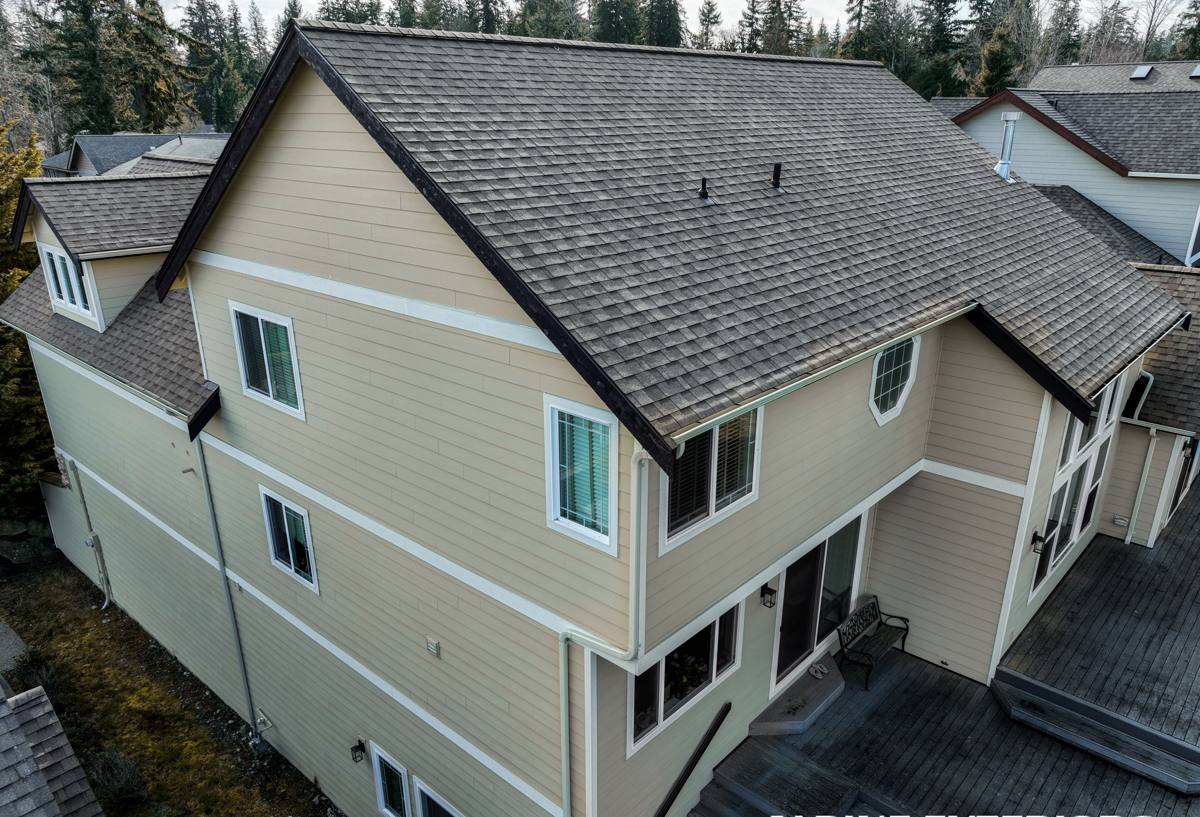
What This Climate Does to Siding
Heat and UV
Florida sun is hard on any exterior material that relies on paint or a factory coating to hold its color. Vinyl siding softens, warps, and can visibly buckle in direct afternoon exposure on west- and south-facing walls — a real issue on Town 'n' Country lots without much mature tree cover. Painted wood and composite products chalk and fade faster here than in almost any other US climate, which means more frequent repainting to keep water out once the finish starts breaking down.
Wind-Driven Rain
Hillsborough County sees intense, fast-moving storms and, periodically, hurricane-force wind events. The danger isn't just the wind itself — it's rain being forced horizontally and even upward under laps, at butt joints, and around penetrations. Siding that isn't installed with correct overlaps, flashing, and fastening will let water behind the cladding, where it soaks sheathing and framing out of sight for months before a soft spot or stain gives it away.
Salt Air and Humidity
Town 'n' Country isn't beachfront, but it's close enough to Tampa Bay that airborne salt still reaches it, and combined with year-round humidity it accelerates corrosion of exposed fasteners and metal trim and keeps moisture sitting against the wall assembly longer after every rain. Materials and fastening hardware that aren't rated for this kind of exposure age faster here than the manufacturer's national averages would suggest.
What Correct Siding Installation Actually Involves
Siding is a system, not a panel. A product can be excellent and still fail on the wall if the installation cuts corners. For a Town 'n' Country home, we treat the following as non-negotiable:
- A continuous, correctly lapped weather-resistive barrier behind the siding — no gaps, no shortcuts at seams
- Proper flashing at every window, door, and penetration so wind-driven rain has nowhere to enter
- Manufacturer-specified nailing patterns and fastener spacing — under-fastening is a common cause of early failure in high-wind areas
- Correct clearance at grade and at the roofline to avoid moisture wicking and rot
- Rain-screen gapping where the product and wall assembly call for it, so incidental moisture can drain and dry
- Sealed, not just butted, joints at trim and corners using products compatible with the siding manufacturer's warranty terms
Skipping any one of these doesn't usually cause immediate visible problems — it causes a problem in three to seven years, which is exactly why so many Town 'n' Country homes we're called to inspect have hidden moisture damage behind siding that still looks fine from the street.
Why We Install Only James Hardie Fiber Cement
We don't offer vinyl, LP SmartSide, Cemplank, Allura, or primed wood siding, and that's a deliberate standard, not a lack of options. Vinyl softens and can distort in sustained Florida heat and offers limited resistance to the wind loads this area sees in storm season. Wood-based and OSB-core composite products depend heavily on an intact factory coating and correct field sealing at every cut edge — miss one spot in a humid climate like this and moisture gets a foothold that's hard to reverse. Other fiber cement brands are reasonable products, but we've standardized our crews, training, and warranty process on one system rather than spreading expertise thin across several.
James Hardie fiber cement is non-combustible, doesn't support rot or termite damage the way wood-based products can, and holds up to UV and moisture cycling better than vinyl in our experience installing it across the Tampa Bay area. Hardie's ColorPlus factory finish is baked on and warranted against fading and peeling, which matters directly here — it's one less thing depending on a future repaint to keep water out. Hardie also produces climate-specific HZ formulations engineered for high-humidity, high-moisture regions like ours, which is not a feature every siding manufacturer offers.
Comparing the Options
| Material | UV/Fade Resistance | Wind/Storm Performance | Moisture Vulnerability | Combustibility |
|---|---|---|---|---|
| Vinyl | Fades, can warp in heat | Limited in high-wind events | Low absorption, but seams can allow water intrusion | Melts/deforms near heat sources |
| Wood/composite (LP, primed spruce, cedar) | Depends fully on paint upkeep | Moderate; fastening quality critical | High if coating or sealing fails | Combustible |
| Other fiber cement (Cemplank, Allura) | Good, coating-dependent | Good when installed to spec | Low | Non-combustible |
| James Hardie fiber cement | Factory ColorPlus finish, warranted | Engineered HZ lines for high-wind/high-moisture regions | Low | Non-combustible |
James Hardie Product Lines We Use in Town 'n' Country
Most homes here get some combination of HardiePlank lap siding for the field of the house, HardieTrim for corners and window/door casing, and HardieSoffit where old wood or aluminum soffit has already shown rot or rust. For homes with architectural gables or accent areas, HardieShingle or HardiePanel can add texture without giving up the durability of the plank product elsewhere on the house. We'll walk through which combination fits your home's design and exposure during the estimate rather than defaulting to one look for every job.
Our Installation Process
- On-site assessment — we inspect the existing siding, sheathing condition, and any visible rot, staining, or prior moisture damage before quoting anything
- Tear-off and substrate check — old siding comes off and we inspect and repair sheathing before anything new goes up; this is where hidden storm or humidity damage gets caught
- Weather barrier and flashing — a correctly lapped barrier and flashing at every opening, sized and detailed for wind-driven rain
- Hardie installation to manufacturer spec — correct fastener type, spacing, and clearances for our climate zone and wind exposure
- Trim, caulking, and finish detailing — sealed transitions at corners, windows, and penetrations
- Final walkthrough — we go over the finished work with you before calling the job done
Why Hire a Crew That Already Works Town 'n' Country
Installation quality is the single biggest variable in how long any siding product lasts, and that's especially true here. A crew that regularly works Hillsborough County knows the wind-load requirements local permitting expects, has already seen how water moves on older Town 'n' Country wall assemblies, and isn't learning Florida's humidity and storm patterns on your house. We're not driving in from another market to hang siding and leave — we're back in this area on a regular basis, which matters if a warranty question or a follow-up detail comes up down the line.
What to Check Before Hiring Any Siding Contractor
- Are they installing to the manufacturer's published specs for wind zone and fastening, not just "however it usually goes"?
- Will they inspect and repair sheathing before installing new siding, not just cover over existing damage?
- Do they carry manufacturer certification or documented experience with the specific product line?
- Is the warranty transferable if you sell the home?
- Will they give you a written scope that specifies flashing, fastening, and clearance details — not just "siding replacement" as a line item?
Cost Factors for Town 'n' Country Homes
| Factor | Why It Matters Here |
|---|---|
| Home size and wall complexity | More corners, gables, and penetrations mean more flashing and trim labor |
| Substrate condition | Rot or moisture damage found at tear-off adds repair scope before new siding goes on |
| Product line selection | Plank, shingle, and panel Hardie products carry different material and labor costs |
| Trim and soffit scope | Older Town 'n' Country homes often need soffit or fascia addressed alongside the siding |
| Access and site conditions | Lot size, landscaping, and structure height affect labor time |
We give firm, itemized numbers after seeing the specific house — broad estimates without an on-site look tend to be wrong in one direction or the other.
If your Town 'n' Country home has siding that's fading, cupping, or showing soft spots after this summer's storms, we're happy to take a look and give you a straightforward, no-pressure estimate using the form below.