 Tampa Roofing
 Siding Built for Ybor City's Conditions
Ybor City sits close enough to Tampa Bay and the port that salt-laden air is a daily fact of life, on top of everything else Hillsborough County throws at exterior building materials: long stretches of intense UV, humidity that rarely lets up, wind-driven summer downpours, and the real possibility of hurricane-force wind during storm season. Add in a neighborhood built up with a mix of older bungalows, shotgun-style houses, and infill construction sitting close together on narrow lots, and you get a housing stock where siding has to do more work than it would in a drier, cooler climate. Replacement siding here isn't just a cosmetic upgrade — it's a decision about what's going to stand between your walls and Florida weather for the next several decades.
When we replace siding in Ybor City, we're thinking about all of that at once: how the product handles moisture cycling, how it holds color and finish under UV, how it resists wind-driven rain intrusion at seams and penetrations, and how it performs in wind events without becoming debris. That combination of demands is exactly why we install James Hardie fiber cement exclusively and don't offer vinyl, LP SmartSide, or other engineered wood products.
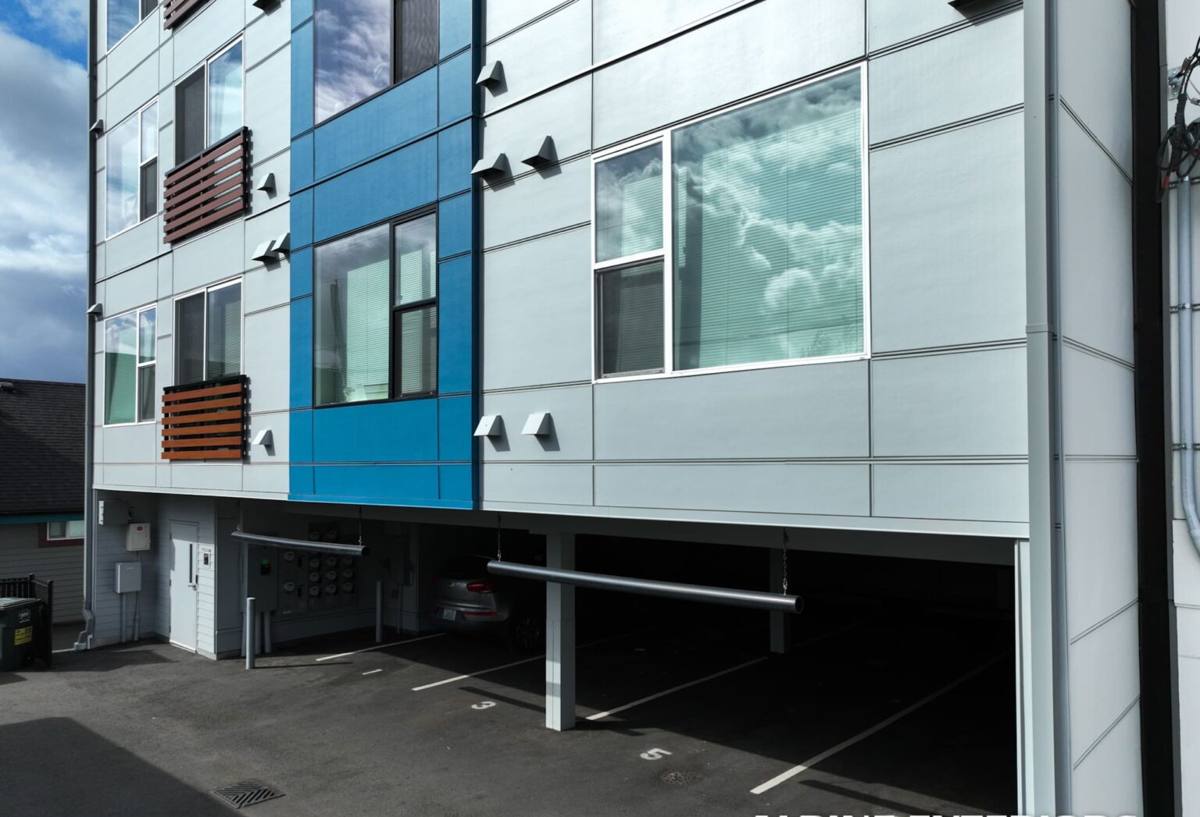
What Ybor City Homes Actually Need From Their Siding
Moisture and Humidity
Tampa Bay humidity means siding is under near-constant moisture pressure — not just from rain, but from ambient humidity that keeps wall assemblies damp longer than they would be in a drier region. Any siding product that can absorb water at cut edges, panel joints, or fastener penetrations is at a disadvantage here, because it never gets a long dry season to fully recover. Materials with wood content are the most exposed to this cycle; that's part of why we won't install engineered wood siding regardless of the manufacturer.
UV and Sun Exposure
Florida sun is harder on painted and coated surfaces than most of the country experiences. Paint film breaks down faster, colors fade unevenly (especially on south- and west-facing walls), and caulk joints dry out and crack sooner. A factory-applied finish engineered for UV resistance holds its color and its seal far longer than field-applied paint on job-site-primed material.
Salt Air
Ybor City isn't beachfront, but it's close enough to the bay that salt-bearing air is a real factor, not a theoretical one. Salt exposure accelerates corrosion of exposed fasteners and trim, and it speeds up the breakdown of finishes that aren't formulated to resist it. Siding, trim, and fastener choices all need to account for this.
Wind and Storm Exposure
Hurricane season puts every exterior product on the house through a stress test. Wind-driven rain finds any gap in flashing or overlap; sustained wind loads test how well panels are fastened and how the product performs when struck by wind-borne debris. Siding that's brittle, that delaminates when wet, or that's only rated for moderate wind exposure is a liability during the exact months it matters most.
Why We Install James Hardie Only
We get asked regularly why we don't offer vinyl or one of the engineered wood siding lines — both are common, and both have a place in some markets. In Hillsborough County's climate, they carry trade-offs we're not willing to put our name behind:
- Vinyl can warp, sag, or crack under sustained heat and UV, and it has real limits in high-wind installations unless heavily reinforced — a real concern given storm exposure here.
- Engineered wood siding uses wood-strand or wood-fiber substrates that are vulnerable to swelling and edge deterioration if moisture gets past the finish, which is a harder standard to hold up to in a humid, storm-prone climate.
- James Hardie fiber cement is non-combustible, dimensionally stable in humidity swings, and engineered with an HZ5 product line specifically formulated for high-humidity, hurricane-exposed climates like ours.
Hardie's ColorPlus factory finish is baked on and warrantied against fading and peeling — a real advantage over field-applied paint in a climate that's brutal on coatings. It's not a miracle product and it still needs to be installed correctly, but it starts from a materials position built for exactly the stresses Tampa Bay siding has to survive.
Siding Options Compared for This Climate
| Factor | Vinyl | Engineered Wood | James Hardie Fiber Cement (HZ5) |
|---|---|---|---|
| Moisture/humidity resistance | Doesn't absorb water, but seams and gaps widen with heat cycling | Vulnerable if finish is compromised | Non-combustible, engineered for humid climates |
| UV/color retention | Fades and can become brittle over time | Field-applied finishes fade and chalk | Factory ColorPlus finish, warrantied against fading |
| Wind performance | Limited without reinforcement | Panel-dependent, moderate | Rated for high-wind, hurricane-exposed installation |
| Salt air durability | Generally stable but can chalk | Finish degrades faster near salt exposure | Stable; finish holds up well near coastal air |
| Maintenance | Low, but limited repair options | Regular inspection/caulking needed | Low; occasional caulk/paint touch-up at trim only |
What a Correct Siding Replacement Involves
Replacing siding correctly is not a matter of pulling off the old material and nailing up new panels. In a climate like ours, the work under the siding matters as much as the siding itself:
- Tear-off and inspection. Once old siding is removed, we inspect sheathing for water damage, rot, or prior moisture intrusion — common on older Ybor City housing stock where past repairs or aging materials may have let water in unnoticed.
- Sheathing repair. Any compromised sheathing gets replaced before anything new goes up. Installing new siding over damaged substrate just hides a problem, it doesn't solve it.
- Weather-resistive barrier. A correctly lapped and sealed water-resistive barrier goes down first, which is the actual moisture defense layer — the siding sheds bulk water, but the barrier is what keeps wind-driven rain from reaching the wall assembly.
- Flashing at penetrations. Windows, doors, vents, and any wall penetration get properly flashed and integrated with the barrier. This is where most real-world leaks originate, not through the field of the siding itself.
- Correct fastening and clearances. Hardie panels have specific fastener patterns, spacing, and minimum clearances (from grade, roofing, and other transitions) that are engineered into the manufacturer's installation specs. Skipping these is the single most common way fiber cement siding underperforms.
- Caulking and finish work. Joints, trim, and penetrations get sealed with a caulk rated for exterior movement and UV exposure, and any field-cut edges get sealed per manufacturer spec to protect against moisture wicking.
Every one of these steps is where installation quality determines whether the siding performs for thirty-plus years or needs early repair. The product only performs as well as the installation behind it.
Our Process for Ybor City Projects
We approach every siding replacement in this neighborhood the same structured way:
- On-site inspection of existing siding, trim, and sheathing condition, with photos of any problem areas we find.
- A written scope and estimate that specifies the Hardie product line, profile, and color — no vague "siding replacement" line item.
- Confirmation of local permitting requirements before work starts.
- Tear-off, sheathing repair as needed, barrier and flashing installation, then Hardie panel installation to manufacturer spec.
- A final walkthrough where we review the completed work with you before calling the job done.
We don't skip steps to move faster, and we don't substitute materials mid-job. What's in the estimate is what goes on the house.
Why It Matters to Hire a Crew That Works This Area
Ybor City has its own mix of housing ages, lot layouts, and construction styles compared to newer Tampa subdivisions — older homes with settled framing, tighter lot spacing that affects access and staging, and in some cases historic district considerations that can affect exterior work. A crew that regularly works this part of Hillsborough County knows what to expect before the tear-off even starts: how older sheathing tends to look underneath existing siding, what permitting looks like locally, and how to stage a job on a tighter lot without disrupting neighbors. That familiarity translates into fewer surprises mid-project and a more accurate estimate up front.
Signs Your Siding Needs Replacing, Not Patching
- Soft or spongy spots when you press on the siding, which usually indicates moisture has reached the substrate.
- Visible warping, buckling, or panels pulling away from the wall.
- Persistent paint failure or bubbling that keeps returning after repainting.
- Cracked or missing caulk at multiple joints and penetrations across the exterior.
- Visible mold, staining, or a musty smell along interior walls that share an exterior wall with damaged siding.
- Siding that's original to a much older home and has never been replaced.
If you're only seeing one or two isolated issues, a repair may make sense. Widespread signs like these usually mean the underlying moisture barrier has been compromised in more than one place, and a full replacement is the more honest recommendation.
What Affects the Cost of a Siding Replacement
| Cost Factor | Why It Matters |
|---|---|
| Home size and wall area | More square footage of siding and trim means more material and labor. |
| Sheathing condition | Rot or water damage found during tear-off adds repair scope before new siding goes on. |
| Siding profile and product line | Hardie offers multiple plank widths, textures, and the HZ5 line built for our climate zone — choices affect material cost. |
| Trim and detail work | Older homes with more architectural trim and detailing take more time to finish correctly. |
| Site access | Tighter lots and close-set neighboring houses, common in this neighborhood, can affect staging and labor time. |
| Color | Factory ColorPlus finishes come in a standard range; custom colors can affect lead time and cost. |
We'd rather walk your specific house and give you real numbers than quote a broad range that doesn't mean much until we've seen the property.
Get an Honest Look at Your Siding
If your Ybor City home's siding is showing its age, or you're just starting to plan ahead of the next storm season, we're glad to come take a look and tell you honestly what we see — no pressure, no obligation. Reach out for a free estimate using the form below.