 Tampa Roofing
 Deck Replacement Built for Clearwater's Coastal Conditions
A deck in the Clearwater area doesn't age the way a deck does in most of the country. Between the intense, near-constant Florida sun, salt-laden air blowing in off the Gulf, and the wind-driven rain that comes with our summer storm pattern, an outdoor structure here is under load almost every day of the year. Replacing a deck in this part of the Tampa Bay region isn't just a cosmetic upgrade — it's an opportunity to correct the weaknesses that got the old one into trouble in the first place.
We build and replace decks for homeowners throughout the Clearwater area, and the patterns repeat themselves: rot at the ledger board where it meets the house, corroded fasteners that have stained the wood around them, boards that have cupped or split from UV exposure, and railing posts that have gone soft at the base. None of that is bad luck. It's what happens when a deck built for a different climate meets ours.
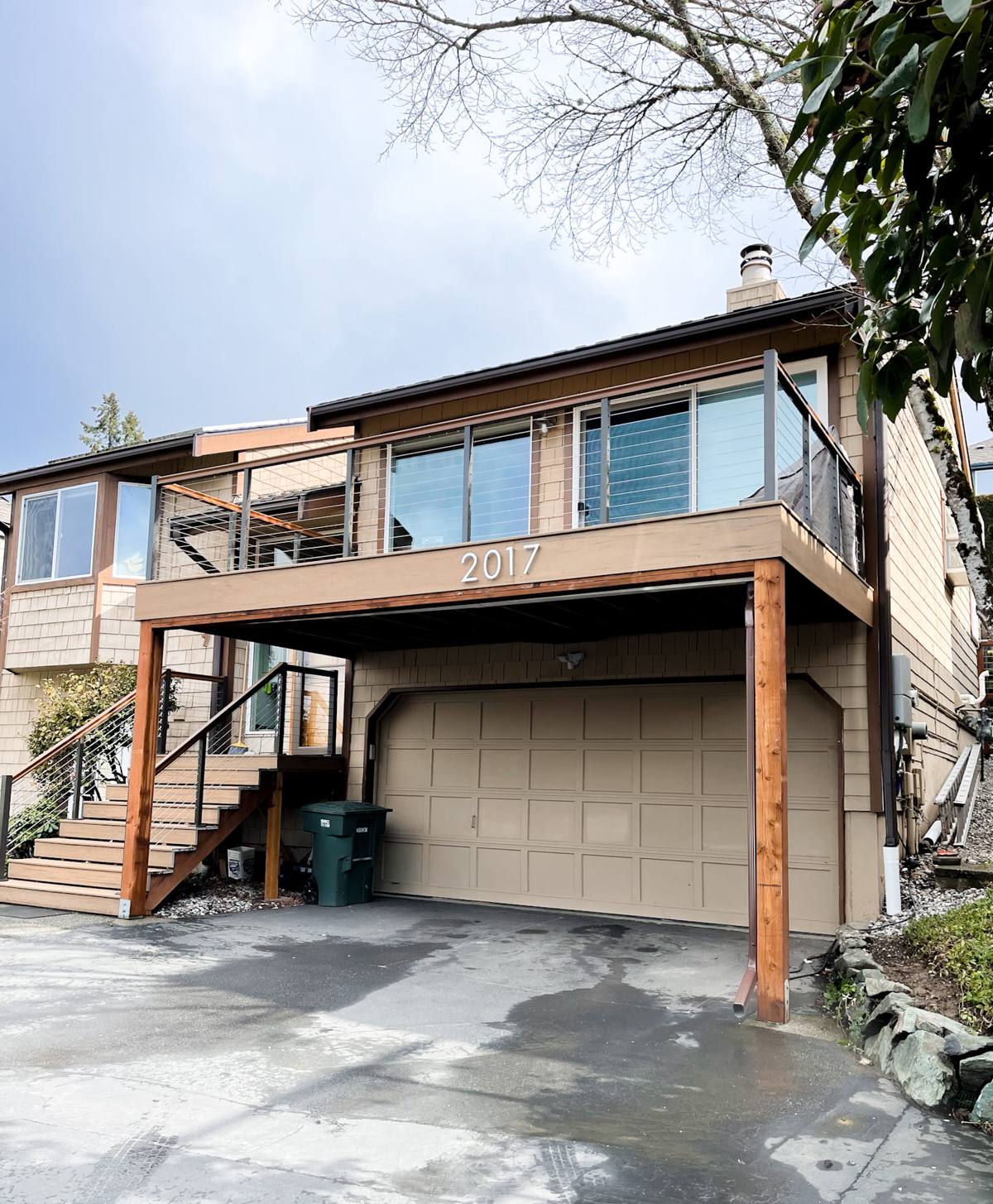
What Clearwater's Climate Actually Does to a Deck
Sun and UV
Florida sun is more intense and more consistent than what building codes and product warranties were originally written around in cooler parts of the country. Wood decking loses its natural oils, grays, and develops surface checking (small splits along the grain) faster here. Composite decking with lower-grade or older-generation capping can fade or chalk over time under this level of UV exposure.
Wind-Driven Rain and Humidity
It's not just that it rains — it's that storms here often drive rain sideways into structures, and humidity keeps wood assemblies damp longer between storms than they'd stay in a drier climate. Any spot where water can collect or get trapped against wood — under flashing that's failed, behind a ledger board, inside a post base — becomes a rot starting point.
Salt Air
Clearwater's proximity to the Gulf means salt is present in the air even well away from the immediate waterfront, and it accelerates corrosion on anything metal: nails, screws, joist hangers, bolts, and railing hardware. A fastener that would last decades inland can fail in a fraction of that time here if it isn't rated for coastal exposure.
Hurricane-Force Wind
Decks and their railings have to resist real lateral and uplift forces during tropical storms and hurricanes, not just support foot traffic. Loose railing posts, undersized structural connectors, or a ledger board that isn't properly through-bolted are the kind of things that turn a strong storm into a safety hazard.
Signs Your Clearwater Deck Needs Replacement, Not Repair
- Soft, spongy, or visibly rotted boards, especially near the house or around post bases
- Rust streaks bleeding out from nail or screw heads
- A ledger board that's pulling away from the house or shows water staining behind it
- Railing posts that wobble or flex noticeably when pushed
- Widespread cupping, splitting, or splintering across the deck surface
- Visible gaps opening up between boards or at structural joints
- A deck that was never permitted or doesn't meet current wind-load requirements
- Structural framing (joists, beams) that's been repeatedly patched rather than replaced
If the problem is isolated to a handful of boards and the framing underneath is sound, a repair can make sense. But once rot or corrosion has reached the structural connections — the ledger, the posts, the joist hangers — patching individual boards is treating the symptom while the real problem keeps spreading underneath.
Getting the Structure Right: What a Correct Job Involves
Ledger Board Attachment and Flashing
The ledger board — where the deck attaches to the house — is the single most common failure point we see, and it's also the connection carrying the most structural load. It needs to be properly through-bolted (not just nailed), flashed to shed water away from the house framing, and separated from direct wood-to-wood water contact. Skipping or rushing this step is how decks fail quietly, from the inside, long before it's visible from the top.
Footings and Post Bases
Footings need to be sized and set to local frost and load requirements — which in this climate is less about frost and more about consistent bearing and resistance to movement in our sandy and often saturated soils. Post bases should hold posts up off the concrete and off standing water, not bury the end grain where it will wick moisture indefinitely.
Structural Connectors and Fasteners
Every joist hanger, hurricane tie, and structural screw should be rated for coastal or exterior exposure — typically stainless steel or a heavy-duty coated fastener designed for treated lumber and salt-air environments. This is one of the cheapest parts of the project relative to the whole, and one of the most consequential to get right, since it's largely hidden once the decking goes down.
Decking and Railing Attachment
Boards need consistent gapping for drainage and material movement, secure fastening that won't back out or corrode prematurely, and railing systems that are anchored into structural framing — not just screwed into fascia board. Railing height and baluster spacing also need to meet current Florida Building Code requirements, which is easy to get wrong on an older deck that predates current standards.
Comparing Decking Materials for This Climate
| Material | UV / Fade Resistance | Moisture & Rot Resistance | Maintenance | Typical Lifespan Here |
|---|---|---|---|---|
| Pressure-treated pine | Fades and grays without regular sealing | Good if sealed and maintained; vulnerable if not | Annual cleaning and re-sealing recommended | 10–15 years with upkeep |
| Composite (capped) | Strong; capped composites resist fading well | Excellent — doesn't rot or absorb water like wood | Occasional washing, no sealing needed | 20–30 years |
| PVC decking | Excellent | Excellent — fully moisture-resistant | Low; occasional washing | 25+ years |
| Tropical hardwood (e.g., ipe) | Fades to gray without oiling | Naturally dense and rot-resistant | Periodic oiling to maintain color | 20–25 years |
There's no universally "correct" material — it's a trade-off between upfront cost, maintenance appetite, and how the deck will be used. Where we're firm is on the framing and fasteners underneath: regardless of which decking surface a homeowner chooses, the structure supporting it needs to be built to the same coastal-durability standard.
Cost Factors Homeowners Should Understand
Every deck replacement quote is different, but the same handful of factors drive most of the variation:
| Factor | Why It Matters |
|---|---|
| Decking material chosen | Composite and PVC cost more upfront than treated wood but reduce long-term maintenance |
| Size and layout complexity | Multi-level decks, curves, and built-in features add labor and material |
| Condition of existing footings/framing | Reusable structural elements (if sound and code-compliant) can reduce cost; full rebuilds cost more |
| Railing style | Cable, glass, and custom railing systems cost more than standard baluster railing |
| Permit and inspection requirements | Required on essentially all deck replacements and factored into project timeline and cost |
| Site access | Second-story decks or tight side-yard access can add labor time |
We walk every homeowner through these factors during the estimate so the quote reflects the actual job, not a generic per-square-foot number that doesn't account for what's actually under the old deck.
Our Replacement Process
- On-site assessment. We inspect the existing deck, ledger connection, footings, and framing to determine what's salvageable and what needs full replacement.
- Permitting. We handle the permit application and coordinate required inspections, so the finished deck is documented and code-compliant.
- Demolition. Full removal of the old decking, railing, and any compromised framing, with debris hauled off site.
- Structural rebuild. New or reinforced footings, framing, ledger attachment, and flashing, using coastal-rated fasteners and connectors throughout.
- Decking and railing installation. Installed to the manufacturer's spacing and fastening specifications and current code requirements for railing height and baluster spacing.
- Final inspection and walkthrough. We confirm the deck passes required inspections and walk the homeowner through the finished project and any material-specific care.
Why a Crew That Already Works in Clearwater Makes a Difference
A deck built to a generic national standard isn't necessarily built for the Tampa Bay area. A crew that regularly works in and around Clearwater already understands the local permitting process, knows what inspectors are checking for on structural connections and railing code compliance, and builds fastener and flashing choices around this specific combination of sun, salt air, and storm wind as a default — not an upsell. That local familiarity shortens the permitting timeline, avoids the rework that comes from using materials or methods that don't hold up in this environment, and means the crew has already seen how deck failures actually happen here, not just in a manual.
Timing also matters in this climate. Scheduling major structural work around hurricane season, and understanding how quickly Florida heat and humidity affect curing times for concrete footings and adhesives, is the kind of thing that only comes from doing this work locally and repeatedly.
Maintaining Your New Deck in a Tampa Bay Climate
- Rinse the deck surface periodically to remove salt residue, pollen, and organic buildup
- Inspect railing posts and connections for looseness at least once a year, especially before storm season
- Check for standing water after heavy rain and confirm drainage gaps between boards aren't clogged with debris
- For wood decking, plan on resealing on the schedule recommended for the specific product — typically every 1–2 years in this climate
- Watch for rust staining around fasteners, which can signal a hardware issue worth addressing early
- Keep plantings and irrigation heads from spraying directly onto framing or post bases
None of this is complicated, but it's the difference between a deck that reaches the upper end of its expected lifespan and one that starts showing the same problems the old deck had within a few years.
Get a Free Estimate
If your deck in the Clearwater area is showing rot, corrosion, or wobble — or it's simply old enough that you're wondering whether it's still safe — we're happy to take a look and give you an honest read on repair versus replacement. Fill out the form below for a free, no-pressure estimate.