 Tampa Roofing
 Clearwater's Coastline Puts Different Demands on a Window Than an Inland Install
A window installed a few miles inland in Hillsborough County and one installed on Clearwater's stretch of the Gulf coast are not facing the same conditions, even though they might be the same product off the same truck. Clearwater sits right on the water in Pinellas County, which means more direct salt air, more sustained onshore wind, and more wind-driven rain hitting the building envelope than homes further inland around Tampa. None of that is a reason to panic about your windows, but it is a reason to think carefully about the product, the installation detail, and the contractor you choose.
Salt Air Works on Hardware, Not Just Glass
Salt-laden air corrodes exposed metal — hinges, locks, cranks, and fasteners — faster than it does in a dry inland climate. A window that looks fine from the street can have hardware that's seized or a frame anchor that's weakened underneath a bead of caulk. This is one reason we pay attention to hardware finish and fastener material on coastal jobs, not just the glass package.
UV and Heat Shorten the Life of Seals
Florida's UV exposure is intense and it's year-round, not seasonal. Vinyl glazing beads, weatherstripping, and exterior sealants all break down under sustained UV and heat cycling faster than manufacturers' national averages would suggest for a milder climate. A window can still look intact while its perimeter seal has already started to fail.
Wind-Driven Rain Finds the Gaps a Normal Rain Never Would
Straight-down rain rarely tests a window's weak points. Wind-driven rain — the kind that comes sideways during a Gulf storm — pushes water into any gap in flashing, sealant, or fastening that a fair-weather install might get away with. This is exactly the failure mode that shows up later as staining under a sill or a soft spot in interior trim.
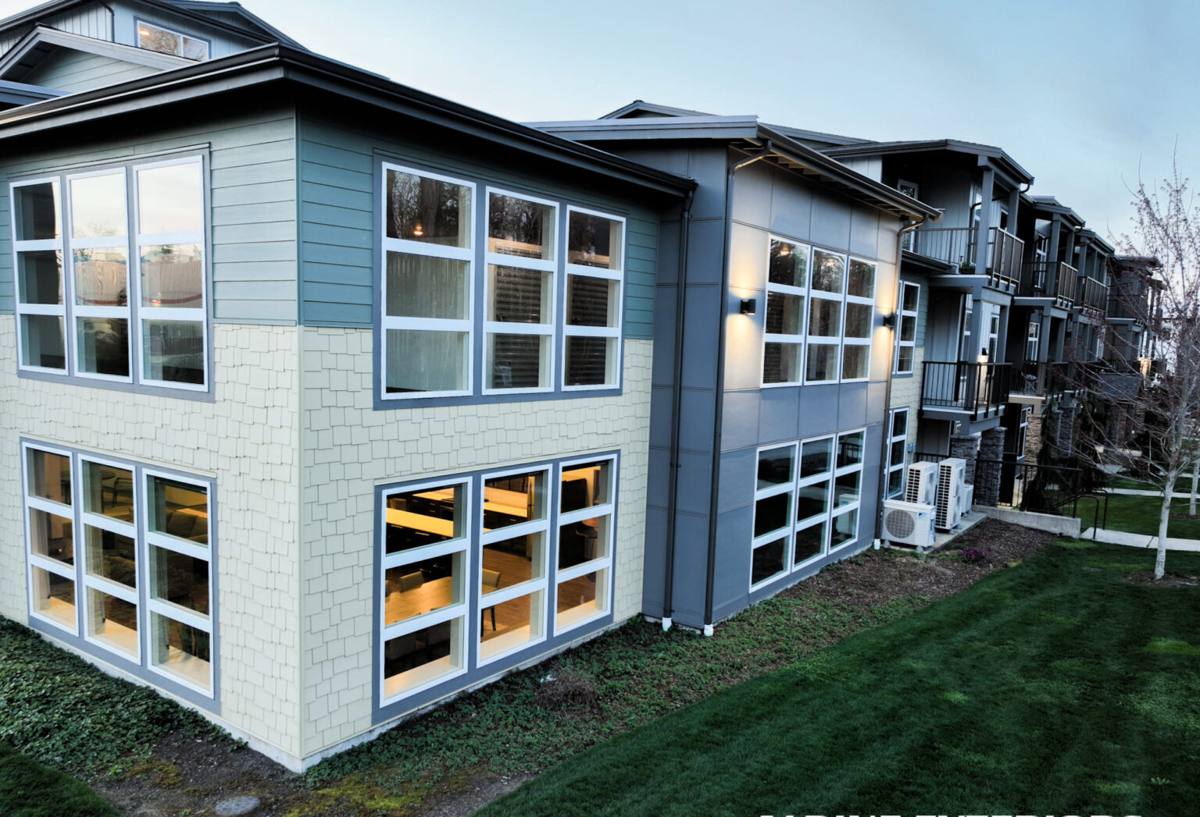
What a Correct Window Installation Actually Involves
The window unit itself is only part of the job. In this climate, the installation detail around the window often determines whether it performs for twenty years or starts leaking in three. A correct install includes:
- Removing the old unit without tearing the opening's structural framing or existing weather barrier more than necessary
- Inspecting the rough opening for rot, prior water intrusion, or out-of-square framing before anything new goes in
- Integrating new flashing with the wall's existing water-resistive barrier, shingle-lapped so water sheds outward, not into the wall cavity
- Setting the unit level, plumb, and square, then shimming correctly so the frame isn't torqued (a torqued frame stresses seals and hardware immediately)
- Fastening to the manufacturer's schedule for the wind zone the home sits in — spacing and fastener type matter, not just "enough screws"
- Sealing and insulating the gap between the frame and rough opening without over-packing it, which can bow the frame
- Finishing interior and exterior trim so the sealant lines are protected and serviceable later
Skipping or rushing any one of these steps is usually invisible on install day and only shows up after the first real storm season.
Impact-Rated Windows vs. Standard Windows With Shutters
For coastal Pinellas County homes, this is usually the first real decision: install impact-rated windows, or install standard windows and rely on separate storm shutters or panels to meet code and protect the opening. Both are legitimate approaches; the right one depends on your home, your budget, and how you want to live day-to-day.
| Factor | Impact-Rated Windows | Standard Windows + Shutters |
|---|---|---|
| Storm prep effort | None — protection is built in | Shutters/panels must be installed before each storm |
| Daily living | No visible change; normal window operation | Normal until shutters go up, then home is boarded |
| Upfront cost | Higher per window | Lower window cost, but shutters add their own cost |
| Maintenance | Laminated glass and heavier hardware to maintain | Shutter tracks/hardware need periodic upkeep too |
| UV and noise | Often noticeably better on both fronts | No change from a standard window's baseline |
| Code compliance path | Meets wind-borne debris requirements directly | Meets requirements when shutters are rated and deployed |
We'll talk through both honestly during an estimate — impact glass isn't automatically "better" for every household, but for a lot of Clearwater homeowners the convenience of not having to shutter up before every storm watch is worth the difference in price.
Permits and Code Requirements Aren't Optional Paperwork
Window replacement in Pinellas County requires a permit, and the products used have to carry current Florida product approval or Miami-Dade Notice of Acceptance documentation appropriate to the wind zone. This isn't bureaucratic box-checking — it's the record that proves the window installed can actually withstand the pressures the building code assumes for that location, and it's the paperwork insurers and future buyers will ask for. A contractor who offers to "skip the permit to save time" is asking you to take on that risk yourself, quietly, with no inspection record to fall back on if something goes wrong later.
Our process always includes pulling the permit under the job, scheduling the required inspection, and handing you the closed-out permit and product documentation when the job is done.
Signs Your Current Windows Are Already Losing the Fight
Coastal wear on windows is gradual, so a lot of homeowners live with early warning signs for years before calling anyone. Worth checking for:
- Fogging or a milky haze between the panes of a double-pane window (seal failure, not cleanable)
- Hardware that's stiff, corroded, or won't fully latch anymore
- Chalky, pitted, or cracked exterior frame material, especially on the sun-facing side of the house
- A noticeable draft at the frame edge when the AC is running
- Staining, softness, or discoloration on the interior sill or wall below the window
- Rattling or whistling around the frame during windy weather
- A jump in cooling costs that isn't explained by anything else in the house
Any one of these on its own might just mean routine maintenance. Several together, especially on windows original to an older home, usually means it's time to talk about replacement rather than another repair.
How We Handle a Clearwater Window Installation
- Assessment and measurement — we look at each opening, the surrounding wall condition, and the home's exposure before recommending anything
- Product selection — matched to the wind zone requirement for that address and to what you actually want day-to-day (impact glass, frame material, glass package)
- Permit pulled — filed under the job before install day, not after
- Removal — old units come out carefully, with the opening inspected for hidden rot or prior water damage
- Prep and flashing — any framing issues get addressed before the new unit ever goes in, and flashing is integrated with the wall, not just caulked over
- Install — set level, plumb, square, and fastened to the required schedule
- Seal and finish — insulated, sealed, and trimmed inside and out
- Inspection and walkthrough — the required inspection is scheduled, and we walk the finished work with you before calling the job done
Frame Material Matters More on the Water Than It Does Inland
Frame material choice has a bigger practical impact in a salt-air environment than it does further inland, because corrosion and UV exposure are more aggressive here. None of the common options are wrong, but each comes with trade-offs worth knowing upfront.
| Frame Material | Salt Air Behavior | Maintenance | General Cost Tier |
|---|---|---|---|
| Vinyl | Does not corrode; can chalk or discolor under long-term intense UV | Low — occasional cleaning | Lower |
| Aluminum | Strong, but reinforced/coated hardware is important near salt air to resist corrosion | Moderate — check fasteners and finish periodically | Mid |
| Fiberglass | Very stable dimensionally and resistant to UV and salt exposure | Low | Higher |
We'll recommend a frame material based on your budget, the style of the home, and how exposed that particular elevation is to prevailing wind and salt spray — a west-facing wall that takes the brunt of afternoon sun and Gulf breeze isn't necessarily treated the same as a sheltered side of the house.
Why Hiring a Crew That Already Works in Clearwater Matters
Window installation done wrong doesn't usually fail on day one — it fails quietly, two or three storm seasons later, when a poorly integrated flashing detail finally lets water in. A crew that works this specific stretch of coastline regularly knows which details actually matter here: the fastening schedule for this wind zone, what Pinellas County's inspectors look for, and how quickly salt air will find any shortcut in the sealing or hardware. That local repetition is what turns "installed a window" into "installed a window that's still tight in ten years."
It also matters for accountability. A contractor based in the Tampa Bay area, with a track record of pulled permits and passed inspections in this county, is a lot easier to hold to a warranty than an outfit that showed up from out of the area for one storm-damage rush and moved on.
Living With New Windows in a Salt-Air Climate
New windows aren't maintenance-free here, even good ones. A simple routine extends the life of any installation:
- Rinse frames and hardware periodically to clear salt residue, especially after windy stretches
- Check and clean weep holes so water can drain out of the frame the way it's designed to
- Inspect exterior sealant lines once a year and have any cracking addressed before rainy season
- Operate locks and cranks regularly so hardware doesn't seize from disuse
None of this is complicated, but it's the difference between a window that ages predictably and one that surprises you with a leak during the next tropical system.
If your windows are original to the house, showing wear, or you're just planning ahead of hurricane season, we're happy to take a look. Estimates are free and there's no pressure to decide on the spot — use the form below to get started.