 Tampa Roofing
 Why Davis Islands Puts Siding to the Test
Davis Islands sits closer to open water than almost any other residential pocket of Tampa, and that proximity changes what "good siding" means. Homes here take on salt-laden air coming off the bay, near-constant summer humidity, and direct UV exposure with very little tree canopy to soften it in newer construction. When a tropical system or hurricane tracks through Hillsborough County, waterfront-adjacent neighborhoods like this one see some of the highest sustained wind loads and wind-driven rain in the metro. That combination — salt, sun, wind, and water — is exactly the environment that separates siding products that hold up for decades from ones that quietly fail from the inside out.
We install James Hardie fiber cement siding exclusively, and we work Davis Islands often enough to know what the neighborhood's mix of historic Mediterranean Revival homes and newer waterfront builds actually needs from an exterior. This page is about that specific pairing: the product, the climate, and the installation standard that makes it hold up.
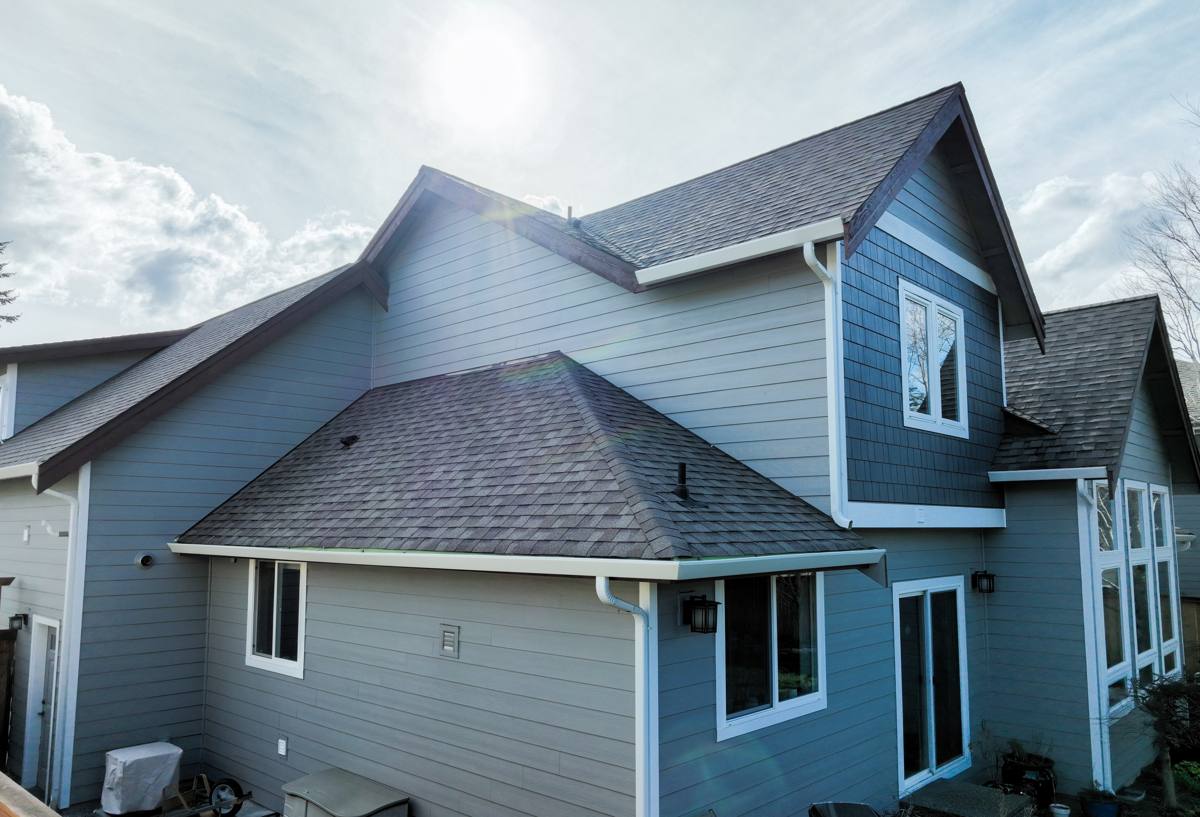
What Salt Air and Wind-Driven Rain Actually Do to Siding
Salt air is corrosive to exposed metal fasteners, trim flashing, and hardware, and it accelerates the breakdown of coatings that aren't formulated to resist it. Wind-driven rain during storms doesn't fall straight down — it gets pushed sideways and upward under laps, around window and door openings, and behind poorly sealed trim. On a barrier-island-style property, that moisture has more opportunities per year to find a way in than it would a few miles inland.
Fiber cement handles this environment fundamentally differently than wood-based or vinyl products. It doesn't absorb moisture the way wood-based composite sidings can, it won't warp or soften in sustained humidity, and it's dimensionally stable enough that expansion and contraction from Tampa's heat swings doesn't work joints and fasteners loose over time. That stability matters more here than in a drier, cooler climate.
UV and Heat Load
Central Florida sun is intense and consistent nearly year-round. Paint-grade sidings and lower-grade finishes chalk, fade, and become brittle faster under that kind of UV load. James Hardie's ColorPlus finish is a factory-applied, baked-on finish engineered specifically to resist fading and hold color integrity longer than field-applied paint, which matters on a home that gets full sun exposure for most of the day.
Why We Standardized on James Hardie
We made a deliberate decision not to install LP SmartSide, vinyl siding, Cemplank, Allura, or primed wood products like spruce or cedar. Each of those has legitimate uses in the right climate and price point, and homeowners considering them should understand what they're trading off — moisture sensitivity, maintenance burden, or warranty structure — rather than being sold on appearance alone.
James Hardie fiber cement is non-combustible, resists moisture intrusion far better than wood-based composites, and is engineered in region-specific formulations for climates exactly like ours. It carries a strong transferable warranty when installed to manufacturer specification, and its ColorPlus technology removes the recurring repaint cycle that other sidings require. For a waterfront Tampa neighborhood, that combination of fire resistance, moisture performance, and finish durability is why it's the only product we put on homes.
The HZ5 Climate Engineering
James Hardie engineers its HZ product lines for specific climate zones, and the HZ5 formulation is built for the Gulf Coast's combination of high humidity, heavy rainfall, and hurricane-force wind exposure. That's a meaningful distinction from a generic fiber cement product — the panel itself is formulated to perform in exactly the conditions Davis Islands sees every hurricane season.
What a Correct Installation Actually Involves
Fiber cement siding is only as good as the installation behind it. A large share of the siding failures we get called out to inspect aren't product failures — they're installation shortcuts that let water behind the cladding. On a home this close to the water, those shortcuts show up faster.
- Proper clearance between the bottom of the siding and grade, decks, and roof lines so water can't wick up into the panel edges
- Correct fastener type, spacing, and penetration depth — over-driven or under-driven nails are one of the most common defects we find on re-inspections
- A weather-resistive barrier installed and lapped correctly behind the siding, not just present
- Properly flashed and sealed penetrations at windows, doors, hose bibs, and vents
- Factory-cut and field-cut edges sealed per manufacturer spec, since raw cut edges are the most moisture-vulnerable part of any fiber cement panel
- Correct joint treatment at butt seams and corners so caulking isn't doing the structural work that flashing should be doing
Every one of those details is more consequential in a high-wind, high-moisture, salt-exposed environment than it would be inland. A minor flashing gap that might take a decade to cause a problem in a drier climate can show up in a fraction of that time here.
Older Homes vs. Newer Waterfront Construction
Davis Islands has a real mix of building stock — older homes with Mediterranean Revival character alongside newer waterfront construction — and each brings different siding considerations.
Character Homes
Older homes on the islands were more commonly built with stucco or other traditional exterior systems rather than lap siding. When siding is being introduced or replaced on a home with historic architectural character, matching trim profiles, reveal spacing, and color to the home's existing lines matters as much as the product performance underneath it. James Hardie's range of panel styles and factory colors gives us room to do that without compromising on the material itself.
Newer Construction
Newer waterfront builds are more likely to already use lap or panel siding, and in many cases these homes are built to more current wind-load and flood-elevation standards. Even so, "newer" doesn't mean immune — installation quality still varies, and we regularly find fastener and flashing issues on homes well under twenty years old.
Our Process on Davis Islands
We approach every siding project on the islands the same structured way, adjusted for the specific home:
- On-site assessment — we inspect existing siding condition, trim, flashing, and any moisture damage before recommending a scope of work
- Product and profile selection — matching panel style, exposure, and ColorPlus color to the home's architecture and HOA or neighborhood expectations
- Substrate prep — addressing any sheathing, framing, or moisture damage found underneath the old siding before new material goes up
- Weather barrier and flashing installation — the layer that does the real waterproofing work, done to manufacturer spec
- Siding installation — correct fastening, spacing, and joint treatment per James Hardie's published installation guidelines
- Final inspection and walkthrough — checking caulking, trim, and finish work before we call the job complete
What Drives Cost on a Davis Islands Siding Project
| Factor | Why It Matters Here |
|---|---|
| Home size and wall complexity | More corners, gables, and dormers mean more cutting, flashing, and labor time |
| Existing substrate condition | Moisture or rot damage found during tear-off adds repair scope before new siding goes up |
| Siding profile chosen | Lap, shingle-style, and panel products have different material and labor costs |
| Color and finish | Factory ColorPlus finishes cost more upfront than primed panels but eliminate repainting |
| Site access | Waterfront lot layouts, seawalls, and tight setbacks can affect staging and equipment access |
| Trim and architectural detail | Matching existing Mediterranean Revival or custom trim profiles adds labor beyond a standard install |
We walk through these factors on-site rather than quoting blind, since two homes of similar size on the islands can land in very different scope once existing condition and architectural detail are accounted for.
Maintaining James Hardie Siding in a Waterfront Climate
- Rinse salt residue off the siding periodically, especially on elevations facing open water
- Inspect caulking at joints, trim, and penetrations annually and before hurricane season
- Keep sprinklers and irrigation from spraying directly on siding long-term, which can leave mineral deposits and keep panels damp
- Check for and clear any organic growth in shaded, humid areas of the exterior
- After major storms, walk the exterior for cracked panels, loose trim, or fastener pops rather than waiting for the next scheduled check
Why a Crew That Already Works This Neighborhood Matters
Davis Islands has its own logistics — waterfront setbacks, limited staging space on some lots, and in many cases neighborhood or architectural expectations around exterior appearance. A crew that's done siding work here already knows how to plan material staging and scheduling around those constraints instead of learning them on your project. Just as important, we've seen firsthand what actually fails on homes this exposed to the bay, which shapes how we flash, fasten, and seal every job we take on in the area — not just the ones on the water.
If you're considering siding replacement or repair on Davis Islands, we're happy to take a look at your home and walk you through what we'd recommend and why. Reach out for a free, no-pressure estimate — there's a form below to get started.