 Tampa Roofing
 Davis Islands sits on the water, and that changes what a home's exterior has to survive day to day. Between Hillsborough Bay's salt air, near-constant Florida sun, and the wind-driven rain that comes with every serious storm off the Gulf, siding on an island property works harder than siding almost anywhere else in Hillsborough County. We install James Hardie fiber cement siding on Davis Islands homes because it's the one product system built to take that punishment without turning into a maintenance project.
What Davis Islands' Waterfront Location Actually Does to Siding
Most siding failures we see near the water aren't dramatic — they're slow. Salt-laden air accelerates corrosion on fasteners and trim. Constant humidity keeps moisture in contact with the wall assembly longer than it would inland. UV exposure that's intense and nearly year-round in Tampa bakes color and flexibility out of lesser materials faster than manufacturers' glossy literature suggests. And when a tropical system or a strong summer squall pushes rain sideways, any gap in the water management behind the siding gets tested immediately.
None of that is unique to Davis Islands, but it's concentrated here. A waterfront lot gets more of all four stressors — wind, UV, humidity, and salt — than a comparable home a few miles inland. Siding that's marginal on a typical Tampa street tends to show its weaknesses faster on the island.
The Four Things Working Against Your Siding Here
- Hurricane-force wind: Loose panels, weak fastening schedules, and poor edge details are where wind gets in first.
- UV load: Florida sun fades and embrittles paint and some composite products faster than the marketing claims.
- Wind-driven rain: Rain doesn't just fall here — it's pushed sideways into laps, seams, and penetrations.
- Salt air: Corrodes exposed metal fasteners and trim, and keeps moisture sitting on surfaces longer.
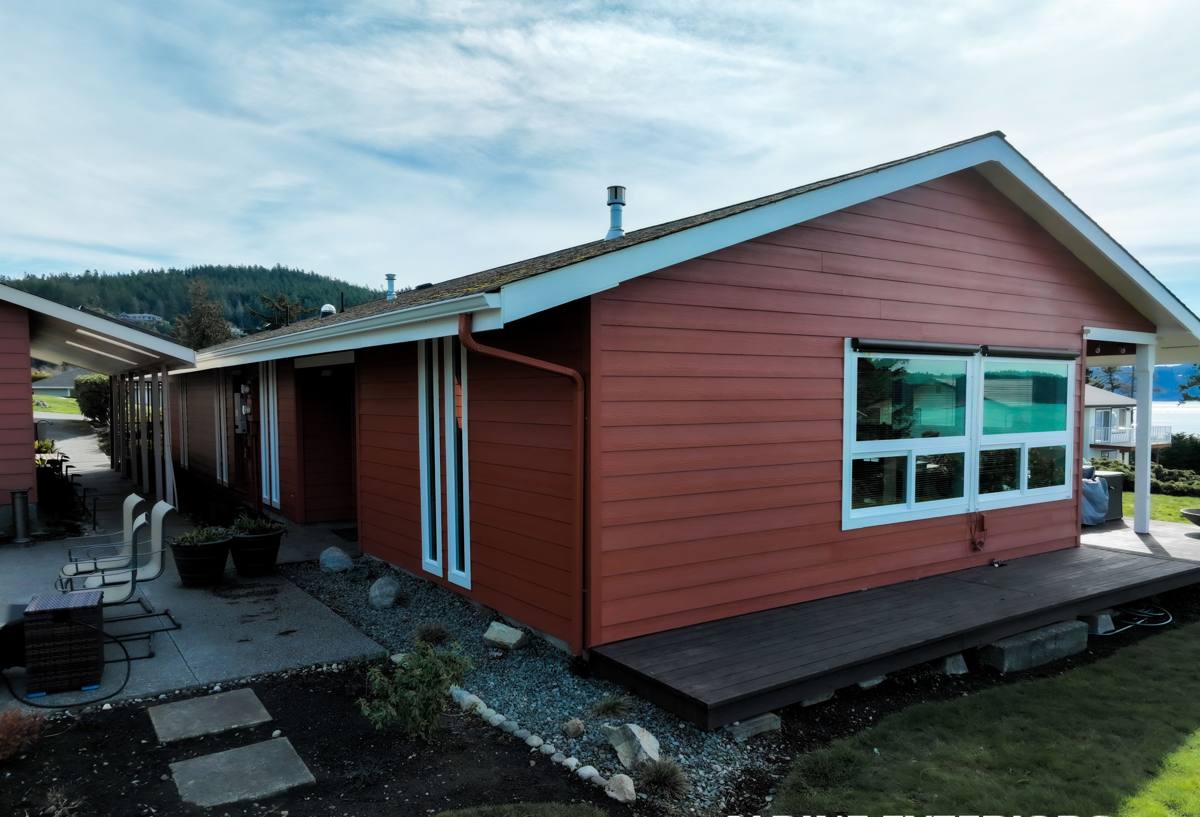
Why We Install James Hardie Fiber Cement — and Nothing Else
We made a decision as a company: we only install James Hardie fiber cement siding. We don't install vinyl, LP SmartSide, Cemplank, Allura, or primed wood products like spruce or cedar. That's not a marketing position — it's a standard we hold because of what we've learned watching how different materials actually perform on Tampa Bay homes over time, not just in a showroom.
Vinyl softens, warps, and can pull away from fastening points under sustained high wind, and it doesn't hold up structurally the way a cement-based product does in storm conditions. Engineered wood products like LP SmartSide use wood strand cores that are inherently more vulnerable to moisture intrusion at cut edges and seams — a real liability in a humid, storm-prone coastal climate, even with modern treatments. Primed wood siding — spruce, cedar — looks good on day one but demands a repainting and caulking cycle that most homeowners underestimate, and every gap in that maintenance is an opening for rot. Other fiber cement brands like Cemplank and Allura are legitimate cement products, but we've standardized on one manufacturer, one factory finish system, and one warranty structure so every installation on our crews is consistent and we can stand behind it fully.
James Hardie doesn't solve every one of those problems by accident. It's a non-combustible, cement-based product that doesn't absorb water the way wood-based sidings can, and it comes from the factory with a baked-on ColorPlus finish rather than field-applied paint — which matters enormously in a market with this much UV exposure.
HardieZone: Why "Climate-Engineered" Isn't Just a Slogan Here
James Hardie manufactures its siding in different formulations for different climate zones — this is the HZ5 vs. HZ10 system. Products engineered for HZ5 (which covers Hillsborough County and most of the Gulf Coast) are formulated to resist moisture, humidity swings, and the freeze-thaw isn't the concern here so much as sustained heat and moisture cycling. That's a meaningfully different product than what gets installed on a house in a dry inland climate, and it's part of why we don't treat "fiber cement" as an interchangeable commodity. The specific Hardie product line and formulation matters for a Davis Islands install as much as the installation technique does.
What a Correct Installation Involves
Fiber cement siding is only as good as the assembly behind it. A huge share of the siding failures we get called out to inspect on older Tampa homes trace back to installation shortcuts, not the material itself. On a waterfront property, we don't cut corners on any of the following:
Water Management Behind the Cladding
A correctly installed rainscreen or drainage plane, proper house wrap integration, and flashing at every window, door, and penetration are what actually keep wind-driven rain out — the siding itself is the last line of defense, not the only one. Butt joints, inside and outside corners, and any place two planes meet need flashing or sealant detailing that accounts for water moving sideways under pressure, not just falling straight down.
Fastening for Wind Load
Fastener spacing, type, and penetration depth all need to match the wind exposure category for the specific home, not a generic minimum. On an open, waterfront lot with higher sustained wind exposure, that often means a tighter fastening schedule than a sheltered inland install would need. Corrosion-resistant fasteners matter more here too, given the salt air.
Clearances and Gaps
Hardie's own installation instructions specify minimum clearances from grade, roofing, decks, and other abutting surfaces so water has somewhere to go and the bottom edge of the siding never sits in standing moisture. Skipping these clearances is one of the most common shortcuts we find on re-siding jobs, and it's invisible until the wood sheathing behind it starts to fail.
Caulking and Joint Treatment
Every seam is a potential entry point. Correct joint treatment — whether caulked, flashed, or both depending on the detail — is what keeps a beautiful install from becoming a maintenance headache two hurricane seasons later.
Comparing Siding Options for a Davis Islands Property
| Material | Moisture Resistance | Wind/Storm Performance | Maintenance Over Time | Salt Air Durability |
|---|---|---|---|---|
| Vinyl | Doesn't rot, but seams and J-channels can trap moisture | Can crack, warp, or blow off in sustained high wind | Low upkeep but fades and becomes brittle with UV exposure | Fasteners and trim hardware can corrode |
| LP SmartSide (engineered wood) | Vulnerable at cut edges and seams if not perfectly sealed | Reasonable when installed to spec, but moisture entry compounds fast | Requires vigilant caulk and paint maintenance | Humidity cycling is a real long-term risk |
| Primed wood (spruce, cedar) | Absorbs water readily without diligent upkeep | Performs adequately but joints are moisture entry points | High — repainting and re-caulking on a recurring cycle | Salt air accelerates finish breakdown |
| James Hardie fiber cement | Cement-based, doesn't absorb water like wood-based products | Rigid, heavy, holds up well to wind load when properly fastened | Factory ColorPlus finish reduces repainting frequency | Non-combustible cement core resists coastal degradation better than wood-based options |
Why a Crew That Already Works This Neighborhood Matters
Davis Islands presents logistical realities that inland Hillsborough County jobs don't — tighter lots, waterfront setbacks, and homes where the exposure on the bay-facing wall is genuinely different from the street-facing wall. A crew that's worked this specific pocket of Tampa knows to check wind exposure per elevation rather than applying one fastening schedule to the whole house, and knows what the island's humidity and salt exposure actually do to a wall assembly over a few storm seasons — not just in theory.
That local pattern recognition is what separates a siding job that looks right on install day from one that's still performing correctly five hurricane seasons later.
Our Process
- On-site assessment: We inspect the existing siding, sheathing, and any moisture damage before recommending a scope of work — not a one-size estimate over the phone.
- Product and color selection: We walk through the relevant James Hardie lines and ColorPlus options for the home.
- Prep and water management: Removal of failing material, sheathing repair where needed, and correct house wrap and flashing installation before a single piece of siding goes up.
- Installation to manufacturer spec: Fastening schedule, clearances, and joint treatment matched to the home's specific wind exposure.
- Final inspection and walkthrough: We review the completed work with the homeowner before calling the job done.
Maintenance and Warranty
One of the practical advantages of James Hardie's factory-applied ColorPlus finish is that it substantially reduces the repainting cycle compared to field-painted wood siding — a real benefit in a climate where UV exposure works overtime. James Hardie also backs its products with a strong, transferable limited warranty, which matters to Davis Islands homeowners thinking about resale value as much as day-to-day performance. Routine maintenance is still simple: periodic rinsing to clear salt residue and organic buildup, and prompt attention to any caulking that shows wear, especially after a significant storm.
Signs Your Current Siding Needs Attention
- Visible gaps, cracking, or buckling at seams and corners
- Soft or spongy spots when pressed, especially near the bottom edge
- Paint that's chalking, peeling, or fading unevenly
- Rust streaking from fasteners or trim hardware
- Musty odors or discoloration on interior walls that back up to exterior siding
- Siding that flexes or rattles noticeably in wind
What to Ask Before Hiring Anyone for Siding on the Island
A correct fiber cement job depends entirely on the crew doing the water management and fastening right — the material can't compensate for a bad install. Before hiring a contractor for a Davis Islands home, it's worth asking directly what product line they're proposing, whether their fastening schedule accounts for the home's specific wind exposure, and how they handle flashing at penetrations and clearances at grade. A contractor who can answer those specifics clearly is a good sign; vague answers about "standard installation" are worth pushing back on.
If your Davis Islands home is due for new siding or you're seeing early signs of wear from sun, salt, or storm exposure, we're happy to take a look and put together a straightforward, no-pressure estimate — just fill out the form below.