 Tampa Roofing
 Wesley Chapel Is Growing Fast — and a Lot of Its Siding Wasn't Built to Last
Wesley Chapel, just north of Tampa along the Pasco County line, has seen more new construction in the last two decades than almost anywhere in the region. That growth means a lot of homes going up quickly, and a lot of builder-grade exterior materials chosen for speed and cost rather than long-term performance. Vinyl siding, thin fiberboard trim, and budget cladding are common on newer subdivisions, and Florida's climate finds every weak point in those materials faster than homeowners expect.
We work on homes throughout the Tampa Bay area, and Wesley Chapel comes up constantly — both new-construction homes where the original siding is already showing wear, and older homes in the area due for a full exterior replacement. This page covers what fiber cement siding specifically needs to deliver for a Wesley Chapel home, what a correct installation actually involves, and how our process works when we take on a project in this part of the county.
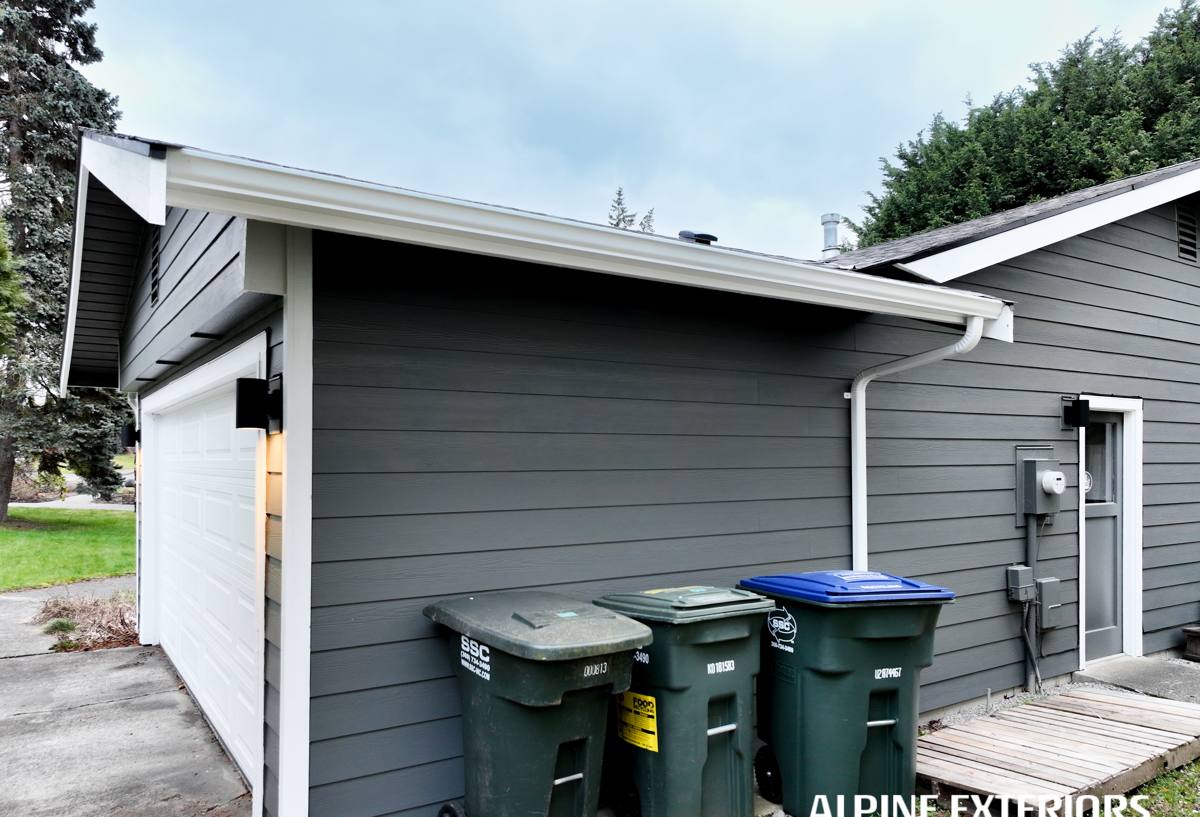
What Tampa Bay's Climate Does to Exterior Siding
Wesley Chapel sits inland from the Gulf, but it isn't spared the conditions that make siding failure common across the Tampa Bay region. Several forces are working against any exterior cladding here, year-round:
- Intense, near-constant UV exposure. Central Florida sun bakes exterior surfaces almost every day of the year, which fades color and breaks down lower-grade materials from the outside in.
- Wind-driven rain. Florida's summer storm pattern doesn't just drop rain — it drives it sideways into wall assemblies, which is where most siding failures actually start, behind the surface rather than on it.
- Hurricane-season wind loads. Even homes that never take a direct hit see repeated high-wind events over their lifespan, which stresses fastening and seams that weren't installed correctly the first time.
- Humidity and Gulf-influenced, salt-tinged air. Even well inland, the region's persistent humidity and the salt content that moves through the air off the Gulf accelerate corrosion of fasteners and trim hardware that isn't rated for it.
None of these factors are unique to Wesley Chapel, but together they're why we treat siding selection and installation quality as the two things that determine whether an exterior lasts 10 years or 40.
Why Fiber Cement Is the Right Material for This Area
Fiber cement is a composite of cement, sand, and cellulose fiber, engineered specifically to resist the conditions that break down wood, vinyl, and lower-grade composite sidings. For a Wesley Chapel home, the relevant advantages are practical, not theoretical:
It doesn't warp, sag, or melt in the sun
Vinyl siding softens and can visibly distort in direct, sustained Florida heat — especially on south- and west-facing walls. Fiber cement holds its shape and doesn't develop the wavy, sun-warped look that shows up on vinyl within a handful of summers.
It's non-combustible
Fiber cement doesn't burn, which matters for wildfire-adjacent brush areas that still exist around some of Wesley Chapel's newer developments, and it's a material class that carries weight with insurers.
It handles wind-driven moisture correctly — when installed correctly
Fiber cement itself is dimensionally stable and doesn't absorb and swell the way untreated wood or lower-grade composite panels can. But that resistance only holds up if the installation — flashing, gaps, fastening, sealant — is done to spec. We'll get into that below, because it's the part most siding failures actually come from.
It carries a real factory finish
James Hardie's ColorPlus finish is baked on at the factory under controlled conditions, rather than field-painted after installation. That finish is engineered to resist UV fading far longer than a standard field-applied paint job, which matters enormously under Florida sun.
Why We Only Install James Hardie
We install James Hardie fiber cement exclusively. We don't install vinyl, LP SmartSide, Cemplank, Allura, or primed wood siding, and that's a deliberate standard, not a sales preference.
Vinyl is inexpensive and easy to install, but it's a thin plastic product that softens in heat, cracks in cold snaps, and offers no real fire resistance — trade-offs we're not willing to put on a home in a climate this demanding. Wood-based composite products like LP SmartSide use engineered wood strand technology, which performs well in many climates but is more sensitive to sustained moisture exposure at cut edges and seams than a cement-based product — a real concern in a region that sees as much wind-driven rain as Tampa Bay does. Other fiber cement brands compete reasonably on the raw material, but James Hardie backs its HardiePlank and HardiePanel products with a factory finish and a transferable limited warranty program that we've found to be the strongest combination of product engineering and manufacturer backing available. For a home going up against Florida sun, humidity, and storm wind year after year, we'd rather install one product we trust completely than offer several we'd have reservations about.
What a Correct Fiber Cement Installation Actually Involves
The material is only half the equation. Most siding failures we get called out to inspect — on any brand — trace back to installation shortcuts, not the product itself. A correct job includes:
- A proper weather-resistive barrier installed and lapped correctly behind the siding, not just whatever was already on the wall.
- Correct flashing at every window, door, roofline, and penetration — the single most common failure point we see on homes with water intrusion behind the siding.
- Manufacturer-specified clearances — gaps between siding and roofing, decks, and grade, so water has somewhere to go instead of wicking into the bottom edge of the boards.
- Correct fastener type, placement, and spacing, matched to Hardie's published installation instructions rather than generic siding practice.
- Proper caulking and sealant at butt joints, using products compatible with the ColorPlus finish so the seal doesn't fail or discolor early.
- HZ5-rated product selection where appropriate — Hardie's climate-engineered line built specifically for humid, high-moisture regions like ours.
Skipping any one of these doesn't usually show up immediately. It shows up two or three years later as staining, soft spots, or a warranty claim that gets denied because the installation didn't follow the manufacturer's specification. That's the gap between a siding job that looks right at handoff and one that actually holds up through a decade of Florida storm seasons.
Fiber Cement vs. Other Common Siding Choices in Wesley Chapel
| Factor | James Hardie Fiber Cement | Vinyl Siding | Wood-Based Composite |
|---|---|---|---|
| Performance in direct sun/heat | Holds shape and finish | Can soften, warp, distort | Generally stable, finish varies |
| Fire resistance | Non-combustible | Combustible, can melt | Combustible |
| Moisture sensitivity at cut edges/seams | Low, with correct install | Low, but can trap moisture behind panels | Moderate — requires diligent sealing |
| Finish durability under UV | Factory-baked ColorPlus finish | Can fade and chalk over time | Field or factory finish, varies by product |
| Typical warranty structure | Long-term, transferable limited warranty | Varies widely by manufacturer | Varies by manufacturer |
This isn't a claim that every alternative fails — it's why, after years of installation and repair work in this climate, we standardized on one product system we're confident in rather than offering several with different trade-offs.
How Our Process Works for a Wesley Chapel Project
1. On-site assessment
We walk the exterior, check the condition of the existing siding and the wall assembly underneath where accessible, and note anything — soft trim, prior water staining, damaged sheathing — that needs to be addressed before new siding goes up, not covered over.
2. Tear-off and prep
Old siding comes off, and we inspect the sheathing and weather barrier underneath. Any damaged material gets repaired before installation starts — this is the step that determines whether the new siding lasts.
3. Installation to manufacturer specification
Weather barrier, flashing, fastening, gaps, and sealant are all installed to James Hardie's published specifications, which is what keeps the manufacturer's warranty intact and keeps the wall assembly dry behind the finished surface.
4. Final walkthrough and cleanup
We walk the finished job with the homeowner, and the site is cleared of debris and old material before we consider the project complete.
Why It Matters That We Already Work in This Area
A crew that regularly works Wesley Chapel and the surrounding Tampa Bay communities knows the local permitting requirements, understands the mix of home ages and construction types in the area's subdivisions, and has already seen how the local climate treats different siding materials over time — not in theory, but on actual homes nearby. That local pattern recognition is what lets us flag a moisture issue or a flashing problem before it becomes a bigger repair, rather than after.
Questions Worth Asking Any Siding Contractor Before You Hire Them
- Are they installing to the manufacturer's published specifications, or a generic industry standard?
- Do they inspect and repair the sheathing and weather barrier before re-siding, or just cover what's there?
- Can they explain their flashing detail at windows, doors, and rooflines specifically?
- What warranty applies, and is it transferable if you sell the home?
- Do they have experience working in this specific climate and region, not just siding in general?
If your Wesley Chapel home's siding is aging, showing damage, or you're planning ahead of the next storm season, we're happy to take a look and give you a straightforward, no-pressure estimate — fill out the form below to get started.