 Tampa Roofing
 Why Hyde Park's Older Homes Put Siding to the Test
Hyde Park is one of Tampa's oldest residential neighborhoods, and that history shows up in the housing stock: bungalows, Craftsman-style homes, and early-20th-century construction sitting close to Bayshore Boulevard and Hillsborough Bay. That proximity to the water is a mixed blessing. It's part of what makes the neighborhood desirable, but it also means homes here take on a heavier climate load than siding further inland.
Hillsborough County sits in a hurricane-exposed corridor, and Hyde Park's closeness to open water means wind-driven rain and salt-laden air reach exterior walls more directly and more often. Add in Florida's near-constant UV exposure, and you have three separate stresses working on a home's exterior at once: wind trying to peel material away, moisture trying to get behind it, and sun trying to break down its surface. Older siding materials — old wood clapboard, aging masonry-adjacent products, or whatever got installed during a past remodel — often weren't engineered with all three in mind simultaneously. Fiber cement, specifically the HZ5 product line built for high-humidity, high-wind climates, was.
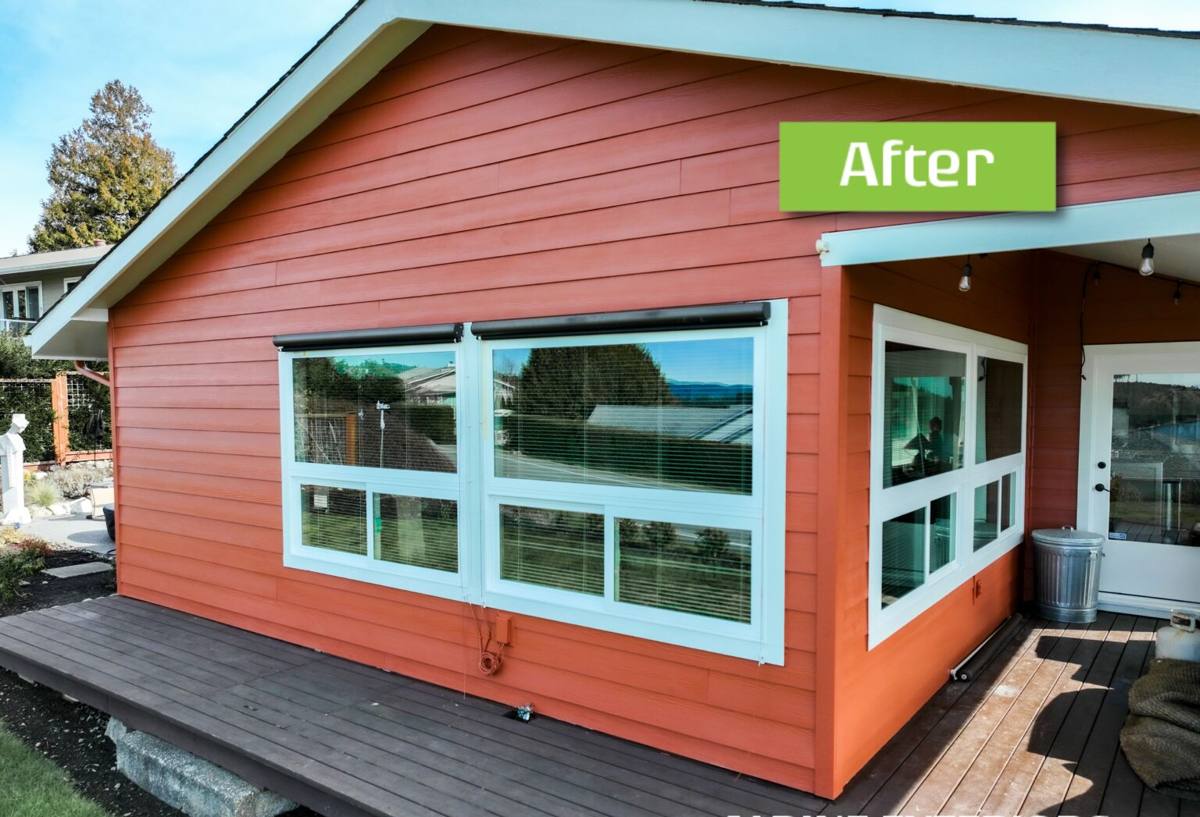
What Fiber Cement Siding Actually Is
Fiber cement is a composite of cement, sand, and cellulose fiber, pressed and cured into planks, panels, or shingles. It's non-combustible, dimensionally stable across temperature and humidity swings, and — when made correctly — far less prone to the swelling, splitting, and insect damage that plague wood-based sidings in Florida's climate.
We install James Hardie products exclusively. We don't install LP SmartSide, vinyl, Cemplank, Allura, or primed wood siding, and we're upfront about why: those products each have real strengths, but none of them combine the fire performance, factory-cured ColorPlus finish, and climate-specific engineering that James Hardie backs with a strong transferable warranty. For a neighborhood like Hyde Park — where homes face real hurricane risk and where curb appeal matters to property value — we don't think it makes sense to install anything less proven.
Why We Standardized on One Manufacturer
Running multiple siding brands means juggling different installation specs, different warranty terms, and different failure modes to watch for. We chose to specialize instead. James Hardie's HZ5 line is engineered specifically for climate zones like Tampa's — Gulf Coast humidity, salt exposure, and hurricane wind loads — rather than being a general-purpose product adapted after the fact. That specialization is the whole reason we stand behind it.
What a Correct Fiber Cement Installation Involves
Fiber cement is only as good as its installation. A huge share of the siding failures we get called out to inspect trace back to installation shortcuts, not the material itself. In a wind-and-rain-exposed neighborhood like Hyde Park, the details matter more than usual.
- Weather-resistive barrier: A correctly lapped, sealed water-resistive barrier behind the siding, so any moisture that gets past the cladding has somewhere to drain rather than sitting against sheathing.
- Proper fastening pattern: James Hardie specifies fastener type, spacing, and placement for a reason — under-fastened or improperly placed nails are a leading cause of panels working loose in high wind.
- Correct clearances: Gaps at the bottom of the siding, around windows and doors, and at roof-to-wall transitions, sized to manufacturer spec so water has an exit path instead of a trap.
- Caulking and flashing done right, not just done: Sealant is a backup to good flashing detail, not a substitute for it. We flash first, caulk second.
- Factory-primed cut edges sealed on site: Every field cut exposes raw material that needs to be sealed before installation, not left exposed to the first rain.
None of this is exotic. It's discipline — following the manufacturer's installation manual exactly rather than treating it as a loose guideline. It's also exactly what most warranty denials trace back to when they get skipped.
Comparing Your Siding Options in Hyde Park's Climate
| Material | Wind/Storm Resistance | Moisture Behavior | UV/Fade Resistance | Typical Maintenance |
|---|---|---|---|---|
| James Hardie Fiber Cement | Engineered HZ5 rating for high-wind zones | Dimensionally stable; resists swelling | ColorPlus factory finish resists fading | Periodic wash; repaint not required for 15+ years with ColorPlus |
| Vinyl | Can warp or crack under high wind and heat cycling | Doesn't rot, but seams can allow water intrusion | Fades and chalks over time, especially darker colors | Low upkeep, but limited repair options once damaged |
| LP SmartSide (engineered wood) | Rated for wind, but wood-based core is moisture-sensitive | Prone to swelling/damage if edges aren't sealed and maintained | Requires repainting on a regular cycle | Higher — edge sealing and paint maintenance are critical |
| Primed Wood / Cedar | Structurally fine but the finish is vulnerable | Absorbs moisture; prone to rot in humid coastal air | Finish breaks down faster under intense Florida sun | Highest — regular repainting and moisture monitoring required |
This isn't a claim that the alternatives are poor products across the board — LP SmartSide and cedar both have legitimate uses in drier, less storm-exposed climates. It's a statement about what performs with the least maintenance burden specifically in a hurricane-exposed, salt-air, high-UV neighborhood like Hyde Park, and that's the standard we install to.
How Our Process Works
1. On-Site Assessment
We inspect the existing siding, sheathing, and any trouble spots — window and door flashing, roof-to-wall transitions, areas showing past water intrusion — before quoting anything. Hyde Park's older homes sometimes have layered siding history (an original material under a later re-side), and we account for what we actually find, not just what's visible from the curb.
2. Product and Color Selection
We walk through James Hardie's HZ5 plank, shingle, and panel options and ColorPlus finish palette, with an eye toward what suits Hyde Park's architectural character — many homes here read best with a traditional lap profile rather than a modern panel look, though that's a homeowner preference, not a rule.
3. Tear-Off and Substrate Check
Old siding comes off, and we inspect sheathing underneath for rot or prior water damage before anything new goes up. Covering damaged sheathing with new siding just hides a problem instead of solving it.
4. Installation to Manufacturer Spec
Weather barrier, flashing, fastening pattern, and clearances — all installed to James Hardie's published specifications, which is also what keeps the manufacturer's transferable warranty intact.
5. Final Walkthrough
We review the finished job with the homeowner, including care guidance, before considering the project complete.
Signs Your Hyde Park Home's Siding Needs Attention
- Soft or spongy spots when pressed, especially near the ground or under windows
- Visible warping, buckling, or panels that have pulled away from the wall
- Paint that's peeling or blistering faster than a normal repaint cycle would suggest
- Cracks or gaps at seams, corners, or trim after a storm season
- Persistent musty smell or interior wall staining near exterior walls
- Visible insect activity or wood damage around siding edges
Any one of these is worth a professional look. Together, or after a hurricane season with direct wind and rain exposure, they're worth an inspection sooner rather than later.
What Drives the Cost of a Fiber Cement Project
| Factor | Why It Matters |
|---|---|
| Home size and wall complexity | More corners, gables, and dormers mean more cutting, flashing, and labor time |
| Condition of existing sheathing | Rot repair or sheathing replacement adds scope beyond the siding itself |
| Product line and profile | Plank, shingle, and panel styles carry different material and labor costs |
| Trim and accessory work | Fascia, soffit, and trim replacement done alongside siding affects total scope |
| Access and site conditions | Tight lot lines, mature landscaping, or multi-story sections affect labor time |
We give a firm, itemized quote after the on-site assessment rather than a ballpark over the phone — Hyde Park's mix of home ages and prior renovation work makes generic pricing unreliable.
Caring for Fiber Cement Siding Long-Term
James Hardie siding with a ColorPlus factory finish is low-maintenance, not no-maintenance. A periodic rinse with a garden hose removes salt residue and airborne grime before it builds up — this matters more in Hyde Park than it would further inland, given the bay proximity. Keep an eye on caulk lines at trim and penetrations, and have any storm damage inspected promptly rather than waiting for the next season to reveal how bad it got.
Why It Matters That We Already Work in Hyde Park
A crew that installs siding across a range of climates learns general best practices. A crew that works Hyde Park specifically learns the neighborhood's particular pattern of exposure — which walls take the worst of a southeaster off the bay, which older homes have sheathing quirks from past renovations, which HOA or historic-character considerations tend to come up. That local repetition is what lets us flag problems during the estimate instead of discovering them mid-project, and it's why we recommend homeowners choose a contractor with real, current experience in this specific part of Tampa rather than a crew installing siding here for the first time.
If your Hyde Park home's siding is showing its age, or you're planning ahead of next hurricane season, we're happy to walk the exterior with you and give you a straight, no-pressure estimate — use the form below to get started.