 Tampa Roofing
 Why Siding Fails Faster in Land O' Lakes Than People Expect
Land O' Lakes sits in the fast-growing northern edge of the Tampa Bay area, in Pasco County just above the Hillsborough County line. It's a young suburban market — new subdivisions, cleared lots with young trees that haven't grown in to shade exterior walls yet, and a lot of homes built or resided in the last two decades with whatever siding the builder or a previous owner chose at the lowest bid. That combination matters more than most homeowners realize when it comes to how long siding actually lasts here.
The area's climate is Tampa Bay climate: long stretches of intense, direct UV exposure, summer humidity that sits in the high double digits for months, sudden hurricane-force wind events, and wind-driven rain that doesn't fall straight down — it gets forced sideways and upward under laps, around trim, and into any gap in the siding system. Land O' Lakes' many lakes and ponds also keep ambient humidity high year-round, which is exactly the condition that punishes siding products with weak moisture tolerance. None of this is unique to one neighborhood — it's the baseline every exterior wall in this part of Florida has to survive, decade after decade.
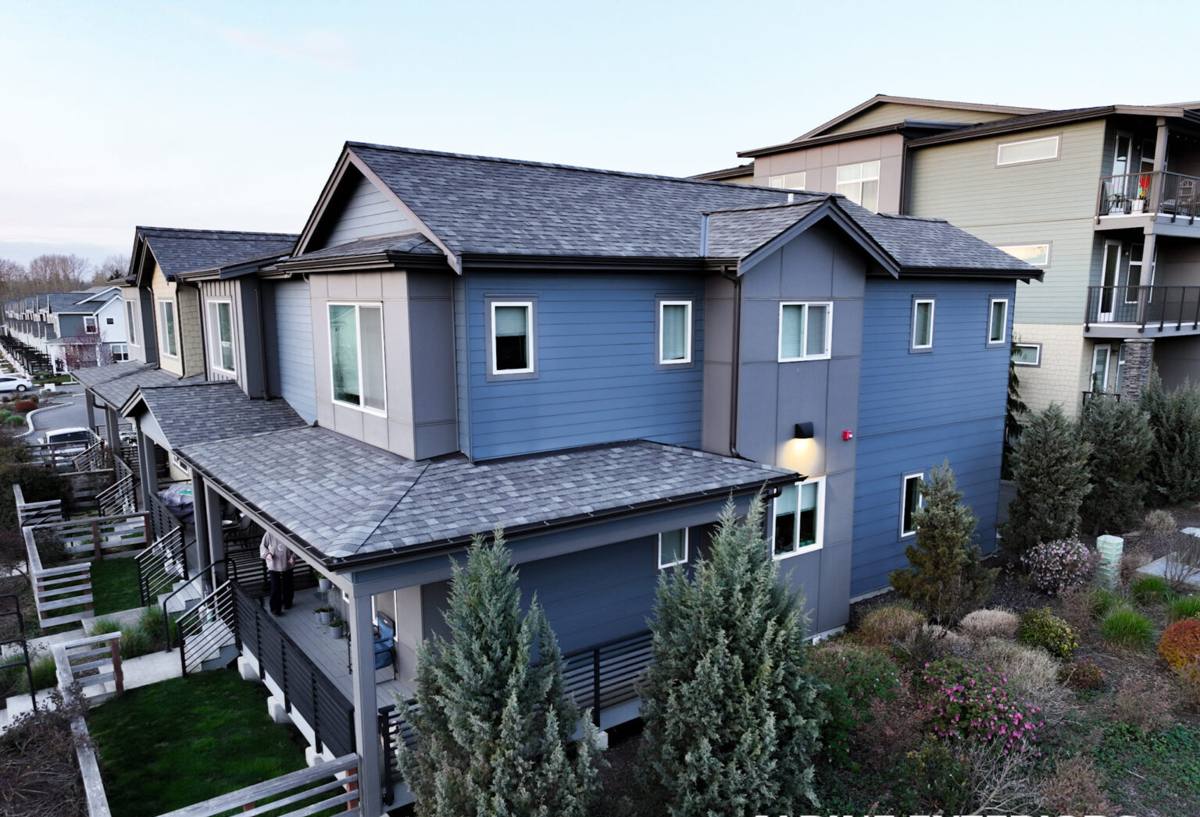
What "Correct" Fiber Cement Siding Actually Requires Here
Fiber cement is the right material family for this climate — it doesn't rot, it doesn't feed insects, and it's dimensionally stable in heat and humidity swings that make wood-based products expand, contract, and eventually fail. But the material being right doesn't mean the job is right. Most fiber cement siding failures we get called out to inspect in this area aren't product failures — they're installation failures. The details that matter most in a wind-and-rain climate like Land O' Lakes':
Clearance and Drainage
Siding needs a minimum gap above roofing, decks, and patios, and a drainage plane behind it so any moisture that does get past the surface has somewhere to go besides into the wall assembly. Butt joints and panel seams need to be flashed, not just caulked.
Fastening for Wind
Hurricane-force gusts put real uplift and lateral load on wall cladding. Fastener spacing, fastener type, and whether they're driven into framing (not just sheathing) all affect whether siding stays put in a storm or starts working loose at the edges first.
Caulking and Sealant Discipline
Wind-driven rain finds every unsealed penetration — light fixtures, hose bibs, vents, trim joints. Correct installation seals these points with sealants rated to move with the building and hold up under UV, not just whatever caulk was on the truck.
Factory-Applied Finish
UV this intense breaks down field-applied paint faster than most homeowners expect. A factory-cured finish system holds color and film integrity far longer than paint applied on-site after installation.
Why We Only Install James Hardie
We install James Hardie fiber cement siding exclusively. We don't install vinyl, LP SmartSide, Cemplank, Allura, or unfinished wood siding like primed spruce or cedar, and we're upfront about why: in a climate that combines hurricane wind, sustained UV, and high humidity, the margin for product and installation error is thin, and we'd rather stand behind one system we know performs than offer a menu of products with different failure modes.
Hardie's fiber cement is non-combustible, which matters in a state where wildfire risk and code scrutiny on exterior materials have both been climbing. It's engineered in climate-specific HZ product lines rather than a one-size-fits-all formulation, and Florida installations use the HZ5 line built for higher-humidity, high-moisture-exposure regions. The ColorPlus factory finish is baked on and warrantied separately from the substrate, which is the piece that most directly addresses the UV fading problem this climate creates. And the transferable limited warranty gives homeowners something concrete if they sell the home before the siding's functional life is up — a real consideration in a fast-turnover market like this one.
We're not saying every other product is unusable everywhere. Vinyl can work in mild climates. LP SmartSide has genuine fans. Cedar has real appeal for homeowners who want to commit to its upkeep. But for the wind, sun, and moisture load a Land O' Lakes exterior wall takes on every year, we've standardized on the one system we've seen hold up consistently when installed to spec — and we only want our name on work we're confident will still look right in fifteen years.
Hardie Product Lines We Use on Land O' Lakes Homes
Most homes in this area get one of two Hardie profiles, sometimes combined for visual interest:
- HardiePlank lap siding — the classic horizontal lap look, available in smooth or woodgrain texture, the most common choice for single-family homes in this market.
- HardiePanel vertical siding — often used as an accent on gables, porch areas, or modern-style facades that are increasingly common in newer Land O' Lakes construction.
- HardieTrim — matched trim boards around windows, doors, and corners so the whole exterior system, not just the field siding, is rated for the same climate exposure.
ColorPlus finish comes in a range of factory colors engineered to resist Florida's UV load better than field-applied paint, which keeps touch-up and repainting off a homeowner's to-do list for far longer.
Our Installation Process
- On-site assessment — we inspect existing siding, sheathing, and any moisture or rot damage before quoting, not after the tear-off starts.
- Tear-off and substrate check — old siding comes off and we confirm the wall sheathing underneath is sound before anything new goes up.
- Weather barrier and drainage plane installation — this is the layer that does the real moisture-management work; it's also the layer that's invisible once siding is on, which is exactly why it has to be done right the first time.
- Hardie installation to manufacturer spec — correct clearances, fastener pattern, and flashing at every penetration and joint.
- Trim, caulking, and finish details — sealant at penetrations, trim installation, and final inspection of every seam.
- Final walkthrough — we go over the finished work with the homeowner before we consider the job done.
Siding Options Compared for This Climate
| Factor | James Hardie Fiber Cement | Vinyl | LP SmartSide | Cedar / Unfinished Wood |
|---|---|---|---|---|
| Wind resistance | Strong when fastened to spec | Can deform or blow off in high gusts | Moderate | Moderate, fastener-dependent |
| UV / fade resistance | High (factory ColorPlus finish) | Fades and chalks over time | Moderate, depends on paint upkeep | Low without regular refinishing |
| Moisture / humidity tolerance | High, non-organic material | High but can trap moisture behind panels | Engineered wood, sensitive to sustained moisture | Low, prone to rot without diligent maintenance |
| Combustibility | Non-combustible | Combustible | Combustible | Combustible |
| Ongoing maintenance | Low | Low, but limited repair options | Moderate, repaint/reseal cycles | High, regular refinishing required |
Land O' Lakes' Newer Subdivisions and HOA Considerations
A lot of Land O' Lakes housing stock is relatively new, which brings its own siding issues: builder-grade material chosen to hit a construction budget rather than to perform over 20-plus years, and HOA architectural guidelines that dictate approved colors and, in some communities, approved materials. We're used to working within HOA submittal requirements — providing spec sheets, color samples, and documentation homeowners need to get exterior work approved before installation starts, which avoids the delay of submitting a project and having it kicked back.
If your home still has its original builder siding and it's starting to show gaps, warping, or chalking, that's usually a sign the material — not just its age — is the limiting factor. Replacing it with a climate-engineered fiber cement system is often less a cosmetic upgrade and more a correction of an original spec that wasn't built for 20+ years of Tampa Bay sun and storms.
Maintenance Checklist for Fiber Cement Siding in This Area
- Rinse siding periodically to clear pollen, salt-tinged air residue, and mildew buildup common in Florida's humidity
- Inspect caulking around windows, doors, and penetrations annually — sealant is the first thing to give way to wind-driven rain
- Walk the exterior after any major storm to check for impact damage or loose panels before small issues become entry points for moisture
- Keep gutters and downspouts clear so water isn't sheeting down or pooling against the base of the siding
- Address any color-matched touch-up promptly at fastener heads or cut edges to keep the moisture barrier intact
Why Hiring a Crew That Already Works in Land O' Lakes Matters
Siding installation quality comes down to details that don't show up in a walkthrough the day the job finishes — they show up three years later when the first real storm tests the flashing, or five years later when the caulking is either still flexible or has cracked. A crew that works this specific area regularly has already seen how local wind patterns, humidity, and HOA requirements play out on real homes here, not just in a manufacturer's install guide. That local repetition is what keeps callbacks low and keeps siding performing the way it's supposed to for the full length of its warranty.
If your Land O' Lakes home needs new siding, is showing early signs of wear, or you're just trying to figure out whether repair or replacement makes more sense, we're happy to take a look and give you a straight answer. Reach out for a free, no-pressure estimate using the form below.