 Tampa Roofing
 Roof Repair Built for Lutz's Climate, Not a Generic Fix
Lutz sits in northern Hillsborough County, far enough from downtown Tampa to keep a semi-rural, lake-dotted character, but close enough to feel every summer storm cell that rolls off the Gulf and every hurricane track that brushes the Tampa Bay area. Roofs here don't fail because of one dramatic event most of the time — they fail because of years of cumulative stress from intense UV exposure, sudden downpours, and the wind loads that come with living in a hurricane-prone region. A roof repair that only patches the visible symptom without accounting for that cumulative stress tends to come back as a second, more expensive repair within a season or two.
We approach every Lutz repair call the same way: figure out why the roof failed where it did, not just where the water showed up inside the house. Water travels along the underlayment and framing before it ever reaches a ceiling stain, so the entry point and the stain are often several feet apart. Chasing the stain instead of the entry point is the single most common mistake in cheap roof repairs, and it's the reason so many "fixed" leaks reappear after the next hard rain.
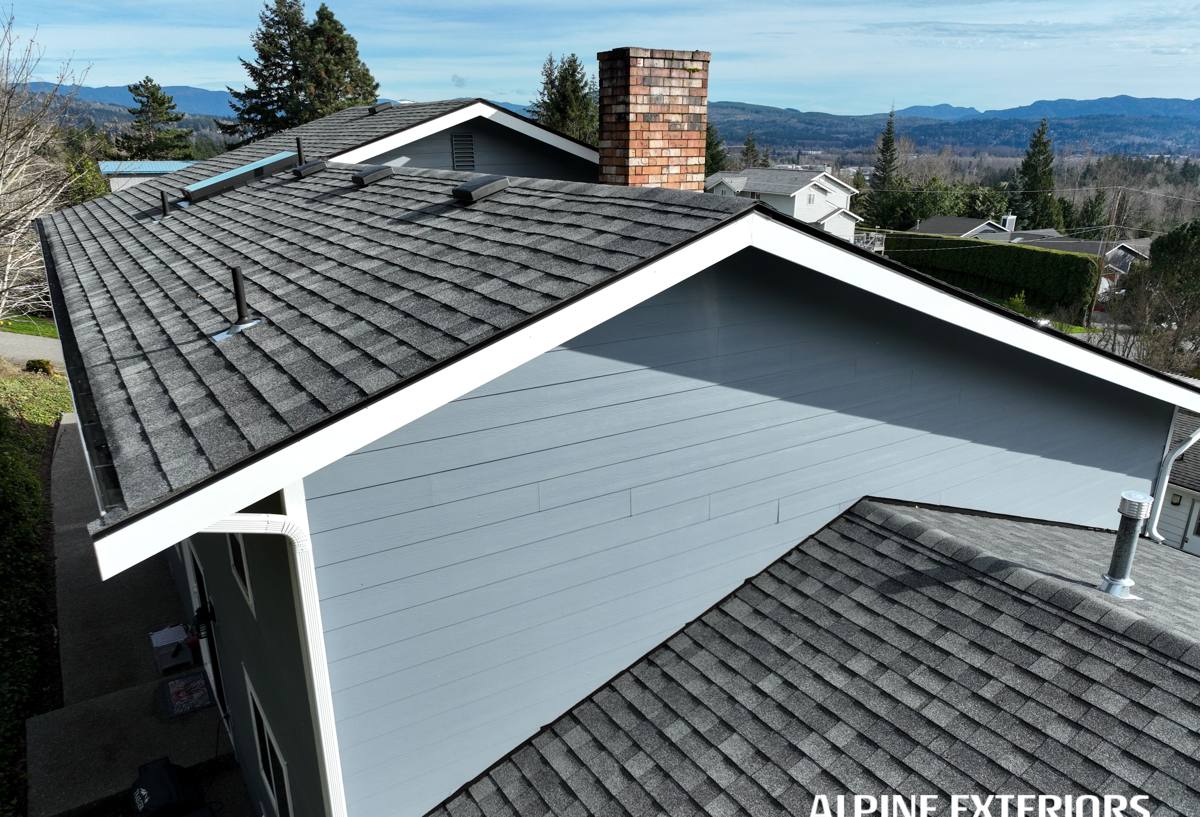
What Hillsborough County's Climate Actually Does to a Roof
Year-Round UV Exposure
Florida's sun angle and number of clear-sky days put roofing materials through more UV cycling per year than most of the country sees in two. Asphalt shingle granules erode, sealant strips lose their tack, and rubber boots around vent pipes and plumbing stacks dry out and crack years before the shingles themselves look worn. UV damage is gradual and often invisible from the ground until a boot or flashing seal has already failed.
Wind-Driven Rain and Hurricane-Force Gusts
Normal rain falls down. Wind-driven rain during a Tampa Bay storm system gets pushed sideways and upward, finding gaps that would never leak in a calm rain. This is why a roof can go years without a single drip and then suddenly leak during one named storm — the wind direction and pressure were different, and a marginal seal that had never been tested finally got tested. Hurricane-force gusts also lift shingle tabs and stress fasteners even when no shingles are visibly missing afterward, weakening the seal for the next event.
Humidity and Afternoon Thunderstorms
Central Florida's daily summer thunderstorm pattern means roofs cycle between scorching heat and sudden soaking rain almost every afternoon for months. That thermal shock accelerates the expansion and contraction that eventually opens seams in flashing, pipe boots, and shingle adhesive. It's a different kind of stress than a one-time storm — it's slow fatigue.
Regional Salt Air
Lutz is inland relative to the barrier islands, but the Tampa Bay region as a whole carries salt-laden air that corrodes exposed metal fasteners, flashing, and drip edge over time. It's a slower factor here than it would be on the coast, but it still shortens the working life of unprotected metal components and is worth factoring into material choices during a repair.
Signs a Lutz Home Needs Roof Repair, Not Just a Look
Most homeowners call us after they've already seen a warning sign — the trick is knowing which signs mean "get it looked at this month" versus "get it looked at today."
- Ceiling stains that appear or grow after a specific storm, even if they dry up between rains
- Granules collecting in gutters or at downspout discharge points
- Curling, cupping, or cracked shingle tabs, especially on south- and west-facing slopes
- Soft or spongy decking felt underfoot in the attic near valleys or penetrations
- Visible daylight through the roof deck when viewed from inside the attic
- Cracked or missing sealant around plumbing vents, skylights, or chimney flashing
- Lifted or missing shingles after wind events, even a few isolated tabs
- Musty odor in upper rooms or closets that share a wall with the attic
- Visible rust streaking below metal flashing or fasteners
Any one of these on its own can often be repaired affordably. Several appearing together, or appearing in multiple areas of the roof, usually points to age-related wear across the whole system rather than a single isolated failure — and that changes the conversation from repair to a broader inspection.
What a Correct Roof Repair Actually Involves
A proper repair isn't just sealing the spot that's leaking. It's a sequence:
- Find the real entry point. This usually means an attic inspection during or right after rainfall, or a controlled water test on the suspected area, tracing moisture back along the deck and framing.
- Assess the surrounding material condition. Shingles, underlayment, and decking immediately around the failure point are checked for hidden rot or granule loss that a spot patch would leave untreated.
- Remove and replace damaged material, not just cover it. Patching over compromised underlayment or soft decking hides a problem instead of solving it.
- Reflash and reseal properly. Flashing around chimneys, skylights, valleys, and pipe penetrations gets rebedded and sealed to manufacturer specification, not just caulked over the old seal.
- Match materials appropriately. Shingle color and profile matching so the repair doesn't stand out, and confirming any replacement components meet current wind-rating requirements for the area.
- Verify with a final water test where practical, especially on repairs tied to a known recurring leak.
Common Roofing Materials Around Lutz
Lutz's housing stock ranges from older ranch homes to newer subdivisions, and the repair approach depends heavily on what's actually on the roof.
| Material | Typical Repair Considerations | Climate Notes |
|---|---|---|
| Asphalt (architectural) shingle | Spot shingle replacement, flashing reseal, ridge cap repair | Most exposed to UV granule loss; wind uplift a recurring issue |
| Asphalt (3-tab) shingle | Often full-slope repair needed since matching older 3-tab profiles gets harder over time | Shorter service life under intense UV than architectural shingle |
| Concrete or clay tile | Individual tile replacement, underlayment repair beneath tile field | Tile itself is durable; the underlayment beneath it is usually the real failure point |
| Metal panel | Fastener re-torque or replacement, seam resealing, panel section replacement | Handles wind well; fastener corrosion from humidity and salt air needs monitoring |
| Flat or low-slope (additions, porches) | Membrane patching or reinforcement at seams and drains | Ponding water and UV breakdown are the primary failure modes |
We'll always tell you plainly what we're looking at and what the repair options are for that specific material — including when a patch is the right call and when the surrounding material is too far gone for a patch to be worth doing honestly.
Repair vs. Replacement: How We Help You Decide
Not every call ends in a repair recommendation, and not every roof needs a full replacement just because it's leaking. Here's how we weigh it.
| Factor | Leans Toward Repair | Leans Toward Replacement |
|---|---|---|
| Roof age | Under roughly 10-12 years | Approaching or past manufacturer-rated lifespan |
| Extent of damage | Isolated to one area or penetration | Spread across multiple slopes or recurring in different spots |
| Decking condition | Solid, dry decking around the failure | Soft, delaminated, or rotted decking found in multiple areas |
| Granule/UV wear | Localized wear | Uniform wear and brittleness across the whole roof |
| Storm history | Single recent event, otherwise sound roof | Multiple storm cycles with cumulative fastener and seal fatigue |
When a roof is borderline, we'd rather walk you through the honest trade-offs than push either direction. A well-executed repair on a roof with years of life left is money well spent; sinking repeated repair costs into a roof that's structurally at the end of its service life usually isn't.
Our Repair Process
When you call us for a Lutz roof repair, here's what to expect:
- Initial contact and scheduling — we ask what you're seeing (stains, missing shingles, timing relative to storms) to prepare for the visit
- On-site inspection — roof surface and attic, checking both the reported problem area and the rest of the roof for related wear
- Clear explanation — what we found, why it happened, and what fixing it correctly involves, in plain language before any work starts
- Written estimate — scope, materials, and cost, so there are no surprises
- The repair itself — completed to the standard outlined above, not a shortcut version
- Documentation — photos of the completed work for your records, useful for insurance or for future reference
Insurance and Storm Damage
If your repair need traces back to a specific storm, wind event, or hurricane, it may be worth documenting the damage for a homeowner's insurance claim before repairs begin. We can point out what appears storm-related versus what looks like ordinary wear, since insurers generally distinguish between sudden storm damage and gradual deterioration. We're not a public adjuster and don't handle the claim itself, but an honest, specific description of what we find can support whatever conversation you have with your insurer.
Simple Maintenance That Extends Repair Life
A repair holds up longer when the rest of the roof is kept in reasonable shape around it. A few habits make a real difference in a climate like ours:
- Clear gutters and downspouts before Florida's rainy season ramps up so water isn't backing up under the roof edge
- Trim overhanging branches that scrape shingles in high wind or drop debris into valleys
- Have the roof looked at after any named storm that produced sustained winds over your area, even if nothing looks obviously wrong
- Address small issues — a lifted shingle tab, a cracked pipe boot — while they're still small repairs
Why It Matters to Hire a Crew That Already Works in Lutz
Roofing crews that work Hillsborough County regularly develop a working knowledge of how local wind exposure, storm patterns, and the mix of older and newer construction in areas like Lutz actually play out on real roofs — not just what a manufacturer's spec sheet says in theory. That translates into fewer surprises during an inspection, straighter answers about what's genuinely storm damage versus wear, and repair work that's built to hold up against the next Tampa Bay storm season rather than just look finished on the day it's done.
If you're dealing with a leak, storm damage, or a roof that's just showing its age, we're happy to take a look and give you a straight answer about what it needs. Reach out for a free, no-pressure estimate using the form below.