 Tampa Roofing
 Metal Roofing for Lutz Homes: Built for What This Climate Actually Does
Lutz sits in northern Hillsborough County, a mix of older ranch homes, newer construction, and a lot of wooded and lake-front lots. Whatever the style of house, the roof over it has to deal with the same set of stresses every home in the Tampa Bay area faces: hurricane-force wind gusts during tropical systems, intense year-round UV that breaks down roofing materials faster than in most of the country, wind-driven rain that finds every gap in flashing and fasteners, and salt-laden air that moves inland off the Gulf and speeds up corrosion on anything not rated for it. Metal roofing, installed correctly, handles all four of those better than most alternatives — but "installed correctly" is doing a lot of work in that sentence, and it's the part that gets skipped when a crew treats a metal roof like any other job.
This page is about what a metal roof needs to actually perform in Lutz, not a generic rundown of metal roofing everywhere. The panel choice, the fastening method, the underlayment, and the flashing details all change depending on whether you're dealing with a low-slope addition, a lake-facing exposure with more wind-driven moisture, or a heavily shaded lot where debris and humidity are the bigger long-term issues.
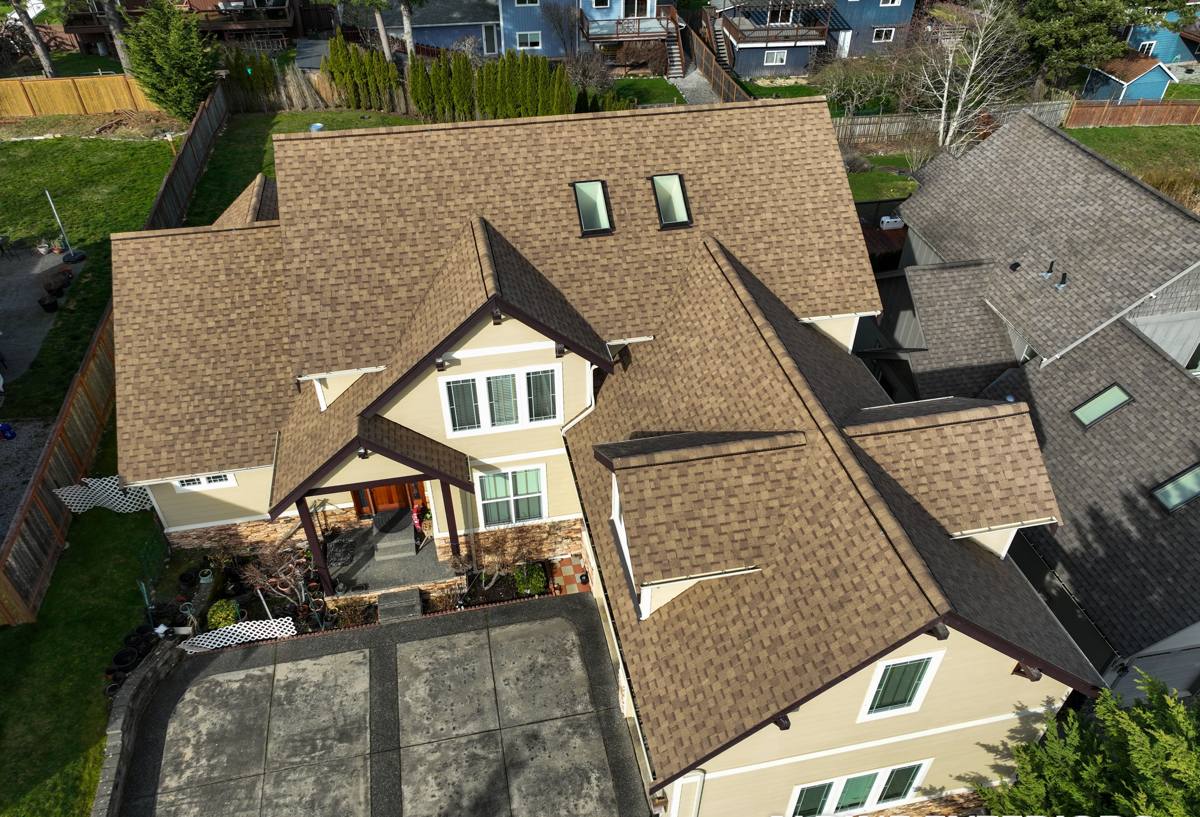
Why Standard Roofing Struggles Here — and Where Metal Holds Up
Asphalt shingles in this part of Florida typically wear out from the top down: UV bakes the asphalt, granules wash off, and the shingle loses its ability to shed water years before it visibly fails. Wind events accelerate that further, lifting edges and tabs that then never seal back down properly. Metal roofing doesn't have that failure mode — the panel itself doesn't degrade under UV the way asphalt does, and a correctly fastened system resists uplift far better than a shingle mat.
That said, metal isn't automatically immune to Florida's climate. The two real risks are:
- Fastener and flashing failure — the panel can be fine while the screws, sealant, or edge flashing holding it down fail years earlier than the metal itself.
- Corrosion from coastal-influenced air — even away from the immediate coastline, salt-laden humidity moving through the Tampa Bay area will attack unprotected steel over time, which is why coating and fastener material matter as much as the panel gauge.
A metal roof that fails early almost always fails at one of those two points, not because "metal roofing doesn't work in Florida." It works — when it's specified and installed for the environment it's going into.
What Florida Building Code Wind Requirements Mean for Your Roof
Hillsborough County enforces the Florida Building Code's high-velocity wind provisions, which set minimum uplift resistance and fastening patterns based on your home's exposure category, roof height, and geometry. In practice, this means the fastening schedule on a metal roof in Lutz isn't a matter of preference — it's calculated. A steeper roof on an open lot near a lake, exposed to sustained wind on more sides, generally needs a tighter fastener pattern and stronger clip system than a low, tree-sheltered roof in a more built-up neighborhood.
This is also where permitting comes in. Metal roof replacements and new installs in unincorporated Hillsborough County (which covers Lutz) require a permit and inspection tied to these code requirements. A contractor pulling the permit correctly and scheduling the required inspections isn't bureaucratic overhead — it's the paper trail that confirms the roof was actually installed to the wind rating it's supposed to have, which matters for insurance and for resale.
Exposure Considerations Specific to Lutz Lots
Lutz has a mix of conditions that don't all call for the same approach:
- Lake-adjacent or open lots — more direct wind exposure, generally warranting tighter fastening and closer attention to ridge and eave detailing.
- Heavily wooded lots — less direct wind load in calm conditions, but more risk from falling limbs during storms and more organic debris buildup on the roof, which affects panel and gutter maintenance.
- Mixed-age neighborhoods — older homes may have deck or truss conditions that need evaluation before a metal roof goes on, especially if the home was built before more recent code cycles.
Panel Types: What We Recommend and Why
Not every metal roofing product is a good fit for a Florida re-roof. The two main categories homeowners in Lutz choose between are standing seam and exposed-fastener (screw-down) panels.
| Feature | Standing Seam | Exposed-Fastener Panel |
|---|---|---|
| Fasteners | Concealed, under the seam | Visible, driven through the panel face |
| Long-term maintenance | Lower — no exposed fastener sealant to fail | Higher — fastener washers age and need periodic re-sealing |
| Wind performance | Excellent, with clip systems rated for high uplift | Good, but performance depends heavily on fastener spacing and quality |
| Upfront cost | Higher | Lower |
| Best fit | Primary residences, long-term ownership, higher wind exposure | Outbuildings, budget-conscious projects, lower-exposure roofs |
Our default recommendation for a primary home in this area is standing seam, specifically because it removes the fastener-sealant failure point that causes most of the leaks we see on older screw-down metal roofs. Exposed-fastener panels aren't a bad product — they're a legitimate, lower-cost option — but they carry a maintenance obligation (periodic inspection and re-sealing of fastener heads) that a lot of homeowners don't stay on top of. We'll spec either one depending on your budget and the building, but we'll always tell you honestly which trade-offs come with each.
What a Correct Metal Roof Installation Actually Involves
The panel is the visible part, but most of what determines whether a metal roof leaks or lasts happens underneath it.
Deck Inspection and Repair
Before anything goes down, the existing deck gets inspected for rot, delamination, or fastener pull-through — common on older Lutz homes that have been through multiple re-roofs. Metal roofing shouldn't go over a compromised deck; it just hides the problem until it's worse.
Underlayment
A high-temperature, self-adhering underlayment is standard under metal in this climate, both for the added water barrier at seams and fastener penetrations and because metal panels run hotter in direct Florida sun than standard felt is rated for.
Fastening and Clips
For standing seam, this means the correct clip spacing for your specific wind exposure, not a generic pattern. For screw-down panels, it means the right fastener length, type, and spacing — under-fastening is the single most common cause of early wind failure we see on metal re-roofs.
Flashing and Penetrations
Valleys, wall transitions, pipe boots, and ridge caps are where the vast majority of roof leaks originate, on metal or otherwise. Wind-driven rain during Tampa Bay's storm season pushes water sideways and upward in ways a lot of standard flashing details don't account for — this is where experience with local storm behavior actually shows up in the finished job.
Ventilation
Metal reflects more solar heat than shingles but still requires proper ridge and soffit ventilation to keep attic temperatures and moisture in check — skipping this can shorten the life of the deck and insulation even if the roof itself is fine.
Our Process, Start to Finish
- On-site inspection — we assess your current roof, deck condition, and specific wind exposure before recommending a panel type.
- Honest estimate — a written scope covering panel choice, underlayment, flashing details, and ventilation, with no vague allowances.
- Permitting — we pull the permit through Hillsborough County and schedule the required inspections; this isn't optional and we don't skip it.
- Tear-off or evaluation for overlay — in most cases we recommend a full tear-off so the deck can be properly inspected, though this is discussed case by case.
- Installation — deck repair, underlayment, panels, and flashing installed to the specified wind rating.
- Final walkthrough and cleanup — including magnetic sweep for stray fasteners, which matters more with metal roofing than shingle work.
- Warranty documentation — paperwork on both material and workmanship warranties, so you have it on file.
What Drives the Cost of a Metal Roof in This Area
| Factor | Why It Matters |
|---|---|
| Panel type | Standing seam costs more upfront than exposed-fastener panels but reduces long-term maintenance |
| Roof complexity | More valleys, dormers, and penetrations mean more flashing labor |
| Deck condition | Rot or delamination found during tear-off adds repair cost before panels go on |
| Wind exposure | Open or lake-facing lots may need tighter fastening/clip spacing, adding labor and hardware |
| Coating and gauge | Heavier gauge and better coatings cost more but last longer in salt-influenced humid air |
We won't quote a metal roof off a phone call — accurate pricing depends on seeing the roof, the deck, and the exposure in person.
Maintenance: What to Actually Check
Metal roofs are lower-maintenance than shingles, not maintenance-free. In Lutz's mix of sun, humidity, and tree cover, a simple seasonal check goes a long way:
- Look for debris buildup in valleys and around penetrations, especially on wooded lots
- Check exposed fasteners (if you have a screw-down system) for backed-out screws or worn washers
- Clear gutters so water isn't backing up under drip edges
- After any major storm, do a visual check for lifted panels, dented flashing, or debris impact
- Watch for streaking or discoloration near fasteners, which can signal early corrosion
Why It Matters That We Already Work in Lutz
A crew that only occasionally works this area has to relearn the local conditions on your dime — guessing at wind exposure, treating every lot the same, or applying a fastening pattern that's overbuilt for a sheltered yard or underbuilt for an open one. A crew that works Hillsborough County regularly already knows how wind behaves differently on a lake-adjacent lot versus a wooded interior lot, what deck conditions show up most often in homes of a given age around here, and which flashing details actually hold up through a real Tampa Bay storm season instead of just looking right on installation day. That's not a marketing point — it's the difference between a roof that gets re-flashed in three years and one that doesn't.
If you're weighing metal roofing for a home in Lutz, we're happy to take a look and give you a straight answer on what your roof actually needs — no pressure, no sales script. Use the form below to request a free estimate.