 Tampa Roofing
 Custom Decks Built for New Tampa's Climate
New Tampa homeowners ask for outdoor living space more than almost anything else we build. A deck extends the house, gives kids and pets a place to be outside, and makes a backyard actually usable for most of the year. But a deck in this part of Hillsborough County isn't the same project as a deck in a drier, cooler climate. Between the summer humidity, the intensity of Florida sun, and the wind and rain that come with our storm season, a deck here has to be built with those conditions in mind from the start, not as an afterthought.
We've built and repaired decks throughout the greater Tampa area, and New Tampa's mix of newer subdivisions and mature tree canopy creates its own set of considerations — more shade in some yards, more exposed sun in others, and irrigation systems that keep the ground consistently moist around footings. None of that is a problem when a deck is designed and built correctly. It becomes a problem when it isn't.
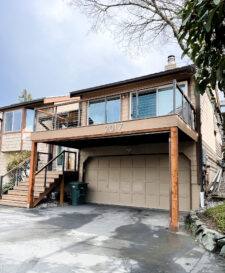
What Tampa's Climate Does to a Deck Over Time
UV Exposure
Florida gets some of the most intense, consistent UV exposure in the country. Wood decking that isn't properly finished and maintained will gray, crack, and check within a few seasons. Composite decking fades less dramatically but still needs a UV-stable product — cheaper composites can chalk or discolor faster than homeowners expect.
Humidity and Moisture
Consistent humidity, afternoon thunderstorms, and heavy dew all mean deck framing spends a lot of time damp. Untreated or improperly treated lumber, especially in ledger boards and joists close to the ground, is where we most often find rot when we're called out to look at an older deck. Proper flashing, ventilation underneath the deck, and the right fasteners matter more here than in drier regions.
Wind and Storm Loads
Hillsborough County sees tropical storm and hurricane-force wind events, and a deck attached to the house has to be engineered to handle uplift and lateral load, not just the weight of people standing on it. Railing systems, post connections, and the ledger attachment to the house are all places where wind can find a weak point if they weren't installed to current code.
Salt and Coastal Air Influence
New Tampa isn't directly on the water, but Tampa Bay's proximity still means the air carries more salt and moisture than an inland climate. Fasteners and hardware that aren't rated for coastal-influenced environments corrode faster than homeowners expect, which is one of the most common causes of premature railing and connector failure we see on decks that are otherwise structurally sound.
Getting the Framing Right — The Part You Don't See
A deck's finish material gets all the attention, but the framing underneath is what determines whether it lasts 10 years or 25. In our climate, that means:
- Pressure-treated framing lumber rated for ground contact where posts meet the soil
- Stainless steel or coated structural screws and connectors resistant to Florida's humidity and salt-influenced air
- Proper ledger board flashing so water is directed away from the house rim joist, not trapped behind it
- Footings set below the frost line requirement and sized for the actual load and soil conditions in the yard
- Joist spacing and blocking that account for the specific decking material chosen, since composite and wood have different span requirements
- Adequate airflow underneath the deck to let framing dry out after rain instead of staying damp
Skipping any of these to save time or money is exactly how a deck that looks fine for the first few years starts having soft spots, squeaks, or rail wobble by year five or six.
Choosing the Right Decking Material
There's no single "best" decking material — the right choice depends on budget, how much upkeep a homeowner wants to take on, and how the deck will be used. We'll walk through the real trade-offs rather than push whatever has the best margin.
| Material | Upfront Cost | Maintenance | How It Handles Tampa's Climate |
|---|---|---|---|
| Pressure-treated wood | Lowest | Annual cleaning and re-sealing recommended | Good value, but UV and humidity mean it needs consistent upkeep to avoid graying, splintering, and checking |
| Composite decking | Higher | Occasional washing, no staining/sealing | Handles humidity and UV well with a quality, UV-stable product; resists rot and insect damage |
| Tropical hardwoods | High | Periodic oiling to maintain color | Naturally dense and rot-resistant, but installation is less forgiving and requires specific fasteners |
| PVC decking | Highest | Minimal | Fully resists moisture and rot; best long-term option for ground-level or heavily shaded areas that stay damp |
We won't install a decking product we don't think will hold up here just because it's the cheapest option on paper. If a material choice comes with a real maintenance trade-off — more sealing, more attention to drainage, a different fastener schedule — we'll tell you upfront so it's your decision to make, not a surprise two summers in.
Railings, Fasteners, and Hardware
Railing systems fail more often from hardware corrosion than from the railing material itself. We use fasteners and structural connectors rated for exterior, humid, salt-influenced environments, and we pay close attention to post-to-frame connections since that's the point where most railing failures start. Cable rail, aluminum, and composite railing systems all have a place depending on the look a homeowner wants, but the connection hardware underneath needs to match the environment regardless of which style is chosen.
Our Process for a New Tampa Deck Project
1. On-Site Assessment
We walk the yard, look at drainage patterns, existing grade, sun and shade exposure, and how the deck will tie into the house. If we're replacing an existing deck, we check the condition of the ledger attachment and any framing that might be reused.
2. Design and Material Selection
We talk through layout, size, decking material, and railing options based on budget and how the space will be used — entertaining, a quiet spot off a primary bedroom, a pool deck, whatever the goal is.
3. Permitting
Deck construction in Hillsborough County typically requires a permit, and we handle that process as part of the job so the work is inspected and documented correctly.
4. Construction
Framing first, with attention to flashing, fastener selection, and structural connections, then decking and railing installation.
5. Final Walkthrough
We go over the finished deck with you, point out any maintenance recommendations specific to the material chosen, and make sure everything meets what was discussed at the start.
New Deck vs. Repairing an Existing One
Not every project needs to be a full rebuild. If the framing is sound but the decking surface has failed, or if a railing has come loose but the posts are solid, a repair or partial replacement can extend the life of a deck without the cost of starting over. The determining factor is almost always the condition of the framing and footings — if those are compromised by rot or undersized for current code, patching the surface just delays a bigger repair later. We'll always tell you honestly which category a project falls into after we've looked at it.
What to Ask Before Hiring Anyone for Deck Work
- Are you pulling a permit for this project, and is the work scheduled for inspection?
- What fastener and hardware grade are you using, and is it rated for humid/coastal-influenced environments?
- How are you flashing the ledger board where the deck attaches to the house?
- What's the footing depth and sizing, and how was that determined for this specific yard?
- Do you carry general liability insurance and workers' comp coverage?
- What's the expected maintenance schedule for the decking material you're recommending?
If a contractor can't give straight answers to these, that's worth paying attention to before signing anything.
Why Local Experience in New Tampa Matters
We work throughout Hillsborough County, and New Tampa's mix of home ages, HOA requirements, and yard conditions is something we've dealt with repeatedly. Knowing how local permitting works, what inspectors here are looking for, and how the neighborhood's soil, drainage, and tree cover tend to behave means fewer surprises during construction and a deck that's built to actually hold up to Tampa's heat, humidity, and storm season — not just to look good on installation day.
If you're thinking about a new deck or need an honest look at one that's showing its age, we're happy to come out, walk the site, and give you a straightforward estimate — no pressure, no obligation. Reach out using the form below to get started.