 Tampa Roofing
 Siding Built for New Tampa's Climate, Not Just Any Florida Climate
New Tampa sits far enough inland from Tampa Bay that homeowners sometimes assume salt air and storm exposure are someone else's problem. They aren't. Hillsborough County still sees hurricane-force wind gusts, wind-driven rain that gets pushed sideways into wall assemblies, and some of the most intense year-round UV exposure in the continental United States. Add the humidity that never really leaves the Tampa area, and you have a climate that is genuinely hard on exterior materials. Siding here isn't just a cosmetic choice — it's the first line of defense for the wood framing, sheathing, and insulation behind it.
New Tampa's newer subdivisions and master-planned communities also mean a lot of homes built in a fairly narrow window of decades, often with similar builder-grade siding choices. When that siding starts to fail — and much of it does around the same age across a neighborhood — homeowners start comparing notes. That's a big part of why we get so many calls from this area specifically: once one house on a street replaces its siding and the difference is visible, neighbors start asking who did the work.
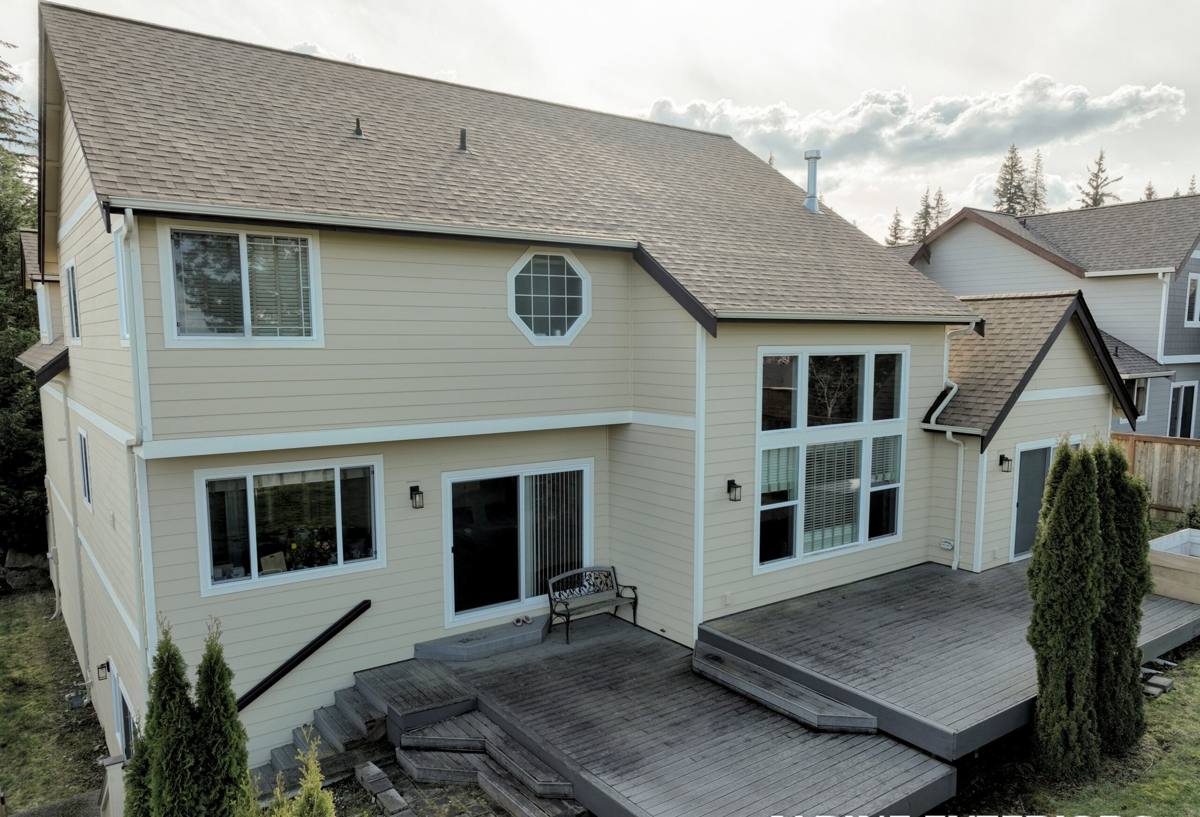
Why Fiber Cement Makes Sense Here Specifically
Fiber cement siding is a blend of cement, sand, and cellulose fiber, engineered to resist the things that actually break down siding in a subtropical climate: moisture, heat cycling, UV, and wind-driven debris. In New Tampa, the practical benefits show up in a few specific ways.
UV and Fade Resistance
Tampa's UV index runs high most of the year. Painted wood and many synthetic sidings chalk, fade, or degrade under that kind of sustained sun exposure. Fiber cement with a factory-applied finish is formulated to hold color and resist UV breakdown far longer than field-applied paint on wood substrates.
Moisture and Humidity Behavior
Florida humidity doesn't take a season off. Siding that absorbs moisture, swells, or traps water behind it becomes a mold and rot risk fast — especially on the shaded, north-facing walls common in New Tampa's tree-lined subdivisions where siding stays damp longer after rain. Fiber cement is dimensionally stable and doesn't swell and contract the way wood-based products do.
Wind and Storm Performance
Hurricane-force wind events are a real design consideration in Hillsborough County, not a hypothetical. Siding needs to stay fastened, stay flat, and shed wind-driven rain rather than let it track behind the panels. This is as much about installation technique — fastening pattern, flashing, water-resistive barrier detailing — as it is about the material itself, which is why we treat installation quality as equal in importance to product choice.
What a Correct Fiber Cement Job Actually Involves
A lot of siding problems we get called to diagnose in New Tampa aren't material failures — they're installation shortcuts. Fiber cement is forgiving of Florida's climate, but it is not forgiving of poor detailing. A correct job includes:
- Removal of the old siding down to the sheathing, so the wall assembly can actually be inspected, not just covered over
- Repair of any rotted sheathing, framing, or trim found underneath before new material goes up
- A properly lapped and sealed water-resistive barrier, since this — not the siding face itself — is the real water management layer
- Correct flashing at windows, doors, and every roof-to-wall intersection
- Manufacturer-specified fastening patterns and clearances, including gaps at butt joints and proper clearance from grade, roofing, and decks
- Factory-finished panels installed with matched, pre-finished trim so field-painted cut edges are minimized and properly sealed
Skipping any one of these steps is how a siding job that looks fine on installation day starts showing problems within a couple of years — moisture intrusion, streaking at joints, or fastener issues that show up as popped nail heads and cracked panels.
Why We Only Install James Hardie
We install James Hardie fiber cement siding exclusively. We don't install LP SmartSide, vinyl, Cemplank, Allura, or primed wood siding, and we think homeowners deserve an honest explanation of why, not just a sales pitch for what we do carry.
Vinyl is inexpensive and easy to install, but it's a thin plastic product that can warp or become brittle under sustained UV and heat, and it offers little in the way of impact resistance against wind-blown debris. LP SmartSide is a wood-strand product — engineered to resist moisture better than raw wood, but it is still an organic, wood-based substrate, which means it depends heavily on flawless caulking and painting maintenance to keep moisture out over the long run, something that's a tougher standard to hold to in Florida's humidity. Other fiber cement brands like Cemplank and Allura are legitimate fiber cement products, but we've standardized on one manufacturer so our crews build deep, repeatable expertise with one set of installation specs, one flashing system, and one warranty structure, rather than splitting focus across several.
James Hardie is non-combustible, which matters for insurance and fire safety, and its HZ5 product line is climate-engineered specifically for high-humidity, high-moisture regions like ours. The ColorPlus factory finish process bakes color onto the panel under controlled conditions, which holds up to UV and salt air exposure far better than a site-applied paint job, and it comes backed by a strong transferable warranty when installed to Hardie's specifications by a certified installer.
Fiber Cement Options Compared
| Factor | Vinyl | Wood-Based (e.g. LP SmartSide) | James Hardie Fiber Cement |
|---|---|---|---|
| UV/fade resistance | Moderate; can chalk over time | Depends on paint maintenance | High with factory ColorPlus finish |
| Moisture/humidity tolerance | Good, but can trap moisture behind panels | Requires diligent sealing and repainting | Engineered for high-humidity climates (HZ5) |
| Wind/impact resistance | Lower; can crack or blow off in high wind | Moderate | High when installed to spec |
| Combustibility | Combustible (plastic) | Combustible (wood-based) | Non-combustible |
| Maintenance burden | Low, but limited repair options | Ongoing paint/caulk upkeep | Low; factory finish reduces repainting cycle |
Our Process for New Tampa Homes
Every siding job starts with an in-person inspection, not a phone estimate. We walk the exterior, check for soft spots in the current siding and trim, look at how water currently drains around the foundation and roofline, and talk through what's actually driving the replacement — age, storm damage, a remodel, or ongoing moisture issues.
Step by Step
- Inspection and estimate: A full walk-around, photos of problem areas, and a written scope before any work is scheduled
- Tear-off and sheathing check: Old siding comes off and the sheathing gets inspected and repaired as needed before anything new goes up
- Weather barrier and flashing: Water-resistive barrier and flashing details get installed or corrected at every penetration and transition
- Hardie panel installation: Panels, trim, and accessories installed to manufacturer fastening and clearance specs
- Final detailing and walkthrough: Caulking, touch-up, and a walkthrough so you know exactly what was done and why
Because we work this area regularly, we're familiar with the HOA aesthetic guidelines common in many New Tampa communities and the general permitting expectations in Hillsborough County, which keeps the process from stalling out on paperwork.
Why a Crew That Already Works New Tampa Matters
Siding crews that bounce between wildly different climates tend to install the same way everywhere. A crew that works Hillsborough County regularly has seen what actually fails here — which wall orientations hold moisture longest, which flashing details get skipped by production builders, how HOA color approval processes typically run, and what storm exposure really looks like on a New Tampa lot versus a coastal one. That local pattern recognition is the difference between a crew that follows a checklist and one that knows why each step on the checklist exists.
There's also a practical service argument: a local crew is reachable for warranty questions, minor touch-ups, or storm-damage assessments without a multi-hour drive. That matters more with siding than with almost any other exterior trade, because siding problems are often slow-developing — you want someone who'll still be local and reachable years down the road.
Cost Factors Homeowners Should Understand
We don't quote pricing without seeing the house, but the main variables that move a siding project's cost are worth understanding upfront:
| Factor | Why It Matters |
|---|---|
| Home size and wall complexity | More square footage and more corners, gables, and trim details mean more material and labor |
| Sheathing condition | Rot or water damage found during tear-off adds repair scope before new siding can go on |
| Siding profile and finish | Lap width, texture, and color selection affect material cost |
| Trim and accessory scope | Window/door trim, corner boards, and fascia detailing add labor time |
| Access and site conditions | Two-story sections, tight lot lines, and landscaping can affect labor time |
Signs Your New Tampa Home May Need Siding Attention
- Visible cracking, warping, or bubbling on siding panels, especially on sun-exposed walls
- Soft or spongy spots when pressed near the base of walls or around window trim
- Peeling or persistently fading paint that keeps returning within a year or two of repainting
- Staining or streaking at panel joints, which often points to water tracking behind the siding
- Visible gaps, missing caulk, or separated trim after a storm season
- Rising energy bills that may indicate compromised insulation behind failing siding
Maintenance Expectations After Installation
One advantage of James Hardie's factory-finished ColorPlus siding is a lighter maintenance load than painted wood alternatives, but "lower maintenance" doesn't mean "no maintenance." A rinse-down once or twice a year removes pollen, salt residue, and grime that Tampa's climate accumulates quickly. Caulked joints and trim should be checked annually, particularly after hurricane season, since sealant is the first thing that can degrade under repeated UV and moisture cycling even when the siding itself is holding up fine.
If your New Tampa home's siding is aging, storm-damaged, or you're just tired of the maintenance cycle, we're glad to come take a look. The estimate is free, there's no pressure, and you'll get a straight answer about what your home actually needs — fill out the form below to get started.