 Tampa Roofing
 What Plant City's Climate Does to Siding
Plant City sits inland in Hillsborough County, east of Tampa, but distance from the water doesn't buy much protection from Florida weather. Hurricane-force winds that spin off the Gulf still reach this far inland with real force, and they don't arrive alone — they bring wind-driven rain that gets pushed sideways and upward into laps, seams, and corner trim in a way straight-down rain never does. Layer on some of the most intense year-round UV exposure in the country and the salt air that drifts inland from Tampa Bay on a steady onshore flow, and you have a combination that ages siding faster than the manufacturer's warranty card usually admits.
None of this is unique to any one house in Plant City — it's the baseline every exterior wall in this part of Hillsborough County has to survive, year after year, not just during storm season. Siding that isn't specified and installed for these conditions doesn't fail all at once. It fails a little every year: a hairline crack that lets moisture in, a seam that opens under UV-driven expansion and contraction, a fastener that backs out after enough freeze-free heat cycling. By the time it's visibly bad, the damage underneath is usually further along than the surface lets on.
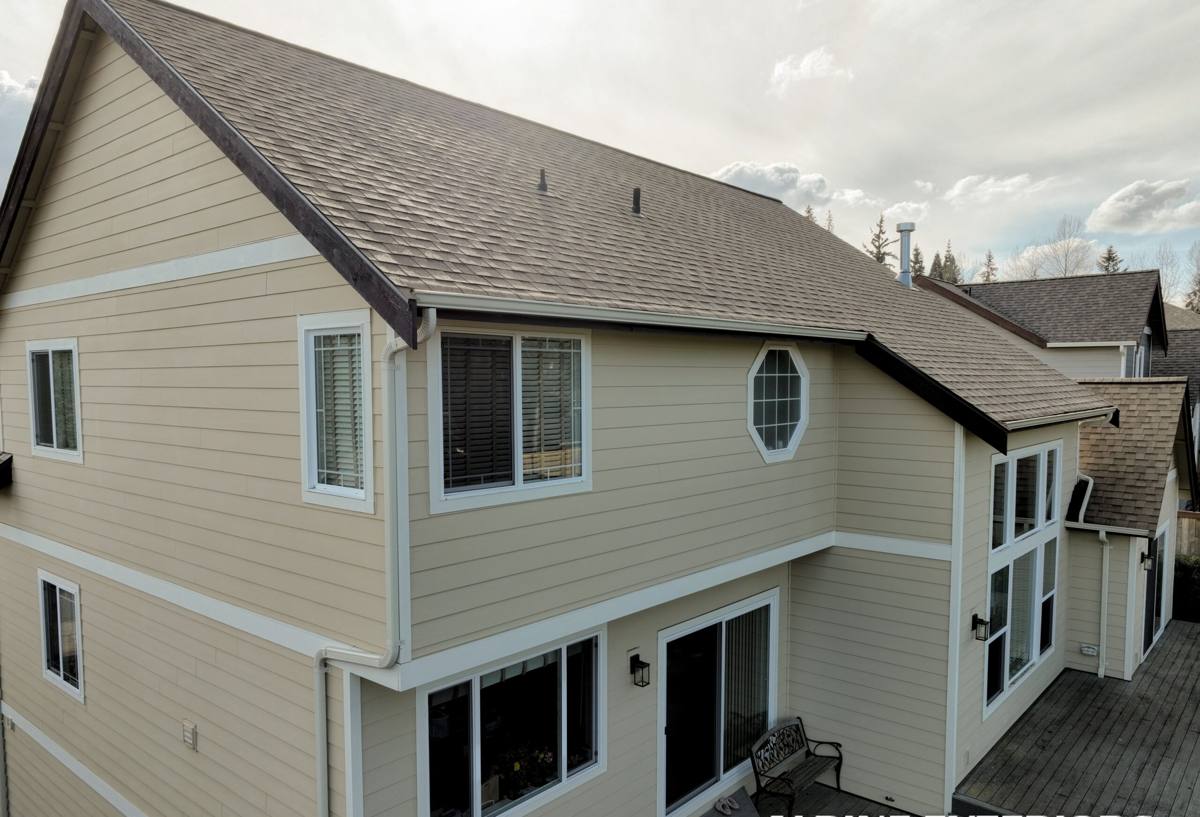
Signs Plant City Siding Needs Replacing, Not Patching
Not every siding problem calls for a full replacement, but a few signs usually mean patching is throwing money at a system that's already past its useful life:
- Soft or spongy spots when you press on the siding, which usually means moisture has already reached the wall sheathing underneath
- Visible warping, buckling, or panels that have pulled away from the wall
- Cracking or splitting that runs along multiple boards rather than one isolated spot
- Paint that won't hold anymore no matter how often it's redone, or chalking that rubs off on your hand
- Soft, swollen, or delaminating siding, a common issue with wood-based products in Florida humidity
- Rising utility bills alongside drafty walls, which can point to a failing water-resistive barrier or insulation gaps behind the siding
- Visible mold or mildew staining that keeps coming back even after cleaning
If you're seeing two or more of these at once, that's usually a sign the siding system as a whole — not just the boards you can see — has reached the point where replacement is the honest recommendation, not another round of caulk and paint.
Why We Install James Hardie Fiber Cement, and Nothing Else
We only install James Hardie fiber cement siding. We don't install vinyl, LP SmartSide, Cemplank, Allura, or primed wood products, and that's a deliberate standard, not a lack of options. In a climate like Plant City's, the material matters as much as the installation.
Fiber cement is non-combustible, which matters in a state with real wildfire and lightning-strike risk alongside its hurricane exposure. It doesn't expand and contract with heat the way vinyl does, so seams stay tighter through Florida's temperature swings between a hot afternoon and a cooler evening. It resists moisture intrusion and doesn't support rot the way wood-based products can once water gets past the surface. And James Hardie's ColorPlus finish is baked on in a factory-controlled process, which holds color and resists fading under sustained UV exposure far better than a field-applied paint job — a real advantage in a region that gets this much sun almost every month of the year.
James Hardie also engineers specific product formulations for different climate zones, and homes in this part of Florida fall into the HZ5 zone, built to handle high humidity and moisture exposure. That's a meaningful difference from a generic national siding spec — it's a product built for exactly the conditions Plant City throws at it, not a compromise that happens to work here too.
What We Won't Install, and Why
Vinyl siding is affordable and low-maintenance in mild climates, but it softens and warps at high heat and can crack in wind events strong enough to flex it past its limits — both real risks in Hillsborough County. LP SmartSide and other wood-strand products perform reasonably well when installed and maintained exactly to spec, but they rely on an engineered wood core that's more sensitive to sustained moisture exposure than fiber cement, and Florida's humidity gives that vulnerability a lot of opportunities. Primed wood siding needs the most upkeep of all in this climate — repainting on a tight cycle just to keep moisture out. None of these are bad products in every setting. We simply won't put our name behind an installation in this specific climate when a better-suited material exists, and that's why every job we do is Hardie.
What a Correct Siding Replacement Involves
The material only performs as well as the installation underneath it. A correct siding replacement in Plant City follows a specific sequence, and skipping steps is where most premature failures start:
- Full tear-off of the old siding rather than installing over it, so the wall sheathing underneath can actually be inspected rather than sealed up with hidden problems still inside.
- Sheathing inspection and repair, replacing any wood that's soft, delaminated, or water-damaged before anything new goes over it.
- Water-resistive barrier installation, a house wrap or building paper layer that manages moisture that gets past the siding itself — the last line of defense if a seam or fastener ever fails.
- Flashing at every penetration — windows, doors, hose bibs, light fixtures, vents — since these details, not the open wall field, are where most leaks actually start.
- Correct fastening pattern using the nail or screw type, spacing, and placement James Hardie specifies for wind exposure in this region, not a generic pattern pulled from a different climate zone's install guide.
- Proper clearances at the ground, roofline, and any hardscape, keeping siding above grade and away from constant moisture contact.
- Sealing and caulking only where Hardie's install specs call for it — over-caulking traps moisture just as badly as under-caulking lets it in.
- Final inspection of every seam, corner, and penetration before we call the job finished.
Every one of these steps matters more in a coastal-influenced, hurricane-exposed climate than it would somewhere drier and calmer. A fastening pattern that's fine in a low-wind region isn't adequate here, and a water-resistive barrier that's optional elsewhere isn't optional in Hillsborough County.
How Our Process Works in Plant City
We start with an on-site inspection and honest assessment — telling you plainly whether you need full replacement, partial replacement, or just targeted repair, rather than defaulting to the biggest job. From there:
- We walk the exterior with you and point out what we're seeing, including anything underneath the siding once tear-off begins
- We provide a written estimate covering material, labor, and scope, with no surprise add-ons buried in the fine print
- We schedule around Florida's weather patterns, since installation shouldn't happen in the middle of a storm system moving through
- We handle tear-off, sheathing repair, and full installation to James Hardie's specifications for this climate zone
- We clean up thoroughly and walk the finished job with you before we consider it done
Working in Plant City and the surrounding Hillsborough County area regularly means we're not guessing at what this climate demands — we're accounting for it as standard practice on every job, not as an upcharge or a special request.
James Hardie Product Lines and What Fits Plant City Homes
James Hardie makes several siding profiles, and the right one depends on the look you want and the home you're working with:
| Product | Profile | Best Fit |
|---|---|---|
| HardiePlank | Horizontal lap siding | Traditional and most common look for single-family homes |
| HardiePanel | Vertical panel siding | Board-and-batten style, modern or farmhouse exteriors |
| HardieShingle | Staggered or straight-edge shingle | Accent areas, gables, or full-shingle exteriors |
| HardieTrim | Trim boards | Window and door surrounds, fascia, corner boards |
All of these come in James Hardie's HZ5 formulation for our climate zone, and all are available with the factory-applied ColorPlus finish, which carries its own separate finish warranty on top of the product warranty covering the substrate itself. That combination — a product engineered for high humidity and a finish that resists Florida's UV load without fading or chalking early — is a large part of why we standardized on this system instead of offering several competing products.
Cost Factors for a Plant City Siding Replacement
Every home is different, so we won't quote a number without seeing the job, but the factors that move the price are consistent from house to house:
| Factor | Why It Matters |
|---|---|
| Home size and wall area | More square footage means more material and labor hours |
| Sheathing condition | Water damage found during tear-off adds repair scope before new siding goes on |
| Siding profile chosen | Lap, panel, and shingle styles differ in material and labor time |
| Trim and detail work | Homes with more corners, windows, and architectural detail take longer to flash and finish correctly |
| Color and finish | Factory ColorPlus finish versus field-painted options affects material cost and long-term maintenance |
| Accessibility | Multi-story sections or tight lot lines can add labor time and equipment needs |
The biggest cost swings we see come from what's found once the old siding comes off. A home with sound sheathing underneath is a straightforward job. A home with hidden water damage needs that repair addressed properly before new siding goes up — which is exactly why full tear-off, not a cover-over installation, is worth the extra step.
What to Ask Before Hiring a Siding Contractor
Plant City homeowners get pitched by a lot of siding crews, not all of whom work this climate regularly. A few questions separate a contractor who understands what this area demands from one who's just installing whatever's cheapest to sell:
- Do they perform a full tear-off, or install over the existing siding?
- Do they inspect and repair sheathing before installing, and is that spelled out in the estimate?
- What fastening pattern and spacing do they use, and is it matched to this region's wind exposure?
- Is a water-resistive barrier included as standard, not an upsell?
- Are they installing to the manufacturer's specific climate-zone requirements, or a generic national install guide?
- What does the warranty actually cover — material, labor, and finish — and is it transferable if you sell the home?
- Do they have experience working in Hillsborough County specifically, where wind and moisture exposure are part of every job?
A contractor who can answer these clearly, without hedging, is one who's actually thought about what this climate does to a siding system — not just how fast they can finish the job.
Warranty and Long-Term Performance
James Hardie backs its fiber cement products with a strong, transferable limited warranty, and the ColorPlus finish carries its own separate finish warranty covering fade and chip resistance. Warranty terms are meaningful, but they only hold up if the installation matches the manufacturer's requirements — a warranty claim can be denied over an installation detail as small as an incorrect fastening pattern or missing clearance. That's a large part of why we treat installation specs as non-negotiable rather than a guideline to work around when it's inconvenient. Correct installation isn't just about performance today — it's what keeps the warranty valid if you ever need it years from now.
If your siding is showing its age or you're just planning ahead, we're happy to take a look and give you a straight answer about what your home actually needs. Reach out for a free, no-pressure estimate using the form below.