 Tampa Roofing
 Why Decks in Riverview Wear Out Faster Than Homeowners Expect
Riverview sits in Hillsborough County, close enough to the Alafia River and Tampa Bay that homes here take on a specific mix of weather stress: long stretches of intense, near year-round UV exposure, sudden wind-driven rain from summer storms, tropical systems that bring hurricane-force gusts, and a steady dose of salt-tinged air moving inland off the bay. None of these factors is dramatic on its own, but stacked together over years, they age a deck structure much faster than the same design would age in a drier, milder climate.
UV breaks down the surface fibers of wood decking and the outer layer of composite boards, leading to graying, checking, and eventually splintering if the boards aren't rated for it. Wind-driven rain gets pushed sideways into ledger connections, fastener holes, and the gaps between boards, rather than simply running off the surface the way it would in calm weather. And humidity keeps framing lumber at a higher moisture content for more of the year, which accelerates rot at the connections most homeowners never look at closely: the ledger board, the joist hangers, and the tops of the support posts.
We see the same pattern on a lot of Riverview decks: the boards look fine from a distance, but the fasteners are rusted, the ledger flashing has failed, or the framing underneath has softened. A deck replacement done right for this area has to account for all of that, not just swap out old boards for new ones.
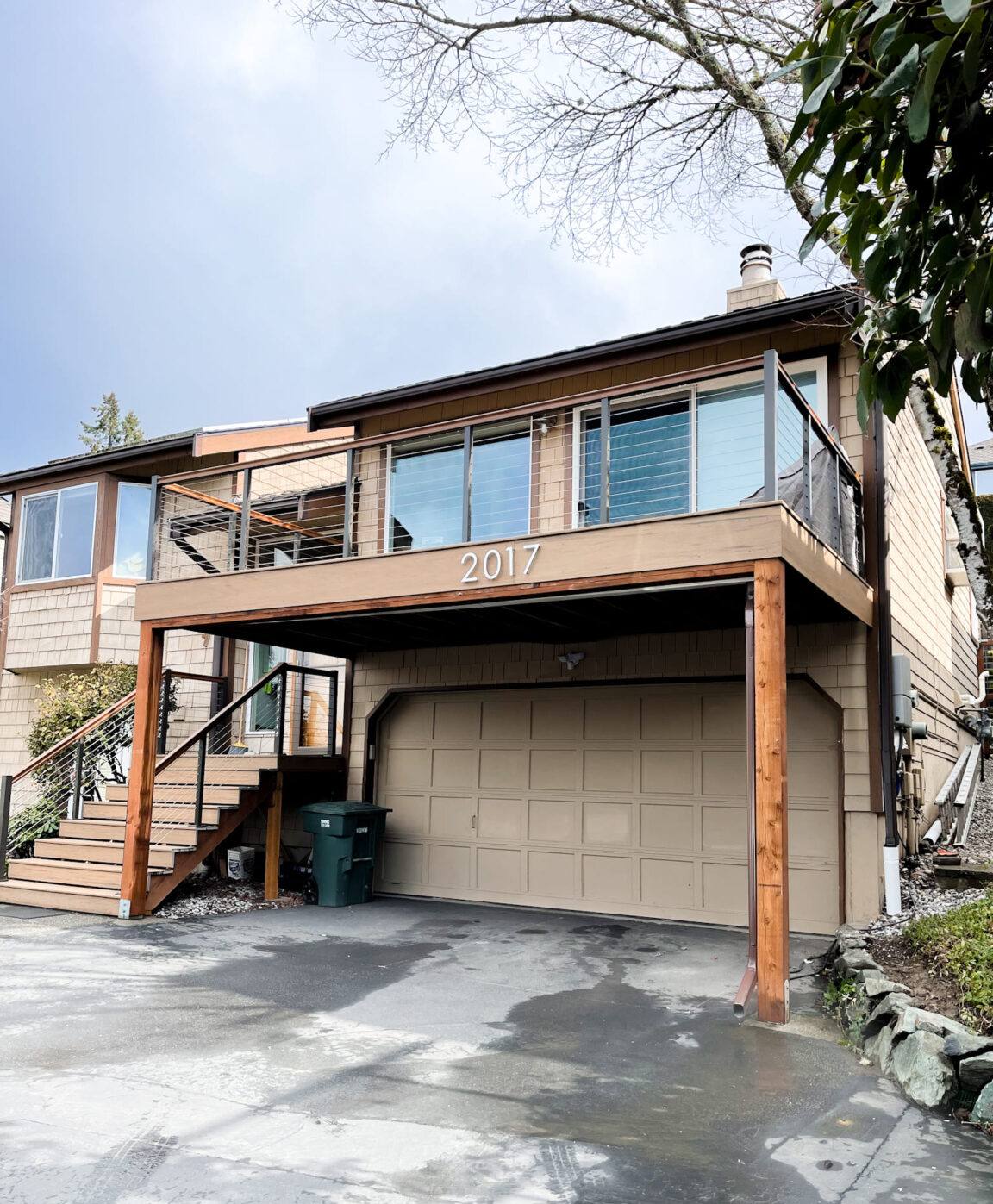
What a Correct Deck Replacement Actually Involves
A deck is only as good as the structure underneath it. Replacing the surface boards without addressing the framing, footings, and connections is the single most common shortcut we see, and it's the reason decks that "look new" can fail again within a few years. A proper replacement addresses every layer of the structure:
Footings and Posts
Footings need to be sized and set to match the loads the deck will actually carry, with post bases that keep wood off standing water and away from direct soil contact. In this area, ground moisture and periodic heavy rain make proper footing depth and post-base hardware more important than they might be in a drier climate.
Ledger Attachment and Flashing
The ledger board, where the deck attaches to the house, is the single most failure-prone connection on any deck. It has to be through-bolted (not just nailed or lag-screwed) and properly flashed so wind-driven rain can't work its way behind the siding. A poorly flashed ledger is a slow leak that homeowners often don't discover until there's already damage to the house's rim joist.
Joists, Hangers, and Fasteners
Framing lumber should be pressure-treated for ground or above-ground contact as appropriate, and every hanger, bracket, and fastener needs to be rated for use with modern treated lumber, which is more corrosive to standard steel than older treatment chemicals were. Stainless steel or heavy hot-dip galvanized hardware is the standard we hold to on coastal and near-coastal builds because of the added humidity and airborne salt.
Hurricane Ties and Structural Connections
Post-to-beam and beam-to-joist connections should include appropriate hurricane ties or structural screws rated for uplift resistance, not just for downward load. A deck attached to the house can act like a lever arm in high wind if it isn't properly tied down, which is why wind resistance has to be designed in, not added as an afterthought.
Choosing the Right Decking Material for This Climate
There's no single "best" decking material for every home — the right choice depends on how much maintenance a homeowner wants to do, budget, and how the deck will be used. What matters most in Hillsborough County is picking a product that's rated for sustained UV and humidity, and installing it the way the manufacturer specifies, since improper installation is behind most of the early failures we see in composite decking specifically.
| Material | UV & Moisture Behavior | Maintenance | Typical Lifespan Here |
|---|---|---|---|
| Pressure-treated pine | Prone to graying, checking, and splintering under strong UV if not sealed regularly | Annual cleaning and re-sealing recommended | 10-15 years with upkeep |
| Composite (capped) | Resists fading and moisture absorption well when capped on all sides | Periodic washing, no sealing or staining | 20-30 years |
| PVC decking | Fully synthetic; handles humidity and UV with minimal fading | Lowest maintenance of the common options | 25-30+ years |
| Tropical hardwoods | Naturally dense and rot-resistant but still needs UV protection | Oiling every 1-2 years to maintain color | 20-25 years with upkeep |
We install all of these, and our recommendation depends on the homeowner's priorities. What we won't do is install a product in a way that ignores its manufacturer's fastening or gapping specifications just to save time — that's where a lot of "composite decking failures" actually originate, and it's an installation issue more than a product issue.
Permits, Codes, and Wind Load Requirements
Deck replacement in Hillsborough County requires a permit in most cases, and inspections check the same structural details outlined above: footing size and depth, ledger attachment, joist spacing, and railing height and spacing if the deck is elevated. Florida's building code sets wind load requirements that are stricter than a lot of other states, because the whole state has to be designed around hurricane exposure. A deck built without those requirements in mind might pass a casual look but won't hold up the way it's supposed to when a strong storm comes through.
We pull permits and build to code as standard practice, not as an upsell. It protects the homeowner's investment, and it matters at resale — an unpermitted deck replacement can become a real problem during a home sale inspection.
Our Deck Replacement Process
- On-site assessment. We inspect the existing deck's framing, footings, and ledger connection to understand what's actually failing, not just what's visible from the top.
- Honest scope discussion. We walk through what needs full replacement versus what can be reused, along with material options that fit the home and budget.
- Permitting. We handle the permit application and schedule required inspections through the county.
- Demolition. Old decking, framing, and any compromised ledger flashing are removed and disposed of.
- Structural rebuild. Footings, posts, ledger attachment, and framing are built to current code with corrosion-resistant hardware throughout.
- Decking and railing installation. Boards are installed per manufacturer spec, with attention to gapping for drainage and expansion in our humidity.
- Final inspection and walkthrough. We confirm the county inspection passes and walk the homeowner through the finished deck and any maintenance recommendations.
Common Problems We Find When Replacing Riverview Decks
Because we work in this area regularly, certain issues come up often enough that we check for them on every job:
- Rusted or corroded fasteners and hangers that were never rated for treated lumber
- Ledger boards attached with nails or lag screws instead of through-bolts
- Missing or failed ledger flashing allowing water intrusion behind siding
- Undersized or shallow footings that have shifted over time
- Composite decking installed without proper gapping, causing buckling in heat
- Railing posts that aren't structurally tied into the framing, a safety issue as much as a durability one
Finding these during a replacement, rather than after a failure, is the whole point of a proper assessment before work begins.
Keeping a New Deck Performing in This Climate
Whatever material a homeowner chooses, a few habits make a real difference in how long a deck holds up under Tampa-area sun and storms:
- Rinse off salt residue and organic debris after storms, especially near coastal-facing sides of the home
- Reseal or oil wood decking on the schedule the product calls for — skipping a cycle accelerates UV damage
- Keep gutters and downspouts clear so runoff doesn't pool near footings or posts
- Check railing connections and fastener heads once or twice a year for early signs of corrosion
- Trim back vegetation that traps moisture against the underside of the deck
Why a Crew That Already Works in Riverview Matters
Deck replacement done for a home in a drier, inland climate can look identical on paper to one built for Hillsborough County and still fail years earlier here. Fastener choice, flashing detail, footing depth, and wind-load connections all need to reflect the reality of hurricane-force wind events, sustained UV, and humid, salt-influenced air. A crew that regularly works Riverview and the surrounding Tampa area already knows which hardware holds up, which decking products perform as advertised locally, and what the county inspectors are specifically checking for — which means fewer surprises, fewer re-inspections, and a deck that's actually built for the conditions it has to survive.
What This Costs, in Broad Terms
Deck replacement cost depends mainly on size, decking material, and how much of the existing structure can be reused versus rebuilt. Pressure-treated wood replacements are generally the most affordable option upfront, composite and PVC cost more in materials but less over time in maintenance, and any structural issues found in the framing or footings during demolition will add to the scope. We provide a clear, itemized estimate after the on-site assessment so there are no surprises once work begins.
If your deck is showing its age, or you're not sure whether it needs a full replacement or just targeted repairs, we're happy to take a look and give you a straightforward, no-pressure estimate — just fill out the form below.