 Tampa Roofing
 Roof Repair Built for New Tampa's Climate
New Tampa sits in Hillsborough County, and like the rest of the Tampa Bay area, its roofs live under conditions that most of the country never has to deal with. Intense, near-constant UV exposure bakes shingles and membranes for most of the year. Summer storm season brings wind-driven rain that finds its way into any gap, lift, or aging seal. And because we're close enough to the coast, salt air works its way into metal fasteners, flashing, and vent components over time, accelerating corrosion that inland roofs rarely see at the same rate. A roof repair here isn't just patching a leak — it's addressing a system that's under year-round stress from heat, moisture, and wind, sometimes all in the same week.
That combination is why a repair that would hold up fine in a drier, milder climate can fail fast in New Tampa if it's not done with local conditions in mind. Every fix we make accounts for how the roof will behave through another humid summer, another round of tropical downpours, and another few years of UV breakdown.
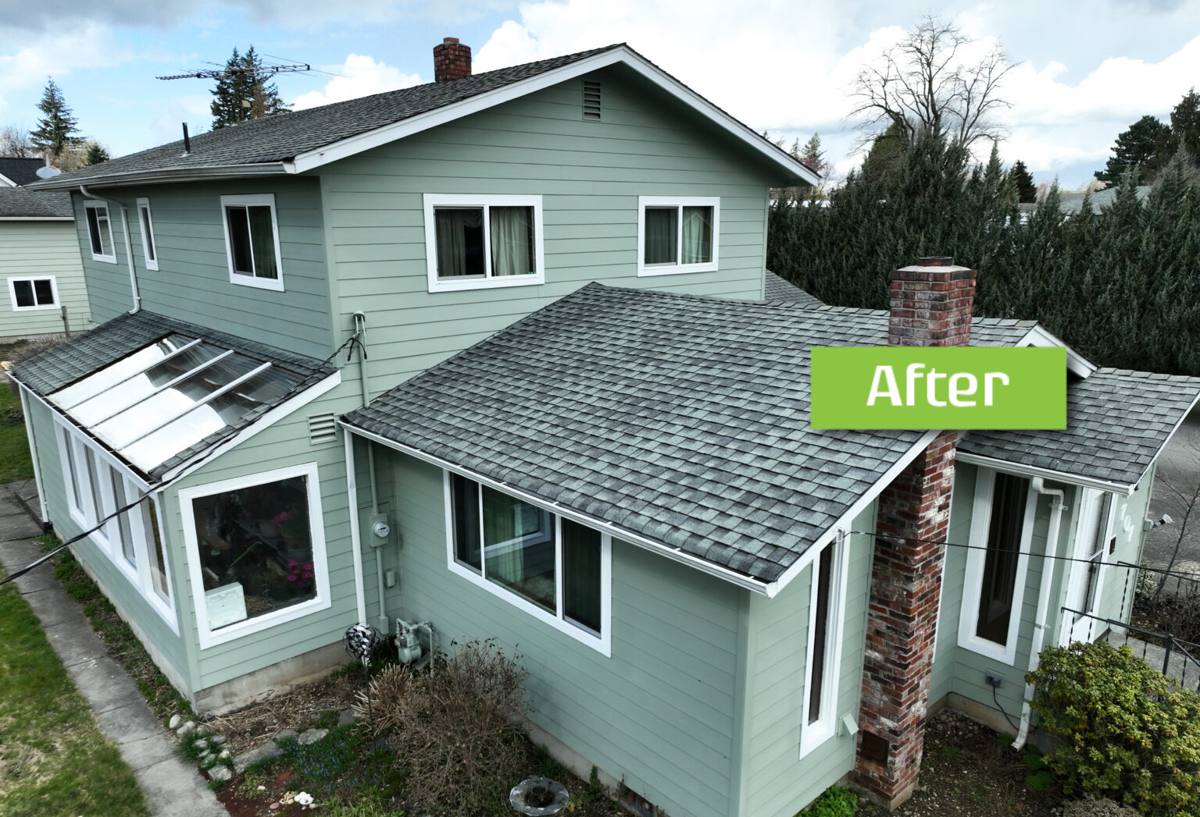
What a Real Roof Repair Actually Involves
"Roof repair" gets used loosely, and that's part of the problem homeowners run into. There's a real difference between a quick patch and a repair that actually solves the underlying issue.
Patch Job
A patch covers a visible symptom — a spot of sealant over a crack, a shingle laid over a soft area — without checking what caused the damage or whether it's spreading underneath. Patches are fast and cheap, but on a Florida roof they tend to fail within a season or two because they don't address moisture that's already gotten into the decking or underlayment.
Proper Repair
A proper repair starts with figuring out why the failure happened — a lifted shingle from wind, a cracked pipe boot from UV breakdown, a flashing seam that opened up — and then correcting that specific failure with materials and technique that match the rest of the roof system. It includes checking the decking underneath for soft spots or rot, confirming the underlayment is still doing its job, and making sure the fix ties in cleanly with surrounding shingles or flashing so water sheds the way it's supposed to.
We do the second kind. It takes longer than slapping on sealant, but it's the only approach that actually holds up through a New Tampa summer.
Common Roof Problems We See in New Tampa
Wind-Lifted or Missing Shingles
Gusts from seasonal storms can lift shingle edges or tear them off outright, especially on roofs where the original nailing pattern was marginal or where sealant strips never fully bonded due to installation timing or age. Once a shingle lifts, the next hard rain drives water underneath it.
Cracked or Failed Flashing
Flashing around chimneys, skylights, and wall intersections is one of the most common leak points on any roof. In this climate, thermal cycling — hot days, cooler nights, sudden storm temperature drops — causes metal flashing and the sealant around it to expand, contract, and eventually crack or separate.
Deteriorated Pipe Boots and Vent Seals
The rubber gaskets around plumbing vents take some of the worst UV exposure on the whole roof. They're small, they're often overlooked, and they're one of the single most common sources of a slow, hard-to-trace leak in this region.
Valley and Low-Slope Wear
Roof valleys concentrate water flow, and any debris buildup, granule loss, or membrane wear in a valley shows up as a leak much faster than the same wear would on an open slope. Wind-driven rain during storms can also push water sideways into valleys and low-slope transitions that weren't designed to handle horizontal force.
Our Repair Process, Step by Step
Every repair we do in New Tampa follows the same structured process, whether it's a single leak or storm damage across the whole roof.
1. Full Roof Inspection
We don't just look at the spot where the leak showed up inside. Water travels — a stain in a bedroom ceiling can trace back to a flashing failure ten feet away. We inspect the whole roof surface, the flashing details, the ventilation, and the attic side where accessible.
2. Honest Diagnosis
We explain what's actually wrong, why it happened, and what your realistic options are — repair now, plan for a larger repair, or start thinking about replacement timeline if the roof is old enough that repairs are becoming a pattern rather than a one-off.
3. The Repair Itself
We remove and replace damaged materials rather than layering over them, match shingle or flashing profiles as closely as possible, and rebuild flashing and seal details to shed water correctly rather than just cover the gap.
4. Cleanup and Documentation
We clear debris, walk you through exactly what was done, and give you clear documentation of the work — useful for your records and for insurance if the damage was storm-related.
Repair vs. Replacement: How to Tell Which You Need
Not every roof problem calls for a full repair, and not every repair is a good use of money if the roof is near the end of its service life. Here's how we help homeowners think through it.
| Factor | Points Toward Repair | Points Toward Replacement |
|---|---|---|
| Roof age | Well within expected lifespan for the material | Near or past the material's typical service life |
| Damage extent | Isolated to one area (flashing, one section of shingles) | Spread across multiple sections or slopes |
| Repair history | First or infrequent repair | Repeated repairs to the same or different areas |
| Decking condition | Solid, dry decking under the damaged area | Soft spots, rot, or widespread moisture intrusion |
| Granule/surface wear | Localized wear or damage | Uniform granule loss or UV breakdown across the roof |
We'll tell you honestly which side of that table your roof falls on. A roof that's a good repair candidate doesn't need to be replaced early, and a roof that's genuinely at the end of its life doesn't benefit from throwing repair money at it repeatedly.
Materials and Methods We Rely On
For repairs, we use materials that match your existing roof system as closely as possible — same or comparable shingle profile and weight class, correctly profiled metal flashing, and sealants and underlayment rated for the sustained heat and UV this region sees. We're deliberate about a few things:
- Flashing gets properly formed and fastened, not just caulked over — sealant is a backup, not the primary water barrier
- New shingles are fastened to current wind-resistance nailing standards, since this is a hurricane-exposed region
- Pipe boots and vent seals get replaced with the whole assembly rather than just re-sealed on top of a cracked gasket
- Any decking found to be soft or water-damaged gets replaced before anything is installed over it
We're also straightforward about products we choose not to use for certain repair situations. Some lightweight or highly moisture-sensitive materials require installation precision and conditions that are hard to guarantee on a spot repair, and using them in the wrong context just shifts the maintenance burden back onto the homeowner sooner than it should. Our standard is to use what will actually perform reliably in Hillsborough County's heat and humidity for the specific repair at hand — not necessarily the cheapest or the flashiest option.
What to Ask Before You Hire Anyone for Roof Repair
Roof repair is one of the easiest home services for a fly-by-night operator to get wrong or overcharge for, especially after a storm when demand spikes. Before you sign anything, it's worth running through a short list:
- Are they licensed to do roofing work in Florida, and can they provide proof of insurance?
- Do they inspect the whole roof, or just the spot where you noticed the leak?
- Will they show you the damage and explain the cause, not just quote a price?
- Do they provide written documentation of what was repaired and what materials were used?
- Are they a crew that works in your area regularly, or a traveling storm crew that showed up after the last big weather event?
- Is there a warranty on the workmanship, separate from any manufacturer material warranty?
If a contractor can't answer these clearly and calmly, that's worth noticing.
Why a Local New Tampa Crew Makes a Difference
Roofing work in this part of Florida has its own set of variables — the storm patterns, the humidity, the way salt air and UV combine to age materials differently than they would somewhere drier or colder. A crew that regularly works New Tampa and the surrounding Tampa area has already seen how local roofs age, which repair approaches hold up through hurricane season, and which shortcuts tend to fail here even if they'd be fine elsewhere.
There's also a practical side to it. A local crew can typically respond faster when a storm leaves you with an active leak, and they're still around months or years later if a warranty issue comes up — which matters a lot more than a low bid from a company that isn't based in the area and won't be easy to reach once the check clears.
Simple Maintenance That Extends the Life of a Repair
A good repair lasts longer when the rest of the roof is looked after in between service visits. A few habits go a long way in this climate:
- Keep gutters and valleys clear of leaves and debris so water has a clear path off the roof during heavy storms
- Trim back overhanging branches that drop debris or scrape shingles during windy weather
- After any major storm, do a visual check from the ground for missing shingles, dented vents, or debris on the roof
- Have the roof inspected periodically rather than waiting for a visible leak — small issues are far cheaper to fix than the water damage they eventually cause
None of this replaces a professional inspection, but it reduces the chance of small problems turning into bigger repair jobs down the line.
If you're dealing with a leak, storm damage, or just want an honest read on the condition of your roof, we're glad to take a look. Reach out for a free, no-pressure estimate using the form below — we'll walk the roof, tell you what we find, and give you a clear picture of your options.