 Tampa Roofing
 Roofing in Westchase Has to Answer to Tampa Bay's Climate
Westchase sits inland enough to feel like a quiet, tree-lined community, but it's still squarely inside the Tampa Bay weather system. That means every roof in the neighborhood is dealing with the same combination of stressors: hurricane-force wind gusts during tropical systems, intense year-round UV exposure that most northern climates never see, wind-driven rain that gets pushed sideways under poorly sealed edges, and a steady dose of salt air carried in off the Gulf that accelerates corrosion on metal components. None of these show up as a single dramatic event most years — they add up quietly, and by the time a roof is visibly failing, the decking and flashing underneath have often been compromised for a while.
A roof replacement in this part of Hillsborough County isn't just about swapping old shingles for new ones. It's about building an assembly — decking, underlayment, flashing, ventilation, and the outer roofing material — that's matched to what actually happens to a roof here over 15 to 25 years of Florida weather.
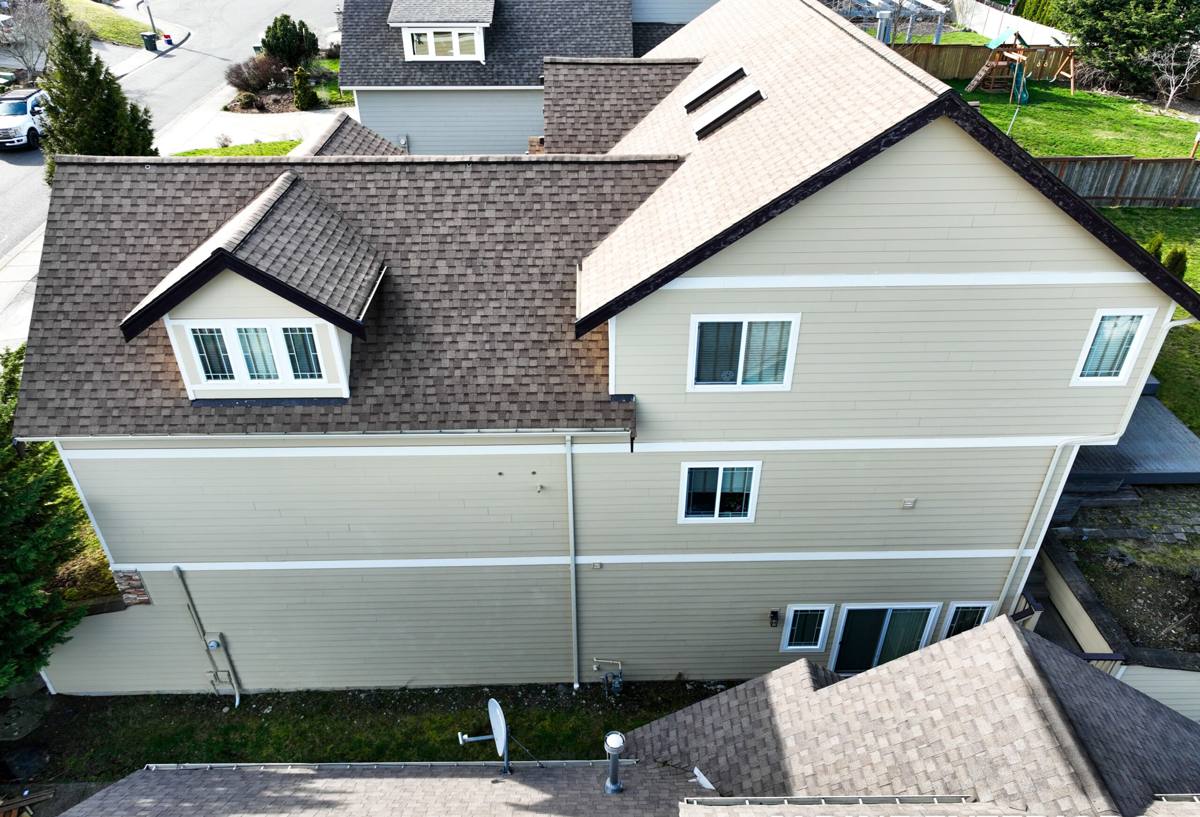
Signs a Westchase Roof Is Past the Point of Patching
What you can see from the ground or attic
- Shingles that are curling, cracking, or losing granules in patches rather than evenly across the roof
- Daylight or water staining visible around roof penetrations when you check the attic after a hard rain
- Soft or spongy spots when walking the roof, which usually means the decking underneath has taken on moisture
- Repeated leaks in the same area even after past repairs
- Granules collecting in gutters or at downspouts more heavily after every storm season
- Visible sagging along the ridge or roof plane, which points to structural issues, not just surface wear
Any one of these can sometimes be handled with a targeted repair. Several at once, or a roof that's already at or past its expected lifespan for this climate, usually means repair costs start working against you — you're paying to patch a system that's failing as a whole.
What an inspection catches that a homeowner usually can't
A trained eye looks past the shingle surface to the flashing at chimneys, skylights, and wall intersections, the condition of the underlayment where it's exposed, and whether the deck nailing pattern still meets current wind-resistance standards. These are the details that determine whether a roof survives the next tropical system intact or loses material in the first sustained gust.
What a Correct Roof Replacement Involves — Not Just a Reshingle
Full tear-off and deck inspection
Every legitimate replacement starts with removing the old roofing material down to the deck. This is the only way to actually see the condition of the plywood or OSB underneath — rot, delamination, and old nail holes don't show up until the surface layer is gone. Any damaged decking gets replaced before anything new goes down, because installing new roofing over a compromised deck just guarantees problems later.
Underlayment built for wind-driven rain
Tampa's storms rarely come straight down. Wind pushes rain sideways and up under roof edges, which is why underlayment selection and installation detail matter as much as the visible roofing material. A synthetic or self-adhering underlayment, properly lapped and sealed at penetrations, is what keeps water out when wind is driving it uphill against the shingle line.
Ventilation that actually moves air
Attic heat buildup is a year-round issue here, not a summer-only one. Poor ventilation shortens shingle life from the underside by cooking the material from inside the attic and traps moisture that leads to deck rot. A correct replacement checks intake and exhaust balance, not just the number of vents on the roof.
Flashing and penetrations sealed to code
Chimneys, skylights, plumbing stacks, and wall-to-roof transitions are where most leaks actually originate — not the open field of shingles. New flashing, properly stepped and sealed, at every one of these points is not optional on a correct job.
Fastening rated for local wind exposure
Hillsborough County's building code reflects the wind loads this area needs to withstand. Nailing pattern, fastener type, and shingle wind rating all have to be matched to code minimums — cutting corners here is exactly what shows up as missing shingles after the next named storm.
Choosing a Roofing Material for a Westchase Home
There's no single "best" material for every house — it depends on your roof's pitch, your budget, your HOA's requirements if you're in a governed section of the neighborhood, and how much long-term maintenance you want to take on.
| Material | Wind performance | Heat/UV behavior | Maintenance |
|---|---|---|---|
| Architectural asphalt shingle | Good, when rated and installed to code | Reflective granule options reduce heat absorption | Low; periodic inspection |
| Metal roofing | Excellent when properly fastened | Reflects heat well; can be noisy in heavy rain | Low, but coastal salt air requires corrosion-resistant fasteners and finishes |
| Concrete or clay tile | Strong if underlayment and fastening are done correctly | Excellent thermal mass, handles UV well | Underlayment beneath tile has a shorter lifespan than the tile itself — this is where most tile roof failures actually happen |
We don't push homeowners toward a single product line. What we do insist on is matching the underlayment and fastening system to the material and to this climate — a beautiful tile or shingle roof installed with the wrong underlayment strategy underneath it is a roof that looks fine and leaks anyway.
HOA and Permitting Considerations in Westchase
Several sections of Westchase are governed by homeowners' associations with rules covering roofing color, material type, and sometimes manufacturer approval lists. Before materials are ordered, it's worth confirming what your specific section requires — this is a step we help homeowners work through rather than something they need to figure out alone.
Every roof replacement in this area also requires a permit through Hillsborough County, along with inspections at defined stages of the work. A contractor who pulls the permit under their own license and schedules those inspections properly is doing what protects you — an unpermitted roof can create real problems at resale and with insurance claims down the line.
Our Process, Start to Finish
- Inspection and honest assessment — we walk the roof and check the attic, and tell you plainly whether you're looking at a repair or a full replacement.
- Written estimate — material options, scope of work, and timeline laid out clearly, no pressure to decide on the spot.
- Permitting — we pull the Hillsborough County permit and handle HOA documentation if your section requires it.
- Material delivery and site protection — landscaping, driveways, and pool enclosures get protected before tear-off begins.
- Tear-off and deck inspection — old material comes off, deck condition gets checked and repaired as needed.
- Underlayment, flashing, and installation — done to the standards this climate actually requires, not just code minimums.
- Cleanup and final inspection — magnetic sweep for stray nails, full cleanup, and county inspection sign-off.
Why Hiring a Crew That Already Works Westchase Matters
A crew that's already done roofs in this neighborhood knows the HOA approval steps without having to ask around, knows what Hillsborough County inspectors are checking for on final walkthrough, and can usually respond faster if a tarp or emergency repair is needed after a storm because they're not driving in from across the region. That local familiarity translates into fewer surprises during permitting and fewer delays getting the project scheduled and closed out.
It also means accountability. A contractor who works this area regularly has a reputation to maintain with neighbors, not just with one customer on one job.
What Actually Drives Roof Replacement Cost
Every roof is priced individually, and we'd rather give you a real number from an on-site look than a guess that doesn't hold up. In general, the biggest cost factors are:
- Total roof square footage and how many roof planes or angles it has
- Roof pitch — steeper roofs take longer and require more safety setup
- Material chosen — shingle, metal, and tile carry different material and labor costs
- Condition of the decking underneath — hidden rot or delamination adds material and labor
- Number of penetrations — chimneys, skylights, and vents each add flashing work
- Tear-off complexity — multiple existing layers take longer to remove
- Access — trees, fencing, or pool enclosures that complicate equipment staging
Caring for Your Roof After the Job Is Done
A new roof still benefits from basic upkeep in this climate. Keep gutters clear so water isn't backing up under the edge, trim back overhanging branches that drop debris and hold moisture against the surface, and have the roof looked at after any major storm — not because anything is necessarily wrong, but because catching a lifted shingle or damaged flashing early costs far less than waiting for it to become a leak. Most manufacturer warranties also have upkeep requirements, so keeping a simple record of inspections protects that coverage too.
If your Westchase roof is showing its age, or you just want a straight answer about whether repair or replacement makes sense, we're glad to take a look. Use the form below for a free, no-pressure estimate.