 Tampa Roofing
 Wesley Chapel has grown fast, and a lot of that growth means newer subdivisions with builder-grade siding that was never meant to be the last siding those homes ever wear. Between the original construction wave and the resales now hitting their teens, we're seeing more Wesley Chapel homeowners asking the same question: what should actually go back on the house when the current siding starts failing? Our answer is the same one we give across Hillsborough County — James Hardie fiber cement, installed correctly, by a crew that already knows this market.
What Wesley Chapel's Climate Actually Does to Siding
Wesley Chapel sits inland from Tampa Bay, but "inland" in this part of Florida still means full exposure to everything a Gulf Coast summer and hurricane season can throw at a house. Four things do most of the damage over time:
- UV load: Central Florida gets some of the most intense year-round sun exposure in the continental U.S. Cheap coatings and unstable substrates fade, chalk, and break down years ahead of schedule.
- Humidity and moisture cycling: Siding here rarely gets a true dry season. Materials that absorb moisture swell, and materials that trap moisture behind them rot from the inside where you can't see it.
- Wind-driven rain: Tropical systems and seasonal storms don't just rain down — they push water sideways, under laps, and into any gap the installer left. Poor flashing and caulking details that would never leak in a drier climate leak constantly here.
- Hurricane-force wind: Wesley Chapel isn't coastal, but it's still squarely in the path of tropical systems that track across the peninsula. Siding fastening and impact resistance matter even this far inland.
None of that is unique to Wesley Chapel by itself — it's a Tampa Bay-wide reality — but it's the backdrop every siding decision on your house gets made against.
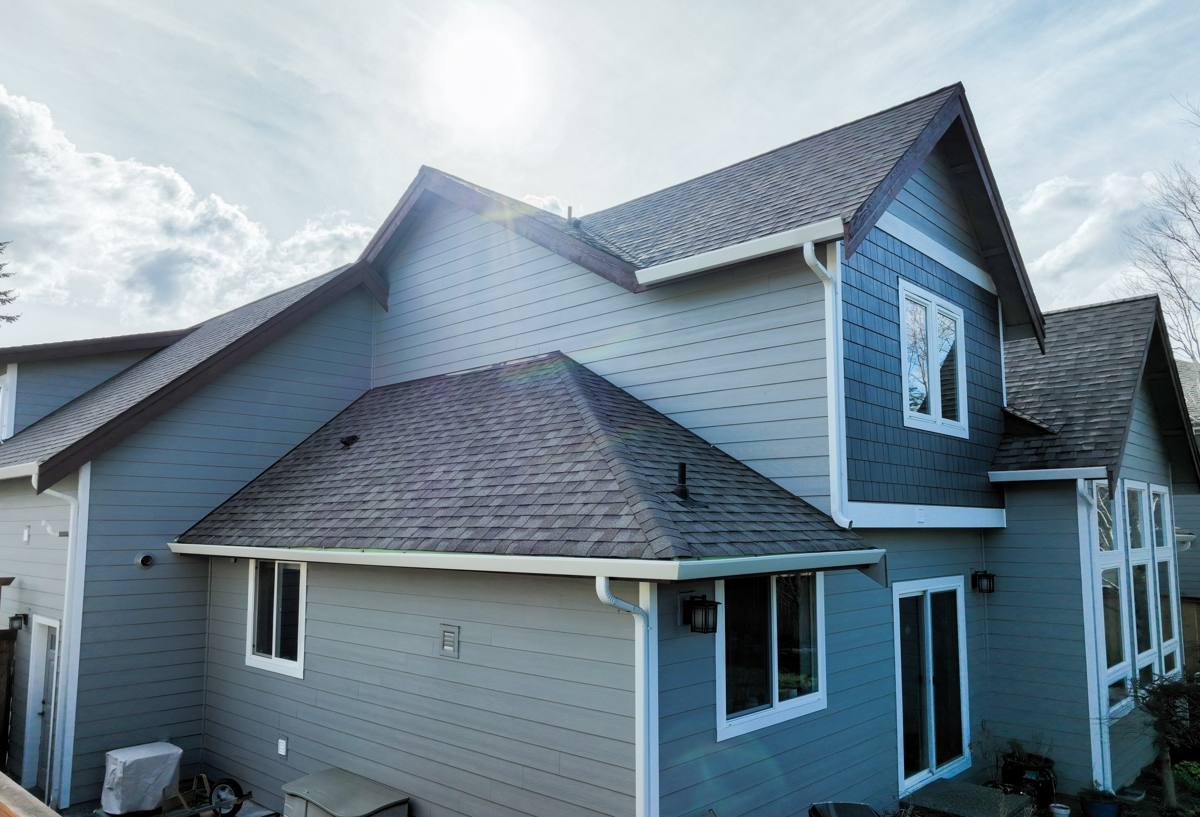
Why We Only Install James Hardie
We get asked why we don't offer vinyl, LP SmartSide, or the other fiber cement brands on the market. The honest answer is that we've made a professional decision to standardize on one product system rather than juggle several, and James Hardie is the one that holds up best under the specific stresses this region puts on a house.
Vinyl softens and can warp under sustained direct sun, and in high wind it's more prone to cracking or blowing off than a properly fastened fiber cement panel. Engineered wood products like LP SmartSide perform well in many climates but rely on factory treatments and installation precision to resist moisture — miss a detail in a climate this wet, and the wood substrate underneath is what pays for it. Other fiber cement brands aren't bad products, but we don't have field history with them the way we do with Hardie, and consistency across every job we run matters to us.
James Hardie's HZ5 product line is engineered specifically for high-humidity, high-moisture climates like ours, and the factory-applied ColorPlus finish is baked on under controlled conditions rather than field-painted, which means better UV and fade resistance than a job-site paint job can match. Fiber cement is also non-combustible, which matters in a state where wildfire risk and insurance underwriting increasingly factor into how a home is rated.
What Correct Siding Installation Actually Involves
Siding failures in this area are rarely about the panel itself — they're almost always about what's underneath it or how it was hung. A correct installation on a Wesley Chapel home includes:
Water Management Behind the Siding
A weather-resistant barrier goes on the sheathing first, with every seam, window, and door opening properly flashed so water that gets behind the cladding has somewhere to go besides your framing. This layer does more long-term work than the siding itself — it's the difference between a cosmetic repair in twenty years and a rot problem you don't find until the drywall's already stained.
Clearances and Fastening
Hardie panels need proper clearance from grade, roof lines, decks, and other hard surfaces so water isn't wicking up into the board's cut edges. Fastener spacing and placement follow Hardie's published specs for our wind zone — this is not a place to eyeball it, since under-fastened siding is one of the most common causes of wind damage in storm season.
Joints, Caulking, and Trim
Butt joints get treated correctly rather than just butted and caulked over, trim gets back-primed and sealed where the manufacturer specifies, and cut edges get sealed before they're closed up. Every one of these is a small detail that, skipped, becomes a moisture entry point within a few Florida summers.
Ventilation
The wall assembly needs to breathe correctly behind the new siding. Trapping moisture against sheathing in a humid climate causes problems regardless of how good the siding itself is.
Our Process on a Wesley Chapel Job
- On-site assessment: We walk the exterior, check the current siding and what's underneath it where we can, and look at trim, window flashing, and any problem areas specific to your home's exposure and elevation.
- Written scope and estimate: You get a clear breakdown of what's being removed, what's going back, the Hardie product and profile involved, and the timeline — no vague allowances.
- Tear-off and substrate check: Old siding comes off and we inspect the sheathing underneath for water damage or rot before anything new goes up. If we find deterioration, we tell you before we cover it, not after.
- Weather barrier and flashing: This is the step that actually protects the house long-term, and it's the one that gets shortcut most often by crews trying to move fast. We don't.
- Hardie installation: Panels, fastening, joints, and trim installed to manufacturer spec for our wind zone.
- Final walkthrough: We go over the finished job with you and cover warranty registration and basic care.
Cost Factors on a Wesley Chapel Siding Job
Every house is different, but the factors that actually move the price on a real estimate are consistent. Rough ranges below are broad and meant to help you think about scope, not to substitute for a walk-through.
| Factor | Why It Matters |
|---|---|
| Current siding removal | Tear-off and disposal cost varies with what's currently on the house and how many layers exist |
| Substrate condition | Hidden rot or water damage found during tear-off adds repair scope before new siding can go on |
| Hardie product line and profile | Lap, shingle-style, and panel profiles carry different material and labor costs |
| ColorPlus vs. field-painted | Factory finish costs more up front but eliminates a repaint cycle for years |
| House complexity | Multiple stories, dormers, and heavy trim detail add labor time |
| Trim and accessory scope | Fascia, soffit, and trim replacement alongside siding changes total project cost |
Signs Your Wesley Chapel Home Needs New Siding
- Visible warping, buckling, or panels pulling away from the wall
- Soft or spongy spots when you press on the siding, especially near the bottom courses
- Paint that's peeling or bubbling on the siding itself, not just trim
- Persistent mold, mildew, or staining that comes back after cleaning
- Rising cooling bills with no other explanation, which can point to compromised insulation behind failing siding
- Visible daylight, drafts, or moisture around window and door trim
Why Hiring a Crew That Already Works Wesley Chapel Matters
Siding installation is a spec-driven trade — the manufacturer publishes exact fastening patterns, clearances, and flashing details, and a crew that runs those same details on Wesley Chapel and greater Tampa homes week after week isn't guessing on your job. A crew that mainly works in a different climate or mostly installs a different product doesn't carry the same muscle memory for what this region's humidity and storm exposure demand. Local also means faster response if a warranty question or storm-related issue comes up later — you're not waiting on a crew that has to drive in from somewhere else in the state.
Maintenance and Warranty After Installation
Correctly installed Hardie siding is low-maintenance, not no-maintenance. Rinse it periodically to keep salt air residue and pollen from building up, keep an eye on caulked joints and trim for any separation over the years, and address any impact damage promptly rather than letting it sit exposed. James Hardie backs the product with a transferable limited warranty, and ColorPlus finishes carry their own finish warranty separate from the substrate warranty — we walk you through both at project close so you know exactly what's covered and for how long.
Get a Free Estimate
If your Wesley Chapel home's siding is showing its age, or you're planning ahead before storm season catches up with it, we're happy to take a look and give you a straight answer on what it needs. The estimate is free, there's no pressure, and you'll get a clear written scope before anything gets scheduled. Fill out the form below to get started.