 Tampa Roofing
 Why Siding Fails Faster in Land O' Lakes
Land O' Lakes sits in the fast-growing corridor just north of Tampa, and homes here face the same punishing combination of stressors that wears down exterior cladding across the greater Tampa Bay area: long stretches of intense UV exposure, sudden and heavy afternoon thunderstorms, humidity that rarely lets up, and the real possibility of hurricane-force wind gusts during storm season. None of that is unique to any one neighborhood, but it adds up differently depending on how a house was built, which direction it faces, and what kind of siding was used in the first place.
A lot of the homes in this area were built during periods of rapid residential growth, which means a wide mix of siding materials went up over the years — vinyl, older fiber cement, engineered wood, and in some cases builder-grade products chosen for cost rather than long-term performance. When any of those materials start to fail, the failure shows up in predictable ways: warping, bubbling paint, soft spots, gaps at seams, and moisture staining near the bottom courses or around windows and doors.
Siding repair in this climate isn't just a cosmetic fix. Done correctly, it's about finding out why a section failed, stopping water from getting behind the cladding, and making sure the repair holds up under the same UV and storm exposure that damaged the original material.
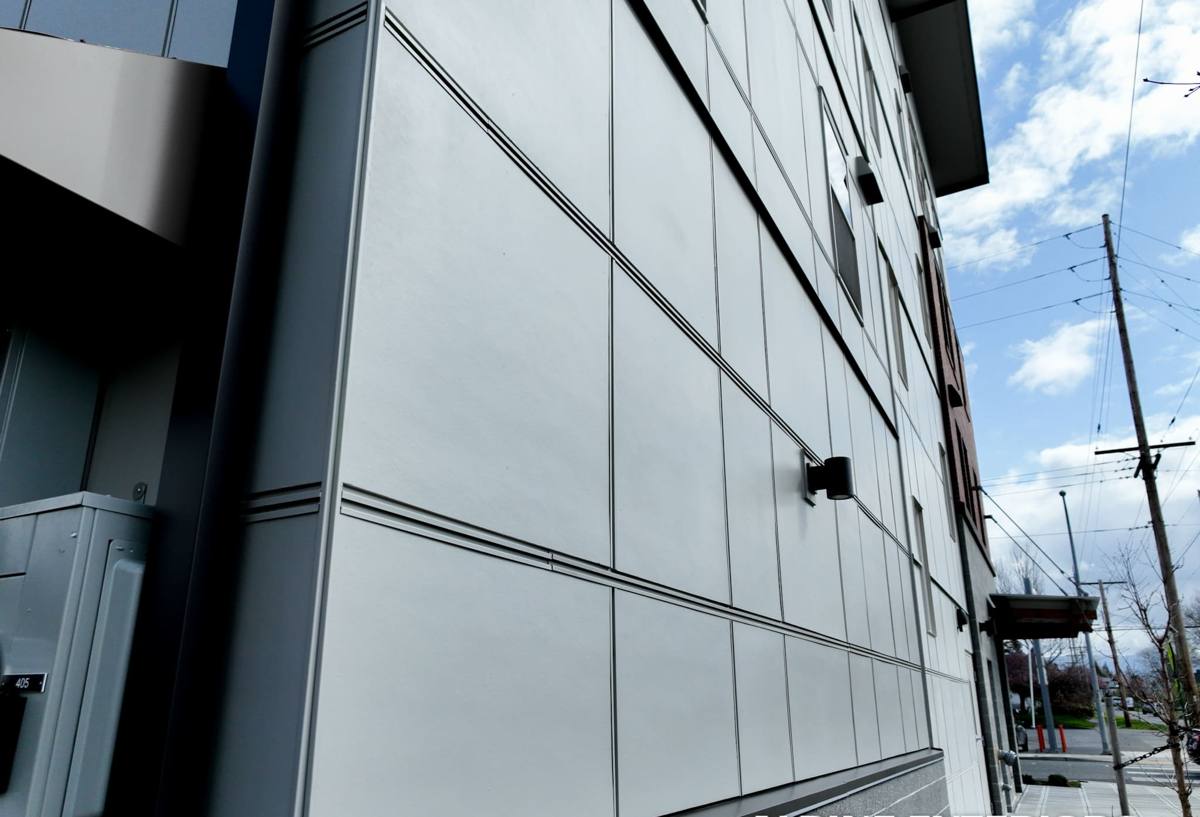
Signs Your Siding Needs Repair
Most siding problems don't announce themselves as an emergency — they show up gradually, and homeowners often wait until a small issue becomes an expensive one. Here's what we look for, and what you can check yourself before calling anyone out.
- Visible cracking, splitting, or buckling in individual boards or panels
- Soft or spongy spots when you press on the siding, especially near the bottom of the wall
- Paint that's peeling, bubbling, or chalking heavily in one area but not others
- Gaps opening up at seams, corners, or where siding meets trim, windows, or doors
- Staining, streaking, or discoloration that suggests water is tracking behind the siding
- Visible fastener heads (nails or screws backing out) or siding that's come loose in wind
- A musty smell or visible mold/mildew growth on interior walls that back up to exterior siding
- Sections of siding that look noticeably different in color or texture from the rest of the wall
One or two of these in isolation usually mean a targeted repair. Several of them clustered in the same area, or spread across multiple walls, usually mean the underlying moisture barrier or original installation has a systemic problem — and that changes the scope of the conversation.
Repair vs. Replace: How We Make That Call
Not every damaged section needs to come off the whole house. A good repair job starts with an honest read on whether the damage is isolated or a symptom of something bigger. We look at how the siding was originally installed — flashing details, house wrap condition, nailing pattern, caulking — because a repair that ignores the root cause just buys you a year or two before the same spot fails again.
What a Correct Siding Repair Actually Involves
Diagnosis Before Demo
Before anything gets pulled off the wall, we check what's happening behind the siding, not just what's visible on the surface. That means checking for soft sheathing, deteriorated house wrap, and improperly flashed penetrations — windows, hose bibs, dryer vents, and anywhere else something punches through the wall plane. In a climate that sees as much wind-driven rain as this one, a poorly flashed penetration is one of the most common root causes of siding failure, and it's invisible until you look for it.
Matching Material and Finish
When we're patching or replacing sections on a home that already has James Hardie fiber cement siding, matching is straightforward because Hardie's ColorPlus factory-applied finish is manufactured to consistent, repeatable standards — new boards blend in rather than sticking out as an obvious patch.
When we're repairing a home with a different siding material — vinyl, older fiber cement from another manufacturer, LP SmartSide, or painted wood — matching gets harder. Discontinued colors, faded originals, and product lines that have changed over the years all make an invisible patch difficult or impossible. In those cases we'll tell you honestly whether a patch will blend or whether replacing a full wall section (or the whole elevation) is the more sensible path to a result you'll actually be happy with.
Sealing and Flashing Correctly
The repair itself — cutting out damaged material, fitting new boards or panels, fastening to spec — is the part most people picture. The part that actually determines whether the repair lasts is the flashing and sealing work around it: proper overlap, correct caulking at joints (not as a substitute for proper flashing, but as a supplement to it), and making sure water has a way to drain out if it does get behind the cladding. Skipping this step is why so many "repairs" fail again within a couple of storm seasons.
Common Siding Materials We See in Land O' Lakes — and Their Repair Realities
| Material | Typical Repair Challenge | Long-Term Outlook |
|---|---|---|
| Vinyl siding | Cracks and warps in intense heat/UV; matching faded panels is difficult; brittle vinyl can shatter during patch work | Patchable short-term, but sun-damaged vinyl rarely matches well and tends to need repeat repairs |
| Older fiber cement (non-Hardie) | Product lines and colors are often discontinued; matching factory finish is hit-or-miss | Repairable if material is sourced, but full-wall replacement is often more practical |
| Engineered wood (e.g. LP SmartSide) | Edge swelling and moisture intrusion at seams is common in humid climates; once swelling starts it doesn't reverse | Swollen or delaminated sections generally need full replacement, not patching |
| Painted wood siding | Rot at butt joints and bottom courses; ongoing paint maintenance in high-UV exposure | Repairable with proper carpentry, but needs more frequent upkeep than fiber cement |
| James Hardie fiber cement | Rarely fails from moisture or UV when installed to spec; repairs are usually storm-impact or accidental-damage driven | Consistent factory finish makes patch sections blend cleanly; strong transferable warranty backs the material |
This is part of why our crews standardized on James Hardie for every installation we do: it gives us a product we can stand behind for repair work years down the road, with a finish and product line that's still available and still matches. When we're repairing a home with a different material, we'll do the work honestly and correctly — but we'll also tell you straight if that material's long-term repair outlook is poor, and what your options look like if you'd rather stop patching and get a system that holds up.
Our Repair Process
1. On-Site Inspection
We walk the exterior, check the damaged areas up close, and look at what's happening behind the siding wherever we can access it — not just what's visible from the ground.
2. Honest Scope and Estimate
You get a clear explanation of what caused the damage, what a proper repair involves, and a written estimate. If a section is beyond a reasonable patch, we'll say so rather than nickel-and-diming a temporary fix.
3. Correct Repair Execution
Damaged material comes out, flashing and moisture barrier get inspected and corrected where needed, and new material goes in fastened and sealed to spec — not just nailed over the old problem.
4. Finish and Cleanup
Repaired sections are finished to blend as closely as the original material allows, and the site is cleaned up before we consider the job done.
Cost Factors for Siding Repair
| Factor | Why It Matters |
|---|---|
| Extent of damage | A few boards is a different job than a full wall section with underlying rot |
| Cause of failure | Storm impact repairs are usually straightforward; moisture-driven failure often means addressing flashing or house wrap too |
| Material match availability | Discontinued colors or product lines can turn a "small patch" into a bigger replacement decision |
| Access and height | Second-story or hard-to-reach sections take more time and equipment |
| Underlying sheathing condition | Soft or rotted sheathing behind the siding has to be addressed before new siding goes back on |
We're not going to publish a one-size-fits-all price here, because a two-board patch and a full-elevation replacement aren't the same job — but every estimate we give breaks these factors down so you know exactly what you're paying for and why.
Why It Matters to Hire a Crew That Already Works This Area
Siding repair done by someone unfamiliar with how Tampa Bay's climate behaves tends to miss the details that actually matter here — the flashing details that hold up under wind-driven rain, the fastening patterns that account for wind load, and the reality that UV exposure in Florida is more aggressive on painted and finished surfaces than in most other parts of the country. A crew that regularly works Land O' Lakes and the surrounding Tampa area has already seen how different siding materials age under these specific conditions, and that experience shows up in fewer callbacks and repairs that actually last.
It also means faster response. Storm damage doesn't wait for a convenient schedule, and having a crew that's already local and already familiar with the area's housing stock means less time between the damage happening and a correct repair getting done.
Maintaining Repaired Siding After the Job Is Done
- Rinse siding periodically to remove salt air residue, pollen, and airborne debris — a garden hose is usually enough
- Keep an eye on caulk lines at trim, corners, and penetrations; caulk degrades faster under intense Florida UV than in milder climates
- Trim back landscaping and irrigation so sprinklers aren't hitting the siding directly and vegetation isn't trapping moisture against the wall
- After any major storm, do a quick visual walk of the exterior to catch new damage early, before it turns into a bigger repair
- If you have James Hardie siding, follow the manufacturer's basic care guidance to keep the ColorPlus finish and warranty coverage intact
A repair that's done right, on a material that's suited to this climate, shouldn't need attention again for years. Staying ahead of small maintenance items is what keeps it that way.
If you've got damaged, warped, or failing siding on a Land O' Lakes home, we're happy to take a look and give you a straight answer on what it needs — whether that's a targeted repair or something bigger. Fill out the form below for a free, no-pressure estimate.