 Tampa Roofing
 Why New Tampa Siding Wears Out Faster Than You'd Expect
New Tampa sits inland from the bay but still takes the full brunt of a Hillsborough County climate: long stretches of intense UV, sudden downpours that come in sideways during summer storm season, and humidity that rarely lets up even after the rain stops. Add hurricane-force wind events that roll through Tampa Bay most years, and you have a set of conditions that will find every weakness in a home's exterior over time. Siding here isn't just cosmetic — it's the barrier between your framing and a climate that never really gives your house a break.
Homes in New Tampa tend to be newer builds compared to some of the older Tampa neighborhoods, which means a lot of original siding is now reaching the age where the factory finish has faded, seams have opened up, and moisture has started finding its way behind panels that were never quite sealed right the first time. If your siding is original to a home built in the 1990s or 2000s, there's a good chance it's due for a real look, not just a pressure wash.
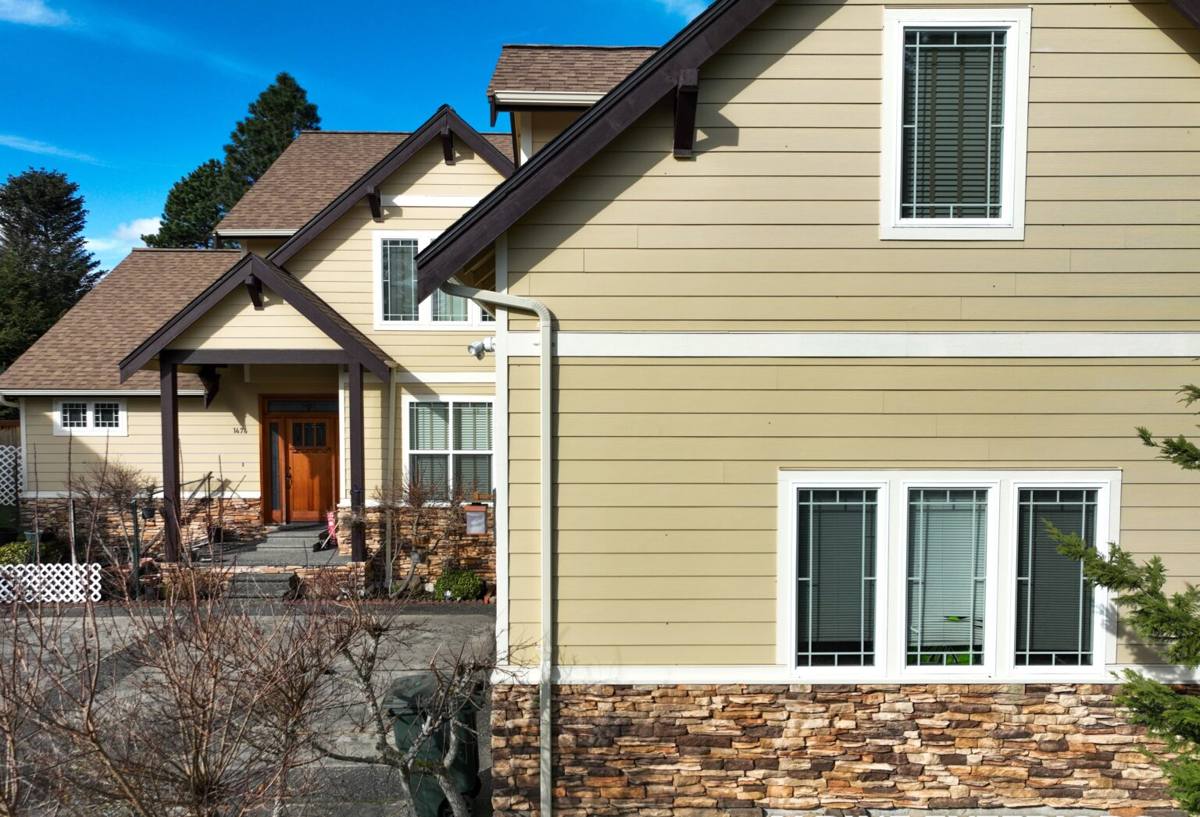
What Tampa's Climate Actually Does to Siding
UV and Heat
Florida sun is relentless, and siding facing south or west in New Tampa takes a beating year-round. Cheaper finishes chalk, fade unevenly, and become brittle over time. Once a finish starts breaking down, the substrate underneath is exposed to moisture it was never designed to handle on its own.
Wind-Driven Rain
It's not just how much rain Tampa gets — it's how it arrives. Wind-driven rain during summer storms and tropical systems pushes water sideways into seams, laps, and fastener points that would stay dry in a calmer climate. Siding that isn't installed with the right flashing, gaps, and clearances lets that water in, and once it's behind the panel, it doesn't dry out easily in Florida's humidity.
Wind Load and Storm Events
Hillsborough County sees real wind events, and siding is one of the first things a strong storm tests. Panels that are under-fastened, improperly nailed, or installed without attention to manufacturer wind-load specs are the ones that end up in the yard next door after a bad afternoon storm.
Humidity and Moisture Cycling
Tampa's humidity means siding rarely gets a chance to fully dry out between rain events. Materials that absorb moisture and swell, or that trap water behind them, are working against the climate every single day, not just during storms.
What a Correct Siding Replacement Actually Involves
Replacing siding isn't just stripping old panels and nailing up new ones. Done right, it's a system, and every layer matters as much as the visible siding itself.
- Full removal of old siding and inspection of the sheathing underneath for rot, water staining, or soft spots
- Repair or replacement of any damaged sheathing before new material goes up — covering over a compromised substrate just hides a problem
- A weather-resistive barrier installed correctly, with proper overlap and sealed penetrations
- Correct flashing at windows, doors, corners, and any roof-to-wall intersections
- Manufacturer-specified fastening pattern and spacing, not a generalized "close enough" approach
- Proper clearance at the bottom of the siding from grade, decks, and roofing to prevent wicking
- Factory-finished panels installed with correct joint treatment, so seams stay sealed rather than becoming entry points
Skipping any one of these steps doesn't usually show up as a problem on day one. It shows up two or three years later as a soft spot near a window, a stain creeping up from the bottom of a wall, or a section that comes loose in the next storm. That gap between installation shortcuts and visible failure is exactly why so many homeowners get burned by a crew that looked competent at the time.
Why We Only Install James Hardie Fiber Cement
We don't install vinyl, LP SmartSide, primed wood, or other fiber cement brands like Cemplank or Allura. That's a deliberate standard, not a sales pitch, and it comes down to how each of those products actually performs over years of Tampa sun, rain, and wind rather than how they look on day one.
Vinyl
Vinyl is affordable and easy to install, and for some climates it holds up reasonably well. In Tampa's UV load, vinyl tends to fade, warp, and become brittle faster than homeowners expect, and it has real limits on wind resistance compared to fiber cement. It's also not fire resistant, which matters to some homeowners more than others.
LP SmartSide and Primed Wood Products
Engineered wood and primed wood siding rely on their protective coatings to keep moisture out. In a climate where humidity rarely drops and wind-driven rain is a regular event, any breach in that coating — a scratch, a poorly sealed cut end, a nail that wasn't set right — gives moisture a path into a wood-based product that can swell and deteriorate. These products can perform well when installation and maintenance are perfect, but Tampa's climate doesn't leave much room for error.
Other Fiber Cement Brands
Cemplank and Allura are legitimate fiber cement products, and fiber cement as a category is the right general approach for this climate. Our decision to work exclusively with James Hardie comes down to their ColorPlus factory finish, their HZ5 product line engineered specifically for high-humidity, high-wind Gulf Coast climates, and a warranty structure we've found to be the strongest and most straightforward to stand behind when we tell a homeowner their siding is built for Tampa.
What Hardie Gets Right for This Climate
James Hardie fiber cement is non-combustible, resists moisture-related swelling and rot far better than wood-based alternatives, and holds its factory-applied ColorPlus finish through years of Florida sun without the chalking and fading that hits lower-grade finishes early. The HZ5 line is specifically formulated for climates like Hillsborough County's — high humidity, hurricane exposure, and heavy UV. When installed to spec, it's the product we're most comfortable standing behind with a real transferable warranty.
Our Siding Replacement Process for New Tampa Homes
- On-site assessment — we walk the exterior, check for existing moisture damage, and evaluate what's driving the need for replacement
- Sheathing inspection — once old siding comes off, we check the substrate before anything new goes up
- Repair as needed — any compromised sheathing gets addressed before installation continues
- Weather barrier and flashing — installed to manufacturer spec, with particular attention to window and door penetrations
- Hardie installation — fastened and spaced to manufacturer requirements for wind resistance in this region
- Final inspection and cleanup — we check seams, clearances, and finish work before calling the job done
Cost Factors for New Tampa Siding Projects
Every home is different, but a few factors consistently move the price on siding replacement projects in this area. We'll walk through your specific situation during an estimate, but this gives you a sense of what drives the number.
| Factor | Why It Matters |
|---|---|
| Home size and wall area | More square footage means more material and labor, the most straightforward cost driver |
| Existing sheathing condition | Water-damaged sheathing found during tear-off needs repair before new siding goes up |
| Siding profile and texture | Lap, shingle, and panel styles within the Hardie lineup vary in material and labor cost |
| Trim and detail work | Homes with more corners, dormers, or architectural detail take more time to flash and finish correctly |
| Story height | Two-story sections require more scaffolding and safety setup than single-story walls |
| Color and finish selection | ColorPlus factory-finished panels vs. field-painted options affect both cost and long-term maintenance |
Signs Your New Tampa Home Needs Siding Replacement
- Visible warping, buckling, or panels that have pulled away from the wall
- Soft spots when you press on the siding, especially near the bottom of walls or under windows
- Persistent staining or streaking that pressure washing doesn't remove
- Fading or chalking finish that's uneven across the home's exposure sides
- Rising energy bills that suggest the wall assembly isn't performing the way it should
- Visible gaps at seams, corners, or trim that weren't there when the siding was new
- Any past storm damage that was patched rather than properly assessed and repaired
Why Local Experience in New Tampa Matters
A crew that regularly works Hillsborough County homes already understands how local building patterns, common sheathing types, and typical wear patterns in this area play out over time. That familiarity shows up in the details — knowing where water tends to intrude on homes built during New Tampa's main growth periods, understanding how HOA guidelines in some New Tampa communities affect color and material choices, and having a realistic sense of how long a project actually takes given Tampa's summer storm schedule. A crew flying in from outside the area, or one that treats every home as a blank slate, is more likely to miss those regional realities.
Get a Straight Answer About Your Siding
If your New Tampa home's siding is showing its age, wind damage, or moisture problems, it's worth getting a real assessment before those issues get more expensive to fix. We're happy to take a look, tell you honestly what we see, and walk you through what James Hardie siding installed correctly would look like for your home — no pressure, no obligation. Fill out the form below to schedule a free estimate.