 Tampa Roofing
 South Tampa's Siding Problem Isn't Like Other Neighborhoods
South Tampa sits closer to open water than most of Hillsborough County, and that changes what siding has to survive. Homes here take on salt-laden air that works its way into seams and fasteners, wind-driven rain that gets pushed sideways during summer storms and tropical systems, and near-constant UV exposure that most siding products were never engineered to handle year after year. Add in hurricane-force wind events that test every fastener and joint, and it's easy to see why siding that performs fine in a drier, inland climate can fail early here.
We see the pattern often: siding that looks fine from the street but is quietly failing underneath — swollen seams, soft spots around window trim, paint that won't hold, or panels that have started to cup and separate. In a lot of cases the damage isn't storm damage at all. It's years of humidity, salt exposure, and sun breaking down a product that was undersized for the job.
What's Actually on South Tampa Homes Right Now
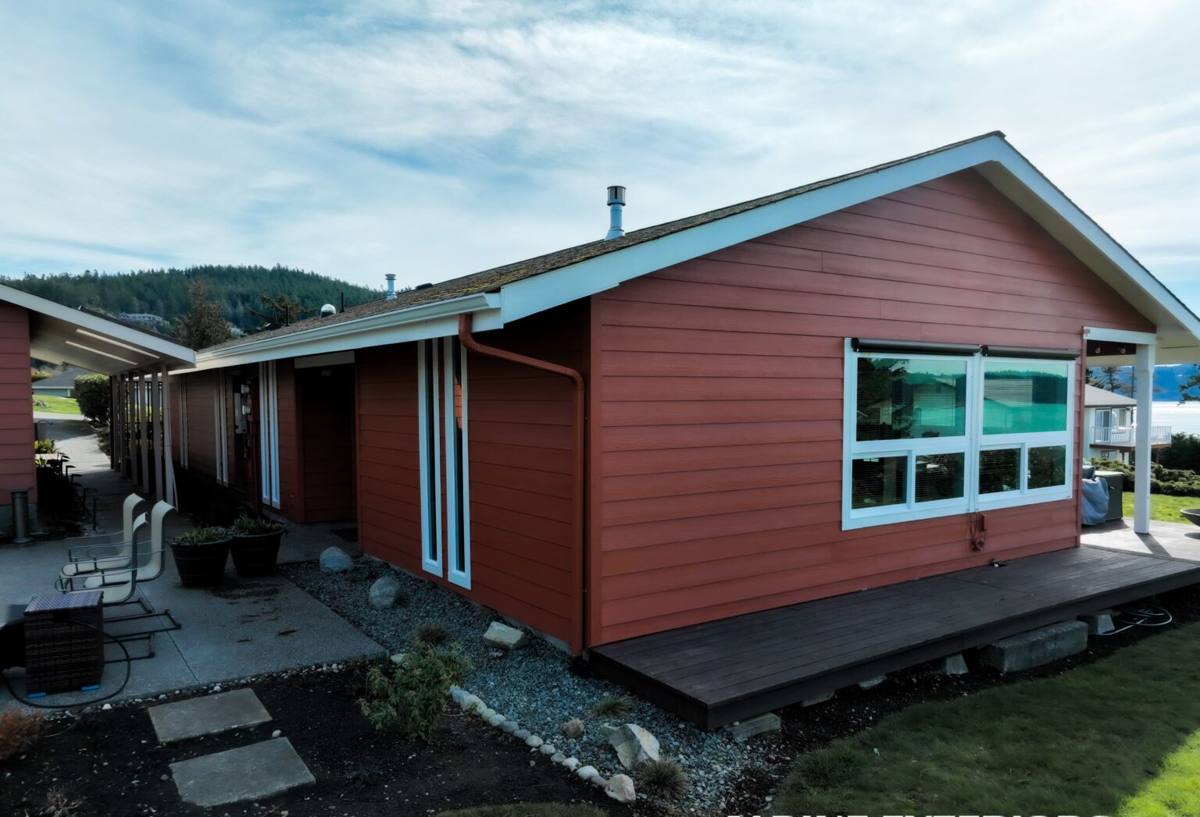
South Tampa's housing stock spans decades — postwar bungalows, mid-century ranches, and a steady wave of newer builds and remodels — so the siding mix is wide. On any given block you'll find old wood lap siding painted over more times than anyone can count, vinyl siding installed during a budget renovation, stucco with siding accents on gables and dormers, and a growing number of homes with fiber cement that was installed correctly (or not).
Each of those has a different failure pattern near the water:
- Wood siding — rot at butt joints and bottom courses, paint failure from UV and humidity cycling, insect entry points once the finish breaks down
- Vinyl siding — heat warping in direct afternoon sun, cracking and brittleness with age, panels that pull loose in sustained wind
- Older or poorly installed fiber cement — moisture intrusion at unsealed cut ends and poor flashing details, not a flaw in the material itself but in how it was installed
- Stucco-to-siding transitions — a common leak point when the two materials weren't properly flashed and sealed at installation
What Correct Siding Replacement Actually Involves
Replacing siding isn't a cosmetic swap. In a coastal-adjacent climate like South Tampa's, most of what determines whether the job lasts happens before a single new panel goes up.
Tear-off and inspection
Removing the old siding down to the sheathing lets us actually see the wall assembly — not guess at it. We're checking for soft or delaminated sheathing, evidence of past moisture intrusion, and whether the existing weather-resistive barrier is intact or needs full replacement.
Water management, not just water resistance
A house wrap or weather-resistive barrier alone isn't enough here. Every penetration — window and door openings, hose bibs, light fixtures, vents — needs proper flashing so that any water that gets behind the cladding has somewhere to go besides the framing. This is the step that gets skipped most often on rushed jobs, and it's the reason siding "fails" years later when the real cause was a flashing detail done wrong at install.
Fastening for wind, not just for looks
Hillsborough County's wind-load requirements exist for a reason. Fastener type, spacing, and placement all affect how a wall assembly performs in a wind event, and cutting corners here is invisible until a storm tests it.
Trim, caulking, and cut-end sealing
Every field-cut edge of fiber cement siding needs to be sealed per the manufacturer's specification before installation. Skipping this step is one of the most common causes of moisture problems in fiber cement siding — and it's also one of the easiest things for an inexperienced crew to overlook because it doesn't show once the piece is hung.
Why We Install Only James Hardie Fiber Cement
We don't install vinyl, LP SmartSide, primed wood, cedar, or other fiber cement brands. That's a deliberate standard, not a sales pitch, and it's worth explaining honestly.
Vinyl is affordable and low-maintenance in mild climates, but it softens and can warp under sustained direct sun, and it's a poor match for the wind exposure South Tampa properties see. Engineered wood products like LP SmartSide perform well in many parts of the country, but wood-based substrates are inherently more vulnerable to the moisture cycling that comes with Gulf Coast humidity and salt air — if the finish is ever compromised, the clock starts on rot. Primed wood and cedar require a maintenance commitment — regular repainting and sealing — that most homeowners underestimate until the finish starts failing.
James Hardie fiber cement is non-combustible, dimensionally stable in humidity swings, and holds its factory-applied ColorPlus finish far longer than field-painted alternatives — which matters directly here, since UV is one of the fastest ways a finish degrades in Florida. Hardie's HZ5 product line is engineered specifically for high-humidity, hurricane-prone climates like ours, and the warranty structure (including a transferable finish warranty) reflects a product built to be a long-term wall system, not a ten-year fix.
| Factor | James Hardie Fiber Cement | Vinyl | Wood / Engineered Wood |
|---|---|---|---|
| Combustibility | Non-combustible | Combustible | Combustible |
| Behavior in direct sun / heat | Dimensionally stable | Can warp or soften | Finish degrades with UV |
| Moisture / humidity resilience | Engineered for humid climates (HZ5) | Doesn't rot, but seams can fail | Vulnerable once finish breaks down |
| Maintenance | Factory finish, minimal upkeep | Low, but limited repair options | Regular repainting/sealing required |
| Wind performance | Rated for high-wind installation | Prone to pull-off in sustained wind | Depends heavily on fastening |
Our Process for a South Tampa Siding Replacement
- On-site assessment — we walk the exterior, check for soft sheathing, existing moisture damage, and any stucco-to-siding or trim transitions that need special attention
- Scope and product selection — plank profile, exposure width, and ColorPlus color, matched to the home's style and any HOA or neighborhood association requirements that may apply
- Tear-off — full removal of the existing siding, not overlay installation, so the wall assembly can actually be inspected and corrected
- Sheathing repair — any compromised sheathing is replaced before the weather barrier goes back on
- Weather-resistive barrier and flashing — installed or verified at every penetration, window, and door
- Hardie installation to manufacturer spec — correct fastening, cut-end sealing, and clearances at grade, roofline, and trim
- Final walkthrough — caulking, touch-up, and a check of every trim and corner detail before we call it done
What Drives the Cost of a South Tampa Siding Job
| Factor | Why It Matters Here |
|---|---|
| Extent of sheathing repair | Homes with hidden moisture damage need substrate repair before new siding goes on — this varies a lot house to house |
| Home size and wall complexity | Gables, dormers, and multiple trim details add labor beyond simple square footage |
| Plank profile and reveal | Wider exposure or specialty profiles cost more in material and install time |
| Trim and accessory scope | Corner boards, frieze boards, and window trim replaced at the same time affect total cost |
| Access and site conditions | Tight lots, fencing, and landscaping near the home affect setup and labor time |
We give honest, itemized estimates based on the actual condition of your walls, not a flat per-square-foot number that ignores what's underneath the old siding.
Signs Your South Tampa Home May Need Siding Replacement
- Paint that won't hold a finish for more than a couple of years
- Soft or spongy areas when you press on siding near the bottom courses or trim
- Visible warping, cupping, or separation at seams
- Persistent musty smell or interior wall staining near exterior walls
- Siding that's original to a home built more than 20-25 years ago
- Visible gaps or pulled fasteners after wind events
Why It Matters That We Already Work in South Tampa
A crew that regularly works South Tampa properties knows the practical realities: tighter lots, mature landscaping to work around, and in some neighborhoods, architectural review requirements before exterior changes get approved. We also know what Hillsborough County's permitting and wind-load requirements mean in practice for a siding replacement, not just on paper. That familiarity shows up in fewer surprises mid-project and a finished install that's actually built for what this specific location throws at it — salt air, sun, and storm season, all at once.
If your siding is showing its age or you're planning ahead of the next storm season, we're happy to take a look. Fill out the form below for a free, no-pressure estimate on a James Hardie siding replacement for your South Tampa home.