 Tampa Roofing
 Why Valrico Decks Wear Out Faster Than the Brochure Says
Valrico sits inland from Tampa Bay in Hillsborough County, but "inland" doesn't mean protected. The same weather pattern that batters the coastline still reaches neighborhoods here: long stretches of intense UV exposure, sudden downpours that drive rain sideways under railings and into ledger connections, and the occasional hurricane-force wind event that racks a deck's frame even when the boards themselves look fine. Add Florida's humidity, which keeps wood assemblies damp for hours after every storm, and you have a climate that is genuinely tough on outdoor structures — regardless of how well they were built originally.
Most deck problems we see in this area aren't from bad luck. They're the predictable result of sun-cooked sealant, fasteners that were never rated for coastal humidity, or framing that was built to code minimums and has simply had years of Florida weather working against it. Understanding that pattern is the first step to fixing a deck correctly instead of just patching what's visible.
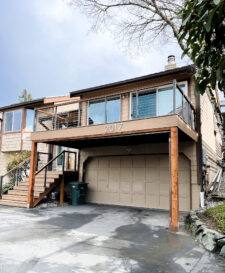
How to Tell Your Deck Needs Repair, Not Just Cleaning
A pressure wash can make a tired deck look decent from a distance, but it won't tell you what's happening underneath the boards or inside the ledger connection. Here's what actually signals a repair need:
- Boards that feel spongy, spring underfoot, or have visible cupping/checking (long UV-driven cracks running with the grain)
- Railings or posts that wiggle when pushed — a sign the connection hardware or post base has failed
- Rust streaks below fastener heads, which usually means the wrong-grade screws or nails were used for this climate
- Gaps or dark staining where the deck attaches to the house (the ledger board) — a common entry point for wind-driven rain
- Stair stringers that flex or feel uneven, which is both a comfort issue and a safety one
- Visible daylight or soft wood around joist hangers, especially near the ground or close to sprinkler heads
If you're seeing more than one of these, it's worth a proper inspection before the next big storm rather than after it.
What a Correct Deck Repair Actually Involves
It Starts Below the Boards, Not On Top of Them
A repair that only replaces surface boards without checking the structure underneath is a cosmetic fix, not a real one. A correct job evaluates the framing first: joists, beams, posts, and — critically in this region — the ledger board connection to the house, since that's the point most exposed to trapped moisture and the hardest to inspect without pulling material back.
Fasteners and Hardware Matter More Here Than in Drier Climates
Standard interior-grade hardware corrodes fast in Hillsborough County's humidity and salt-influenced air. Any honest repair uses fasteners and connectors rated for exterior, coastal-adjacent exposure — this isn't an upsell, it's the difference between a repair that lasts and one you'll be paying for again in three years.
Flashing Gets Checked, Not Assumed
Flashing at the ledger board is one of the most common failure points on Florida decks, and it's completely hidden once boards are reinstalled. If it's missing, undersized, or improperly lapped, water gets behind the house's siding or sheathing — a much bigger and more expensive problem than the deck itself.
Repair vs. Replacement: How We Actually Decide
Not every deck with visible wear needs to be torn out. But not every deck is worth patching, either. Here's the honest breakdown of how that decision usually plays out:
| Condition Found | Usually Repairable | Usually Needs Replacement |
|---|---|---|
| Framing / joists | Solid wood, isolated soft spots | Widespread rot, sagging, or undersized for current use |
| Ledger connection | Flashing intact, isolated fastener corrosion | Water damage extending into house framing |
| Decking boards | Scattered cupped or split boards | Majority of boards checked, soft, or delaminating |
| Railings and posts | Loose hardware, minor wobble | Rotted post bases, non-compliant spacing/height |
| Age of structure | Under 10–12 years, built to a reasonable spec | Older, undersized footings, or unpermitted original build |
We'll tell you plainly which category your deck falls into, including when a repair is genuinely the right call and full replacement isn't necessary.
Our Deck Repair Process
- On-site inspection. We check framing, fasteners, flashing, and the ledger connection — not just the walking surface.
- Written scope and honest options. You get a clear explanation of what's failing, why, and what repair vs. replacement would each involve — no pressure toward the bigger job.
- Structural repairs first. Damaged joists, beams, or connectors are addressed before any new decking goes down. A new surface over a weak frame is a wasted repair.
- Fastener and flashing correction. We replace undersized or corroded hardware with exterior-rated connectors and confirm the ledger flashing is doing its job.
- Decking, railing, and stair work. Boards, balusters, and stringers are repaired or replaced to match structural code requirements, not just cosmetic preference.
- Final walkthrough. We check for level, secure railings, consistent fastener pattern, and that the deck is ready for both daily use and storm season.
Materials: What We Use and the Trade-Offs We're Honest About
Homeowners often ask why we don't push composite decking as the default answer, or why we're careful about certain fastener systems. It comes down to matching the material to the maintenance the homeowner actually wants to do — not to any one product being bad.
Pressure-Treated Lumber
Cost-effective and widely available, but it requires regular sealing in Florida's UV and rain cycle. Skip that maintenance for a couple of seasons and you'll see checking and graying faster than in drier climates.
Composite and Capped Boards
Lower maintenance and generally stable in humidity, but installation is less forgiving — improper spacing or fastening for thermal movement in Florida's heat swings can cause buckling. We follow manufacturer spec closely on hidden-fastener systems for exactly this reason.
Hardware
We standardize on stainless or heavy hot-dip galvanized connectors for anything structural. Standard zinc-coated hardware is a common cause of the rust staining we see on repair calls, and replacing it properly the first time avoids a repeat visit.
What Deck Repair Typically Costs in Valrico
Every deck is different, but here are the broad factors that move price up or down. These are general ranges to help you think about scope, not a quote.
| Factor | Tends to Lower Cost | Tends to Raise Cost |
|---|---|---|
| Extent of framing damage | Isolated, easily accessed joists | Ledger or beam damage, hidden rot |
| Decking material | Standard pressure-treated | Composite, hardwood, or discontinued board profiles |
| Access | Ground-level, open access | Second-story, tight side-yard, or pool enclosure decks |
| Code compliance | Existing structure already compliant | Railing height/spacing or footing upgrades required |
Small, general ranges for context: minor board and hardware repairs are typically a modest single job, while framing or ledger repairs involving demolition and rebuilding run higher. We'll give you a firm number after seeing the actual deck.
Why It Matters That We Already Work in Valrico
A crew that regularly works this part of Hillsborough County isn't guessing at how the local climate treats a deck — we've seen how UV exposure, humidity, and storm wind loads play out on structures in this specific area over time. That means fewer surprises during the job, a scope that accounts for what's actually likely to be failing (not just what's visible), and a repair built to hold up through another Florida wet season and hurricane window — not just look good for the next open house or family gathering.
Local familiarity also means we know what Hillsborough County permitting expects for structural deck work, so repairs that need a permit don't stall out or get flagged later during a home sale inspection.
Keeping a Repaired Deck in Good Shape
- Reseal or refinish wood decking on a regular schedule — Florida sun breaks down sealants faster than it does in milder climates
- Rinse salt-influenced grime and pollen buildup off boards and railings periodically, especially after storms
- Check railing and stair connections for looseness once or twice a year
- Keep sprinklers and downspouts from soaking the same deck area repeatedly — trapped moisture at the base of posts is a common repeat-failure point
- Address small issues (a loose board, a hairline crack) before the next storm season rather than after
If your Valrico deck is showing wear, flexing, or you're just not sure whether it's a quick fix or something bigger, we're happy to take a look. Request a free, no-pressure estimate using the form below and we'll give you a straight answer about what your deck actually needs.