 Tampa Roofing
 Siding Replacement Built for Wesley Chapel's Climate
Wesley Chapel has grown fast, and a lot of that growth happened during a stretch of Florida building booms when siding got installed quickly to keep up with demand. Correct installation practices don't always keep pace with that kind of growth. Whether your home has vinyl, older fiber cement, or wood-based siding that's now 10, 15, or 20 years into a Tampa Bay area climate, the material and the workmanship underneath it matter more here than almost anywhere else in the country.
This area sits close enough to the coast to deal with salt-laden air, far enough inland to bake under intense subtropical sun most of the year, and squarely in the path of Gulf-driven storm systems that bring hurricane-force wind gusts and hours of wind-driven rain. That combination is hard on exterior cladding. UV breaks down pigments and surface coatings. Humidity and afternoon storms push moisture into any gap in the water management system. Wind uplift tests every fastener and every inch of exposure. Siding that isn't specified and installed for this environment tends to show it early — fading, cupping, soft spots, and seams that open up.
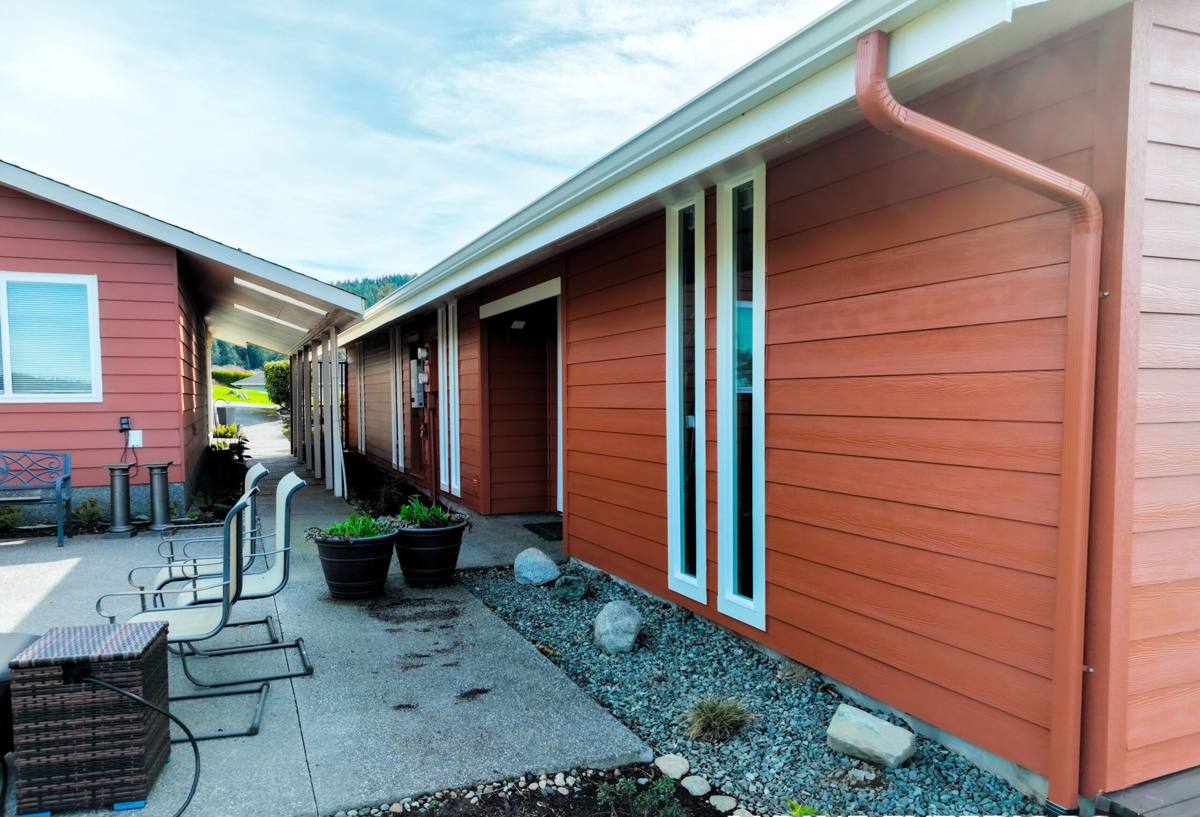
Signs Wesley Chapel Homeowners Should Not Ignore
Siding failure is rarely sudden. It shows up gradually, and a lot of homeowners assume what they're seeing is cosmetic when it's actually a sign of water getting behind the cladding. Before you decide between a repair and a full replacement, walk your exterior and look for these:
- Visible warping, buckling, or waviness, especially on walls that face west or southwest and take the most afternoon sun
- Soft or spongy spots when you press on the siding, particularly near the bottom courses and around window and door trim
- Paint that's peeling, bubbling, or chalking heavily even though the siding itself hasn't been repainted recently
- Persistent staining, streaking, or dark patches that come back after cleaning
- Gaps opening up at seams, corners, or where siding meets trim, fascia, or the roofline
- Visible fastener heads, rust bleed from nails or screws, or siding panels that have started to separate from the wall
- A musty smell or discoloration on interior walls that back up to exterior siding
Any one of these on its own might be a minor fix. Several together usually mean the water management layer behind the siding has been compromised for a while, and that's a replacement conversation, not a caulk-and-patch one.
What a Correct Siding Replacement Actually Involves
Siding replacement is often sold as a cosmetic upgrade, but the visible panel is the last layer of a system. What's underneath it does most of the work of keeping a Wesley Chapel home dry through summer storms and tropical systems.
The Water Management Layer
Before any new siding goes up, the old material comes off and the wall sheathing gets inspected for rot or moisture damage that needs to be addressed first. A proper weather-resistive barrier goes over the sheathing, and every penetration — windows, doors, hose bibs, light fixtures, vents — gets flashed and sealed correctly. This layer is what actually stops wind-driven rain from reaching your framing. Skipping or rushing it is the single most common reason siding fails early in this climate.
Fastening and Clearances
Fiber cement siding has manufacturer-specified fastener patterns, nail types, and minimum clearances from the ground, roofline, and other surfaces. In a market that sees sustained tropical-storm-force winds and occasional hurricane conditions, under-fastened siding or panels installed with insufficient clearance are the pieces that fail first when wind gets under an edge.
Joints, Caulking, and Trim
Butt joints, corners, and trim transitions are where most long-term leaks originate. Correct installation uses the manufacturer's specified joint treatment and factory-matched caulk, not a generic sealant that will shrink, crack, or discolor differently than the siding within a couple of years.
Why We Install Only James Hardie Fiber Cement
We get asked regularly why we don't offer vinyl, LP SmartSide, or other engineered wood siding as options. It's a fair question, and the honest answer is that we made a standard for our own crews and stand behind it: James Hardie fiber cement is the only product we've found that consistently holds up to this climate without the maintenance burden or moisture risk of the alternatives.
Vinyl is affordable and low-maintenance in mild climates, but it softens and can distort in sustained high heat, and it's not rated to withstand the wind speeds this region can see in a serious storm the way fiber cement is. Engineered wood products perform well when installation and maintenance are perfect, but they're wood-based at the core, and any breach in the coating that lets moisture in in a humid climate like this one can lead to swelling or deterioration at the edges. We're not saying these products can't work anywhere — we're saying that after installing exteriors in this specific climate, we stopped offering them because we didn't want our name on a product we'd have to explain away in five years.
James Hardie fiber cement is non-combustible, dimensionally stable in heat and humidity, and comes with a factory-applied ColorPlus finish that's baked on and warranted against fading in direct UV exposure far more effectively than field-applied paint. Hardie also engineers region-specific product lines (HZ5) built for exactly the heat, humidity, and moisture cycling that defines Florida.
Material Comparison, Honestly
| Factor | James Hardie Fiber Cement | Vinyl | Engineered Wood (LP-Type) |
|---|---|---|---|
| Heat/UV stability | High — factory ColorPlus finish, HZ5 formulation for Florida | Can soften, warp, or fade under sustained intense sun | Moderate — coating protects, but coating can degrade |
| Moisture/humidity behavior | Dimensionally stable, resists moisture-driven swelling | Not moisture-permeable, but can trap condensation behind panels | Wood core vulnerable if coating is breached |
| Wind/impact resistance | Dense, heavy panel; strong wind rating when correctly fastened | Lighter material, more prone to cracking or blow-off in high wind | Good when new; weakens if moisture compromises the core |
| Fire behavior | Non-combustible | Combustible | Combustible |
| Typical warranty | Long-term, transferable, includes finish coverage | Shorter, often prorated | Coverage varies, often more limited on moisture-related failure |
Our Wesley Chapel Siding Replacement Process
The steps that matter are the ones underneath the final look of the wall, and we don't shortcut them.
- Inspection and assessment: We evaluate the existing siding, sheathing, and any areas already affected by moisture before quoting the job.
- Tear-off: Old siding and trim come off, and sheathing is checked and repaired as needed before anything new goes on.
- Weather-resistive barrier and flashing: Every window, door, and penetration gets flashed to shed water down and out, per manufacturer specification.
- Hardie panel installation: Siding is installed to James Hardie's fastening schedule and clearance requirements — not a generalized approach.
- Trim, joints, and caulking: Corners, butt joints, and trim transitions are finished with compatible, factory-recommended materials.
- Final walkthrough: We review the finished exterior with you before considering the job complete.
Choosing the Right Hardie Line and Color for This Area
James Hardie offers multiple product lines and formulations, and the right choice depends on your home's exposure, style, and your own maintenance preferences. HardiePlank lap siding is the most common choice for traditional Wesley Chapel home styles, while HardiePanel or HardieShingle can suit accent walls or more distinct architectural styles. All of it is available in the HZ5 climate formulation designed for high-humidity, high-UV regions like this one.
On color, lighter ColorPlus tones tend to run cooler and show less thermal movement under intense sun, which can matter on walls with heavy west or south exposure. Darker tones are absolutely usable with Hardie's factory finish, but it's worth discussing sun exposure on your specific elevations before locking in a color.
What Affects the Cost of a Siding Replacement
| Factor | Why It Matters |
|---|---|
| Home size and wall area | More square footage means more material and labor |
| Existing sheathing condition | Rotted or moisture-damaged sheathing must be repaired before new siding goes up |
| Siding profile and line | Lap, panel, and shingle profiles vary in material and installation time |
| Trim and accent complexity | Multiple gables, dormers, or accent details add labor |
| Access and site conditions | Fencing, landscaping, or tight lot lines can affect setup and staging |
We give straightforward, itemized estimates so you can see exactly what you're paying for — material, labor, and the parts of the job that don't show once the siding's up but determine how long it lasts.
Why Working With a Crew That Already Knows Wesley Chapel Matters
A siding replacement crew that works this area regularly already understands what the local exposure does to different elevations, how storm patterns tend to hit from certain directions, and what permitting and inspection expectations look like for exterior work in this part of the Tampa Bay region. That familiarity shows up in fewer surprises mid-project and a finished exterior that's set up to handle the next storm season, not just look good on installation day.
We stand behind our work the same way we stand behind the one product line we install. If you're dealing with aging, damaged, or failing siding on a Wesley Chapel home, we're happy to take a look and give you an honest read on whether you're looking at a repair or a full replacement — no pressure either way. Reach out for a free estimate and we'll walk your property with you.