 Tampa Roofing
 Board & Batten Siding Built for Westchase's Climate
Westchase sits inland from Tampa Bay but still takes the full brunt of Hillsborough County's weather: long stretches of intense UV, humidity that rarely lets up, sudden downpours that drive rain sideways against west- and south-facing walls, and the occasional hurricane-force wind event that tests every seam, fastener, and joint on a home's exterior. Board and batten siding — with its bold vertical lines and deep shadow reveals — is a popular look in Westchase's mix of traditional, farmhouse, and transitional home designs. But that same vertical-board-and-narrow-strip profile has more seams per square foot than lap siding, and every one of those seams is a potential water entry point if the material or the installation isn't right for this climate.
This page covers what board and batten siding needs to hold up in Westchase specifically, what a correct installation involves, and why we install it exclusively in James Hardie fiber cement rather than the wood-composite or vinyl versions of the same look.
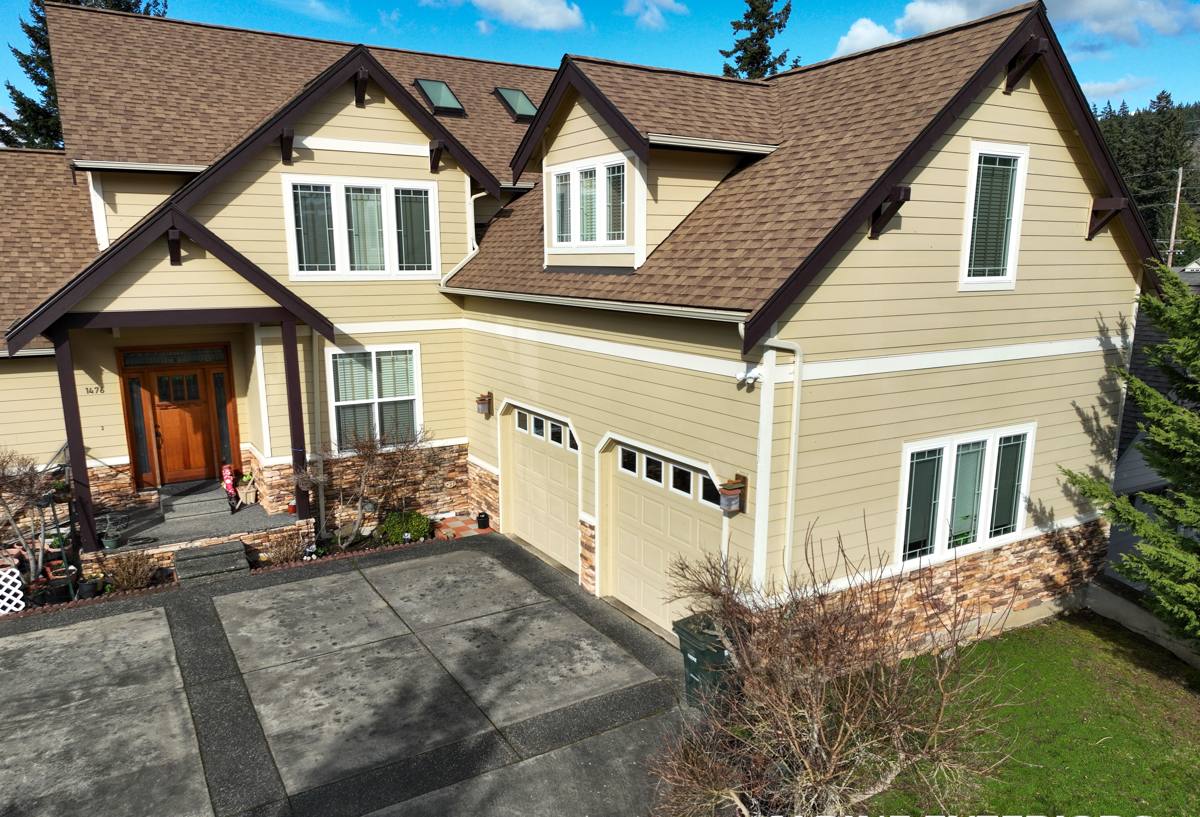
What Local Homes Are Up Against
A few things make Westchase's exterior environment more demanding than it looks on a calm, sunny day:
- Year-round UV exposure breaks down pigments and resins in lower-grade siding materials faster than in most of the country, leading to fading, chalking, or surface degradation on products not engineered for it.
- Wind-driven rain during Tampa's summer storm season and tropical systems pushes water horizontally into vertical joints and batten seams, not just down the face of the wall.
- Humidity stays high enough, long enough, that any siding material prone to swelling, delaminating, or holding moisture against the wall assembly is working against the climate every single day, not just during storms.
- Hurricane-force wind events put real uplift and racking load on fastener patterns and panel edges — a board and batten system is only as strong as its weakest fastening detail.
- Salt-influenced air, carried inland from the Bay and the Gulf, accelerates corrosion on fasteners and trim that aren't rated for coastal-adjacent exposure.
None of this is unique to Westchase, but it's the baseline every siding decision here has to account for — and it's why we treat board and batten as a system that has to be engineered for this environment, not just a style choice.
Why Board & Batten Suits Westchase's Home Styles
Westchase's neighborhoods blend traditional and farmhouse-influenced exteriors with more transitional and craftsman-style homes, and board and batten reads naturally on both. It's commonly used as a full-elevation siding choice, as a gable accent above lap siding, or on porch surrounds and entry features. The vertical lines add height and a more custom, architectural feel than standard horizontal lap siding — which is part of why it's held up well as a resale and curb-appeal feature in this market.
The trade-off is that a board and batten wall has roughly double the vertical seams of a lap-sided wall of the same size, because each batten strip creates two additional joints running the full height of the wall. That's more places for water to test, more fastener penetrations, and more reliance on correct flashing and water-resistive barrier detailing underneath. Get those details right and board and batten is exceptionally durable. Skip them, or use a material not built for this application, and it's the siding style most likely to show problems early.
What a Correct Board & Batten Installation Involves
A board and batten installation that's going to hold up through Hillsborough County's storm seasons has several non-negotiable steps, regardless of the material:
Water Management Layer
Every wall gets a continuous water-resistive barrier (WRB) installed before any siding goes on. Seams are lapped and taped correctly, and penetrations — outlets, hose bibs, light fixtures — are properly flashed before the siding covers them. This layer is what actually keeps a home dry; the siding is the first line of defense, not the only one.
Furring and Airflow
Vertical board and batten siding typically requires furring strips or a rainscreen gap behind the panels, especially over a WRB, so that any incidental moisture that gets behind the siding can drain and dry rather than sitting against the wall sheathing. This detail matters more in Tampa's humidity than it would in a drier climate.
Fastening Pattern
Fastener spacing and type have to match the manufacturer's wind-load engineering for the actual exposure of the home — corner units, gable ends, and homes near open areas typically need tighter fastener schedules than a sheltered mid-block wall. This is where a lot of subpar installations fail during named storms: not because the material failed, but because the fastening pattern wasn't rated for the wind zone.
Joint and Seam Treatment
Butt joints, corners, and top/bottom terminations all need correct flashing and sealant details. On a board and batten wall, the battens themselves have to be fastened without overdriving or underdriving, and caulked at the right joints — not all of them, since some need to stay able to move with the material.
- Continuous, correctly lapped WRB behind every wall
- Furring or rainscreen gap for drainage and drying
- Fastener type and spacing matched to the home's wind exposure
- Flashed and sealed penetrations, corners, and terminations
- Factory-finished material with a documented paint/finish warranty
- Manufacturer-specified clearances from grade, roofing, and hardscape
The Material Question: Why We Install Only James Hardie
Board and batten is available in several materials, and each behaves differently in a climate like Tampa's. We install James Hardie fiber cement exclusively — specifically HardiePanel vertical siding with HardieTrim battens, or the Hardie Artisan vertical collection where a more refined reveal is wanted — and we don't install vinyl board and batten, wood-composite panels like LP SmartSide, or unfinished wood battens. Here's the honest comparison:
| Material | UV / Fade Resistance | Moisture Behavior | Hurricane-Zone Fit |
|---|---|---|---|
| James Hardie fiber cement (HardiePanel/Artisan) | ColorPlus factory finish engineered for sun exposure | Non-combustible, doesn't swell or rot; engineered for humid climates | HZ5 product line built for high-wind, high-moisture regions like Florida |
| Vinyl board & batten | Can fade and become brittle under sustained UV | Doesn't rot, but seams and panels can distort in heat and flex in wind | Lower wind ratings than fiber cement; can be pulled loose in severe gusts |
| Wood-composite (e.g., LP SmartSide) | Painted finish requires more frequent upkeep | Engineered wood strand product; edges and cuts need consistent sealing to resist moisture | Performs adequately when maintained, but more installation-sensitive in humid climates |
| Raw/primed wood battens | Fades and weathers without diligent repainting | Prone to swelling, cupping, and rot in sustained humidity | Least suited to Gulf Coast conditions without heavy ongoing maintenance |
We're not going to claim any of these products are unusable — plenty of homes around Tampa wear them without incident. But our standard is a non-combustible material with a factory-applied finish engineered specifically for climates like this one, backed by a strong transferable warranty, and that's what led us to build our business around James Hardie rather than offering a menu of siding brands. When a board and batten job is done in Westchase, we want the homeowner to get 30-plus years out of it without the recurring maintenance that wood and wood-composite products tend to demand in this humidity.
Our Process for a Westchase Board & Batten Project
- On-site assessment — we look at the home's current siding condition, wall assembly, exposure (corner lot, open field, tree cover), and any moisture or rot issues that need addressing before new siding goes on.
- Scope and material plan — we confirm panel width, batten spacing, ColorPlus finish selection, and trim details to match the home's architecture.
- Tear-off and substrate check — existing siding comes off and the sheathing underneath is inspected; any water damage found gets repaired before the WRB goes back on, not covered over.
- WRB and flashing — a continuous water-resistive barrier is installed with correctly lapped seams and flashed penetrations.
- Furring and installation — furring strips or rainscreen components go up, followed by the HardiePanel siding and HardieTrim battens, fastened to the wind-load spec for that specific wall.
- Sealing and finish work — joints, corners, and terminations are sealed per manufacturer spec, and trim is finished out around windows, doors, and rooflines.
- Final walkthrough and cleanup — the site is cleaned of debris and fasteners, and we walk the job with the homeowner before calling it done.
Maintenance and Lifespan to Expect
One of the practical advantages of a correctly installed James Hardie board and batten system in a Gulf Coast climate is how little ongoing maintenance it asks for. There's no repainting cycle on the schedule of wood or wood-composite siding, no risk of swelling or rot from humidity, and the ColorPlus finish is engineered to hold its color under sustained Florida sun rather than chalking out in a few seasons. Homeowners should still do an annual visual check — looking at caulked joints, trim terminations, and areas near sprinklers or dense landscaping — but that's a far lighter lift than the recurring maintenance wood-based board and batten products require in this humidity.
What Drives Cost on a Board & Batten Project
| Factor | Why It Matters |
|---|---|
| Wall square footage and home shape | More corners, gables, and dormers mean more cutting, trim, and labor time |
| Substrate condition | Rotted sheathing or existing moisture damage found during tear-off adds repair scope |
| Panel width and reveal style | Wider battens or custom spacing affect material takeoff and layout time |
| Finish selection | Factory ColorPlus finishes vary by color and product line |
| Wind exposure of the site | Corner lots and open-exposure homes may need tighter fastening schedules |
| Trim and accent scope | Full-elevation board and batten costs more than an accent gable or porch feature |
We give homeowners a real number after walking the specific home — broad national averages don't account for a home's actual condition, exposure, or scope, and we'd rather quote accurately than guess low and revise later.
Why It Matters to Hire a Crew That Already Works in Westchase
A crew that regularly works in Westchase and the surrounding Tampa area already understands the wind exposure differences between an open corner lot and a sheltered interior street, knows how local humidity affects sequencing (siding installed over damp sheathing traps problems in the wall), and has already worked through Hillsborough County's permitting and inspection process for exterior work. That local familiarity shows up in the details — fastener schedules matched to the right wind zone, flashing done correctly the first time, and a finished job that's built for the storms this area actually sees rather than a generic installation.
If you're considering board and batten siding for a home in Westchase, we're happy to come take a look, walk you through what your specific home needs, and put together a straightforward estimate — no pressure, no sales script. The form below gets you started.