 Tampa Roofing
 New Roof Installation in Westchase: What Local Homes Actually Need
Westchase homes sit under the same sun and the same storm tracks as the rest of Hillsborough County, but the neighborhood's mix of newer subdivisions and mature tree canopy creates a few of its own wrinkles. Roofs here get shaded and damp under oak and pine cover in some sections, then take full, unbroken sun in others. A correct new roof installation accounts for both conditions on the same property, not just the average.
Tampa's climate is hard on roofing in a way that's easy to underestimate until you've replaced a roof that failed early. Hurricane-force wind events, intense UV exposure nearly year-round, wind-driven rain that gets pushed sideways under shingle edges and flashing, and salt-laden air moving in off the Gulf all combine to shorten the useful life of a poorly installed roof. A well-installed one, using materials and methods matched to this environment, is what actually gets a homeowner the 25-to-30-year lifespan printed on the shingle wrapper.
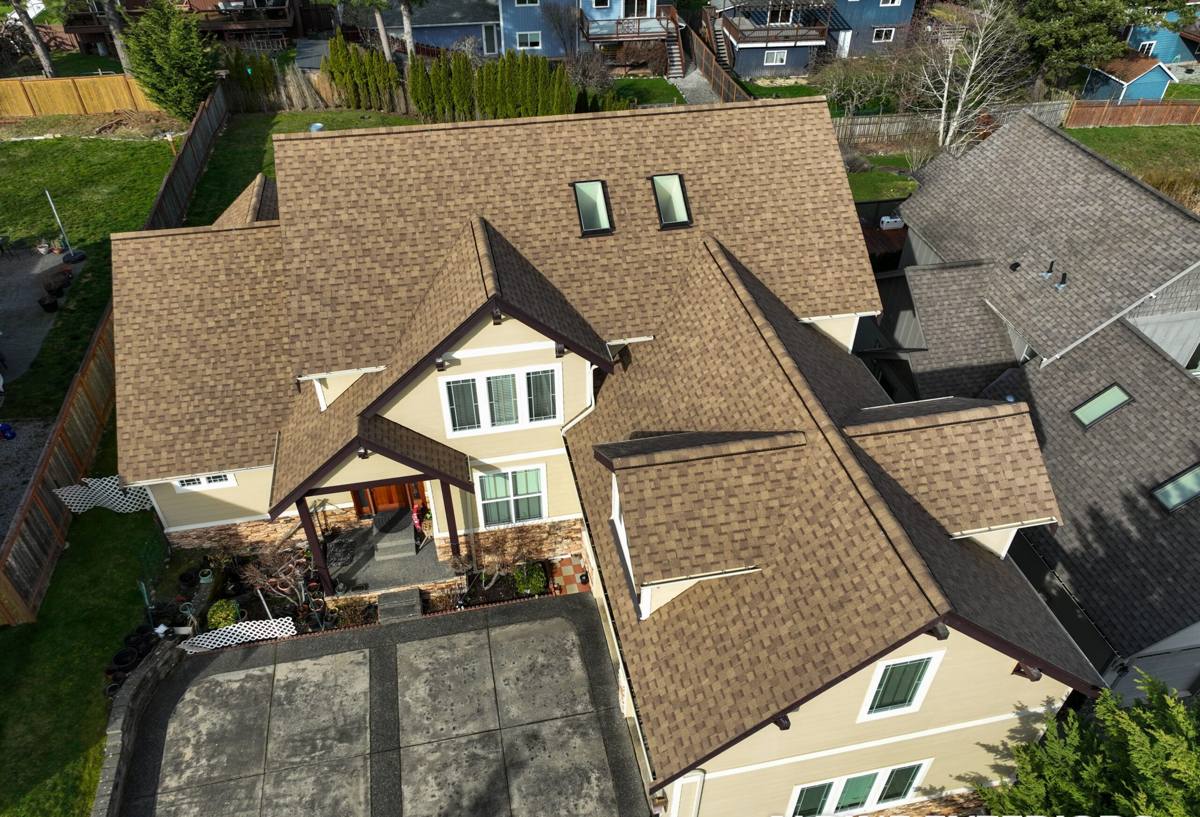
Why "New Roof Installation" Means More Than Shingles
A new roof is a system, not a single product. The shingles (or metal, or tile) are the visible layer, but the parts underneath and around them are what determine whether that roof survives a Hillsborough County summer storm season intact. For Westchase homes, we treat each of the following as non-negotiable:
- Deck inspection and repair — the plywood or OSB substrate has to be sound before anything goes on top of it. Soft, delaminated, or water-stained decking gets replaced, not covered.
- Underlayment — a synthetic or self-adhered underlayment rated for wind-driven rain, installed as a continuous water barrier, not just a formality under the shingles.
- Flashing — at every chimney, wall intersection, skylight, and roof-to-roof valley. Flashing failure is one of the most common causes of "mystery leaks" in homes that otherwise have a fine roof.
- Ventilation — intake at the eaves, exhaust at the ridge, balanced so attic heat and moisture actually move out instead of cooking the roof from underneath.
- Fastening pattern — nail placement and count matched to Florida's high-wind fastening requirements, not a generic national standard.
The Florida Building Code Baseline
Hillsborough County enforces the Florida Building Code's high-velocity and wind-borne debris provisions, which set minimum standards for fastening, underlayment attachment, and edge metal on new roof installations. These aren't upgrades — they're the floor. A roofer working in Westchase who treats code minimums as optional, or who quotes a job without pulling the required permit, is setting a homeowner up for problems at resale, insurance claim time, or the next storm, whichever comes first.
Material Choices for Westchase Roofs
Most Westchase homes are well suited to architectural (dimensional) asphalt shingles, which balance cost, appearance, and wind performance well for this area. Metal and tile are also common in the broader Tampa market and each has a real place, but the right choice depends on the home's structure, HOA requirements (Westchase has active HOAs in many sections), and the homeowner's budget and time horizon.
| Material | Typical Lifespan | Wind Performance | Considerations for This Area |
|---|---|---|---|
| Architectural asphalt shingle | 25–30 years | Rated up to 130+ mph with proper install | Most cost-effective; wide color range; HOA-friendly in most Westchase sections |
| Standing seam metal | 40–50+ years | Excellent when properly fastened | Higher upfront cost; handles UV and heat well; check HOA approval first |
| Concrete/clay tile | 40–50 years | Very good when installed to code | Heavier — requires structural check; common on some Tampa-area homes; higher repair cost per tile |
We don't push a single product on every roof. We'll tell you honestly which option fits the home in front of us, including the trade-offs — tile costs more to repair after impact damage, metal costs more upfront but less over its life, and asphalt shingle needs a genuinely good install (not just good material) to hit its rated wind resistance.
How We Handle a New Roof Installation, Start to Finish
1. On-Site Assessment
We walk the roof, check the deck condition from the attic side where accessible, look at existing ventilation, and note anything unusual about the home's layout — valleys, dormers, penetrations, tree overhang. This is also when we talk through material options and what's realistic for the budget.
2. Written Scope and Permit
You get a clear, itemized scope before work starts — materials, underlayment type, flashing plan, and disposal. We pull the required Hillsborough County permit; this is not optional and it's what protects you if there's ever a dispute with an insurer down the road.
3. Tear-Off and Deck Repair
Full tear-off to the deck. We don't install a new roof over old roofing — it traps moisture, hides deck problems, and voids most manufacturer warranties. Any compromised decking is replaced and documented before we move forward, so there are no surprises added to the bill later without your sign-off.
4. Underlayment and Flashing
A continuous, properly lapped underlayment goes down first, followed by new flashing at every penetration and intersection. This step is where most future leaks get prevented or guaranteed, depending on how carefully it's done.
5. Roofing Material Installation
Shingles, metal, or tile installed to the fastening pattern and exposure spacing required for Hillsborough County's wind zone — not a generic pattern used everywhere regardless of local code.
6. Ventilation and Final Details
Ridge and soffit ventilation confirmed and balanced, ridge caps set, all penetrations sealed, gutters and downspouts reconnected.
7. Cleanup and Final Walkthrough
Magnetic sweep for nails, full debris removal, and a walkthrough where we point out what was done and answer any questions before we consider the job finished.
What Salt Air and UV Do to a Roof Over Time
Westchase isn't beachfront, but Tampa Bay's proximity still puts a measurable amount of salt-laden moisture into the air across the region, and it settles on roofing, flashing, and fasteners over the years. Combined with the intense, near-constant Florida UV exposure, this accelerates the breakdown of lower-quality shingle granules and can corrode unprotected or poorly coated metal flashing and fasteners faster than in drier, less sun-exposed climates. That's why we use corrosion-resistant fasteners and flashing materials rated for coastal-adjacent exposure, even on inland Tampa neighborhoods — it costs a little more upfront and saves a homeowner from premature flashing failure a decade in.
Signs a Westchase Roof Needs Full Replacement, Not Another Repair
- Shingles curling, cupping, or losing significant granule coverage across large sections, not just one isolated area
- Soft spots or visible sagging when walked on or viewed from the attic
- Repeated leaks in different locations after past repairs — a sign the underlayment has failed broadly, not just at one point
- Roof is at or past 20–25 years old, especially if it's never been reviewed after a major storm
- Daylight visible through the roof deck from inside the attic
- Rising energy bills tied to poor attic ventilation and heat buildup
- Visible storm damage — lifted shingles, exposed nail heads, bent flashing — after a wind event
If a roof is showing two or more of these, a patch repair is usually a short-term fix that delays the inevitable and adds cost on top of the eventual full replacement.
Why a Crew That Works Westchase Regularly Matters
A roofing crew that's out in Westchase and the surrounding Tampa neighborhoods routinely knows the local permitting process at the county level, understands typical HOA architectural review expectations for roofing color and material, and has a working sense of which roof styles and pitches are common in the area from having actually worked on them. That local familiarity translates into fewer permit delays, fewer surprises during tear-off, and a homeowner who isn't the test case for a crew's first Hillsborough County job.
It also means we're not a one-time crew that disappears after the invoice clears. If a warranty question or a storm-related concern comes up two years later, we're still working in the same neighborhoods and still reachable.
Cost Factors for a Westchase Roof Replacement
| Factor | Why It Affects Cost |
|---|---|
| Roof size and pitch | More square footage and steeper pitches increase labor and material needs |
| Number of penetrations/valleys | Chimneys, skylights, and complex valleys each require additional flashing labor |
| Deck condition | Rotten or soft decking found during tear-off adds material and labor to replace it properly |
| Material selection | Asphalt, metal, and tile carry very different material and labor costs |
| Ventilation upgrades | Adding or correcting ridge/soffit ventilation is sometimes needed on older homes |
| Permit and disposal fees | County permitting and tear-off debris disposal are part of an honest quote, not hidden add-ons |
We give broad, honest ranges upfront based on the assessment, not a lowball number designed to get a signature and then grow once work starts.
Get a Local Estimate
If your Westchase roof is showing its age, took storm damage, or you're just planning ahead before the next hurricane season, we're glad to come take a look. The estimate is free, there's no pressure attached to it, and you'll walk away with a straight answer about whether you need a repair or a full replacement — use the form below to get started.