 Tampa Roofing
 Carrollwood's Deck-Building Challenge: Same County, Different Demands
Carrollwood sits inland from Tampa Bay, tucked among mature tree canopy and long-established residential streets. That gives it a slightly different microclimate than beachfront Hillsborough County properties, but it does not exempt a deck here from the punishment Central Florida hands out year-round. Intense UV exposure, sudden downpours, high humidity, and the outer bands of tropical systems all reach Carrollwood the same as anywhere else in the Tampa metro. The difference is subtle: less direct salt spray than a bayfront lot, but still enough salt-laden air moving inland on onshore winds to matter for fastener and hardware choices over a 15-20 year deck life.
Inland but Not Immune
Homeowners sometimes assume that being a few miles from the water means standard, big-box lumber and generic screws are good enough. In practice, Hillsborough County's building code doesn't distinguish between a coastal lot and an inland one for wind design purposes within the same wind zone, and Carrollwood's tree cover, while reducing some UV load on shaded sections of a deck, doesn't reduce wind loading during a named storm. A deck built to a lower standard here fails the same way a deck built on the water does — just a little slower.
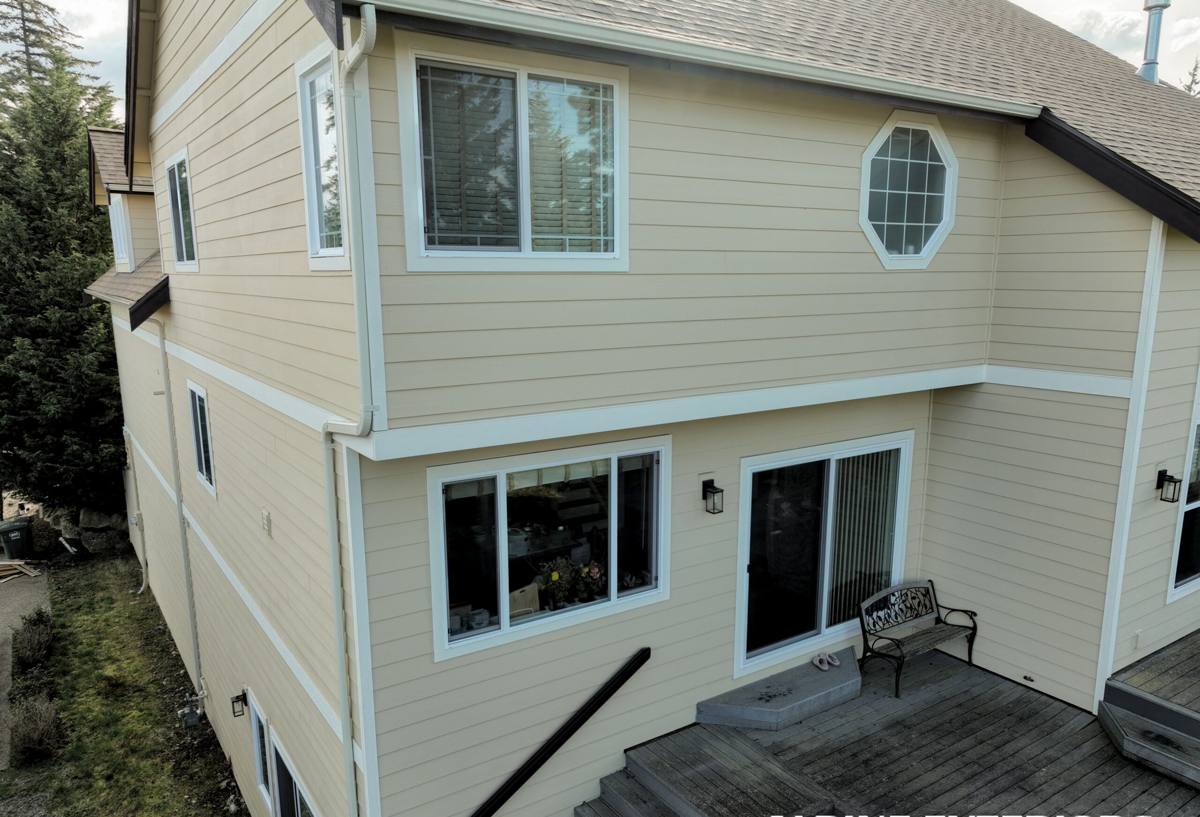
What a Correctly Built Custom Deck Requires in Hillsborough County
A deck that's going to hold up in this climate isn't just a matter of picking attractive boards. The structure underneath does the real work, and it's where we see the most corners cut on decks we're asked to repair or replace.
Framing and Fasteners Rated for Wind
Florida Building Code wind provisions apply to attached and freestanding decks alike. That means joist hangers, post bases, and ledger attachments sized and spaced for the wind speeds Hillsborough County is rated for, not generic on-center spacing pulled from a national average table. Uplift connectors at posts and beams matter more here than in most of the country — a deck that isn't tied down properly doesn't just sag over time, it can become a genuine hazard when hurricane-force gusts move through.
Ledger Attachment and House Connection
Most deck failures we're called out to inspect start at the ledger board — the point where the deck attaches to the house. Improper flashing lets wind-driven rain track behind the ledger and into the house's rim joist, rotting it from the inside where it's invisible until the deck starts to pull away from the structure. Correct flashing detail, and in many cases a fully self-flashing ledger connection, is not optional in a climate that sees this much horizontal rain.
Fastener and Hardware Corrosion Resistance
Standard electro-galvanized screws and connectors have a short service life in Gulf Coast humidity, and that clock runs faster with any salt air exposure. We use hot-dip galvanized or stainless structural hardware and coated or stainless deck screws matched to the decking material, because replacing a handful of rusted screws every few years costs more in labor over time than specifying the right fastener once.
Decking Attachment: Screws, Clips, and Expansion Gaps
How boards are actually fastened down matters as much as what they're made of. Composite and PVC decking expand and contract more than wood does across a Tampa summer-to-winter swing, and manufacturers specify board gapping for exactly that reason — install it too tight in July and you'll see buckling by the following summer. Hidden fastener clip systems keep the deck surface free of screw heads and reduce the number of penetration points where water can sit, while face-screwing with color-matched stainless or coated screws remains a durable, lower-cost option. Either approach works when it's installed to the manufacturer's spec; the problems we see come from crews using one generic spacing for every material regardless of what the manufacturer actually calls for.
Decking Material Options for Carrollwood's Climate
There's no single "correct" decking material — the right choice depends on budget, how much upkeep you want to do, and how much direct sun versus tree shade your yard gets. Here's how the common options actually perform under Tampa conditions.
| Material | UV & Heat Behavior | Moisture Behavior | Maintenance |
|---|---|---|---|
| Pressure-treated southern yellow pine | Fades and can check/splinter with prolonged sun; lowest upfront cost | Treated for rot resistance but absorbs moisture; needs sealing | Re-seal or stain every 1-2 years |
| Tropical hardwood (e.g., ipe-type species) | Very stable in heat, minimal fading if oiled | Naturally dense and rot-resistant | Periodic oiling to maintain color; otherwise low |
| Capped composite decking | Cooler-toned options resist fading; can still get hot underfoot in full sun | Won't rot or absorb water; capped shell resists staining | Occasional washing, no sealing or staining |
| PVC decking | Excellent UV and fade resistance; some lighter colors stay cooler | Fully moisture-immune, will not rot | Lowest ongoing maintenance |
In a shaded Carrollwood lot under mature oaks, wood options age slower simply because they see less direct sun — but that same shade holds moisture and pollen longer, which means more frequent cleaning regardless of material. Full-sun backyards see the opposite tradeoff: faster fading and heat buildup, but faster drying after rain.
Our Process for a Carrollwood Deck Project
1. On-Site Assessment and Design
We start at your property, not with a generic template. That means checking grade and drainage around the footprint, noting sun exposure and tree root locations if you're building near established landscaping, and confirming how the deck ties into your home's existing structure. We'll talk through material tradeoffs honestly, including what we won't recommend and why.
2. Permitting Through Hillsborough County / City of Tampa
Most custom decks require a building permit, and depending on your address that means filing through Hillsborough County or the City of Tampa's permitting process, along with an HOA review if your section of Carrollwood has one. We handle the permit drawings and submission so you're not the one deciphering code sections — but you should expect this step to take real time, not a rubber stamp.
3. Footings, Framing, and Inspection
Footing depth and size are engineered to the deck's load and your soil conditions, not guessed at. Framing goes up next with the hardware and fastener standards described above, and Hillsborough County requires inspections at defined stages — typically footing/pre-pour and final framing — before decking goes down. We schedule around those inspections rather than trying to rush past them.
4. Decking, Railing, and Final Walkthrough
Once the structure passes inspection, decking, railing, and any stairs go on. We walk the finished deck with you before we consider the job done, covering how to care for whatever material you chose and what warranty coverage applies to materials and workmanship.
Freestanding vs. Ledger-Attached Decks: Which Fits Your Lot
Not every Carrollwood deck should tie into the house. Freestanding decks — built on their own posts and beams with no ledger connection — avoid the single biggest failure point described above entirely, which makes them worth considering around pools, over uneven yards with mature tree roots, or on additions where tying into existing framing would be complicated or invasive. The tradeoff is cost: a freestanding deck needs a full beam and footing system on every side instead of borrowing the house's structure on one side, so material and labor run higher for the same footprint. We'll walk you through both options during design rather than defaulting to whichever is easier to build. Hillsborough County and most Carrollwood HOA sections also enforce setback requirements from property lines and easements, which can influence whether a freestanding design even fits your lot — worth confirming before you fall in love with a layout.
Common Problems We Find on Existing Carrollwood Decks
When we're called out to inspect or repair a deck that wasn't recently built, the same handful of issues show up repeatedly:
- Ledger boards attached with no flashing, or flashing that was improperly lapped, letting water into the house's framing
- Undersized or missing joist hanger nails/screws — builder's coil nails instead of structural fasteners
- Posts set on top of soil or a paver rather than on a proper footing, allowing settling and rot at the post base
- Standard interior-grade or electro-galvanized hardware that's visibly rusting or has failed within 5-8 years
- Composite or wood decking installed with no gap for expansion, causing buckling in summer heat
- Railing posts that flex or wobble because they weren't through-bolted to the framing
Most of these are invisible from the surface until a board feels spongy, a railing feels loose, or — worst case — a section fails under load. None of them are expensive to do correctly the first time; they're expensive to fix after years of hidden water damage.
Maintenance: What to Expect Year-Round in This Climate
No decking material in Tampa is truly "no maintenance" — that phrase applies to upkeep frequency, not zero effort. Here's a realistic seasonal checklist for a Carrollwood deck:
- Spring: Wash off pollen buildup (heavier under oak canopy), check railing and stair connections for looseness after winter
- Early summer (start of wet season): Inspect for standing water or debris trapped between boards that can hold moisture against the structure
- Hurricane season (June-November): Clear furniture, planters, and grills before a storm; have loose fasteners or railing tightened before wind events, not after
- Fall: Re-seal or oil wood decking if it's due; check fastener heads for rust staining, which signals it's time to replace before it spreads
- Anytime: Keep gutters and downspouts near the deck clear so runoff isn't dumping directly onto framing or footings
Cost Factors for a Custom Deck in Carrollwood
Every deck is priced around its own footprint, material, and site conditions, so we won't quote a number here that doesn't apply to your project. What we can tell you is what actually moves the price:
| Factor | Why It Matters |
|---|---|
| Decking material | Pressure-treated wood is the lowest upfront cost; PVC and composite cost more but reduce maintenance spending over the deck's life |
| Height and stairs | A deck built well above grade needs more framing, railing code compliance, and stair engineering than a low ground-level deck |
| Ledger vs. freestanding | Freestanding decks need their own beam and footing system on all sides, which adds material and labor |
| Site access and grading | Tight side-yard access, tree roots, or drainage correction on your Carrollwood lot can add time before framing even starts |
| Railing and finish details | Cable rail, custom post caps, or built-in seating add labor beyond a standard baluster railing |
| Permit and engineering scope | Larger or multi-level decks may require stamped engineering beyond standard prescriptive code tables |
Why Hire a Crew That Already Works in Carrollwood
Deck-building isn't exotic work, but building one correctly for this specific climate and this specific permitting jurisdiction is a different job than building one in a dry, low-wind state. A crew that regularly pulls permits through Hillsborough County and the City of Tampa already knows the inspection sequence, the flashing detail that passes, and the fastener specs that hold up through a full hurricane season — instead of learning it on your project. We're not driving in from another region to bid this job cheap and disappear if a warranty issue comes up; we're built to be the crew you can call five years from now if something needs attention.
If you're weighing a custom deck for your Carrollwood home, we're happy to walk the site, talk through material and design options honestly, and put together a written estimate with no pressure to sign anything on the spot. Use the form below to get started.