 Tampa Roofing
 Why Siding Takes a Beating in Riverview
Riverview sits in the humid, storm-exposed stretch of Hillsborough County south of Tampa, and the exterior of a home here works harder than it does almost anywhere else in the country. Summers bring long stretches of intense, direct UV that bakes painted and vinyl surfaces day after day. The wet season adds wind-driven rain that gets forced sideways into every seam, joint, and fastener hole in a wall assembly. And because this part of Florida sits well within the Gulf Coast's hurricane corridor, siding here also has to survive sustained high winds and flying debris, sometimes more than once in a home's lifetime.
Add in the salt-tinged air that moves inland off Tampa Bay and the near-constant humidity that keeps wall cavities damp longer than in drier climates, and you have a combination that few siding products were ever designed to handle. Vinyl softens, warps, and fades under sustained UV. Wood and wood-composite products absorb moisture and are vulnerable to rot if any part of the installation lets water in. This is the environment a Riverview home's siding has to perform in every single year, not just during a named storm.
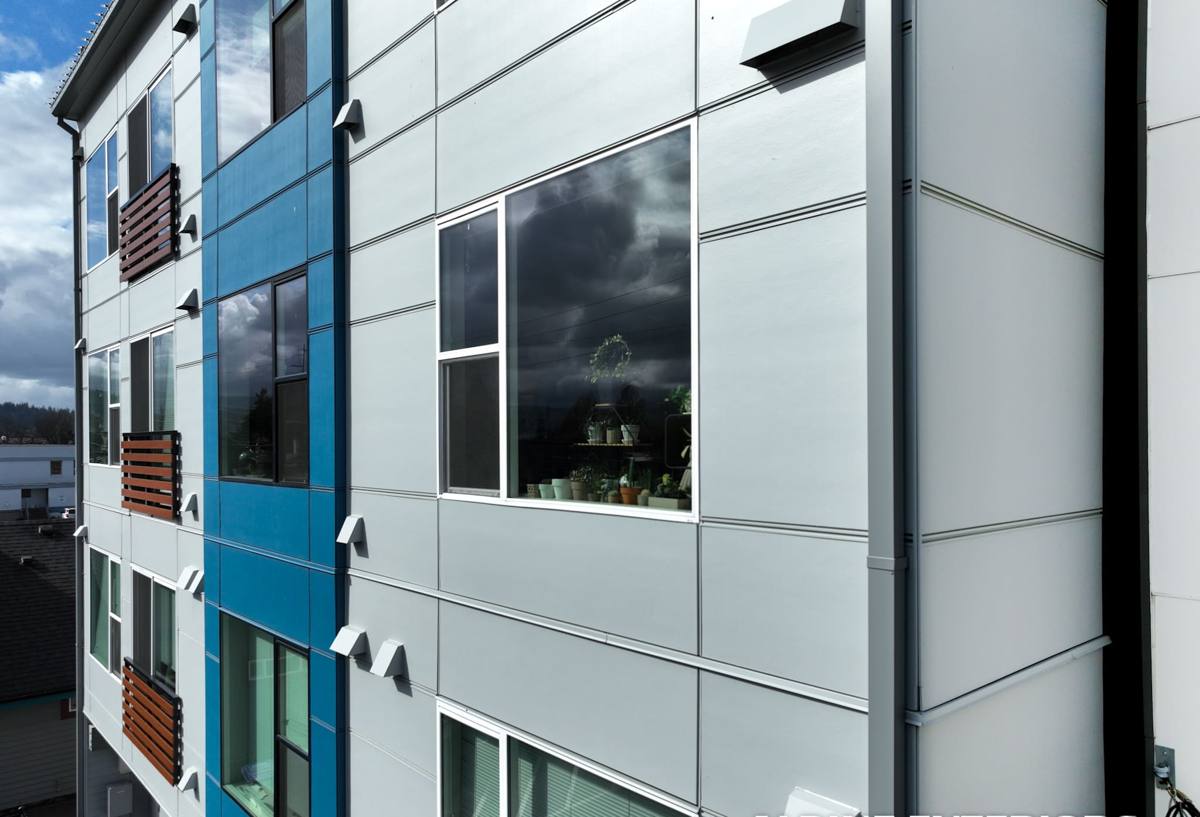
Why We Install Only James Hardie Fiber Cement
Tampa Roofing Co made a deliberate decision to install one siding product: James Hardie fiber cement. We don't offer vinyl, LP SmartSide, Cemplank, Allura, or primed wood siding as alternatives, and that's not a marketing angle — it's a standard we hold because of what we've seen this climate do to exterior products over time.
Fiber cement is a mix of cement, sand, and cellulose fiber, which makes it non-combustible and dimensionally stable in a way that vinyl and wood-based products simply are not. It doesn't soften in direct sun, it doesn't provide a food source for pests, and it resists swelling and rot even when it takes on moisture at a cut edge or fastener point. James Hardie backs its boards with a factory-applied ColorPlus finish baked on under controlled conditions, which holds color and resists fading far better than field-applied paint exposed to Florida's UV load. We'd rather install one product correctly, to spec, every time, than offer several options and let homeowners guess which one will actually hold up.
HZ10: Hardie's Engineering for Florida's Climate
James Hardie doesn't sell one nationwide product. Its HardieZone system engineers two distinct formulations: HZ5 for northern regions that see freeze-thaw cycling, and HZ10 for warm, humid climates like ours. Hillsborough County falls squarely in HZ10 territory, and the boards we install for Riverview homes are built for exactly this kind of environment — high humidity, sustained heat, and heavy seasonal rainfall.
HZ10 fiber cement is formulated to resist moisture-related damage and to hold its shape and finish under the kind of prolonged UV exposure Tampa Bay gets nearly year-round. That matters more than it sounds like it should: a siding product engineered for a mild coastal climate somewhere else, or for a colder region, isn't necessarily built to handle a Florida summer, let alone a Florida summer followed by a tropical system. Ordering the correct HardieZone product for this region is one of the first things we confirm before a job starts, and it's a detail that's easy for a crew unfamiliar with Florida installs to get wrong.
What a Correct Installation Actually Involves
Fiber cement siding is only as good as the installation behind it. James Hardie publishes detailed installation requirements, and in a wind- and moisture-exposed area like Riverview, following them precisely is not optional.
Clearance and Moisture Management
Every wall needs a proper water-resistive barrier behind the siding, correctly lapped and integrated with window and door flashing so water is directed out, not trapped inside the wall cavity. Hardie's specifications call for minimum clearances above roof lines, decks, and grade so that splashback and standing water don't sit against the bottom edge of the boards. Skipping these details is the single most common reason any siding — Hardie included — fails early in a humid climate.
Fastening and Board Layout
Fasteners have to be the correct type and length, driven at the specified spacing, and set flush without overdriving, which can crack the board or reduce its wind resistance. Panel and lap siding need proper joint treatment at butt seams, and in a hurricane-wind area, fastening patterns matter for how the wall assembly performs when it's tested by a storm, not just for appearance.
Caulking, Trim, and Finish Details
Every seam, penetration, and trim joint needs the right sealant, applied so it sheds water rather than trapping it. Because ColorPlus is a factory finish, cut edges and any field-touched areas need to be treated with the matching touch-up product so the finish performs consistently across the whole wall, not just on the factory-coated face.
James Hardie Compared to Other Siding Options
Homeowners in Riverview often ask us to explain, plainly, why the material matters as much as the installation. Here's an honest comparison across the factors that actually affect how siding performs in this climate over time.
| Factor | James Hardie Fiber Cement | Vinyl Siding | Wood / Wood-Composite Siding |
|---|---|---|---|
| Hurricane wind resistance | Rigid, holds shape under high wind loads when installed to spec | Can flex, crack, or blow off in sustained high wind | Depends on fastening; panels can loosen or split |
| UV and color retention | ColorPlus factory finish resists fading in year-round sun | Prone to fading and chalking over time | Field-applied paint or stain fades and needs recoating |
| Moisture behavior | Resists rot and swelling when installed with proper flashing | Doesn't rot, but seams can trap moisture behind it | Absorbs moisture; vulnerable to rot at cuts and joints |
| Fire performance | Non-combustible material | Combustible plastic material | Combustible material |
| Typical maintenance | Periodic caulk and touch-up checks | Low, but damage often means full-panel replacement | Regular repainting, staining, and rot inspection |
No siding material is maintenance-free in this climate, but the gap in how these products hold up over a decade or two of Florida sun and storms is real, and it's the reason we standardized on one product instead of offering several.
Our Process for a Riverview Siding Job
Every siding job we run in the Riverview area follows the same sequence, whether it's a full re-side or a targeted section replacement after storm damage.
- On-site assessment. We inspect the existing exterior wall, sheathing, and any moisture or rot damage before quoting the work, not after.
- Removal and substrate check. Old siding comes off and we check the sheathing underneath for water damage that needs to be addressed before new siding goes up.
- Water-resistive barrier and flashing. A properly lapped weather barrier goes in, integrated with window, door, and penetration flashing so water is managed correctly from day one.
- Board installation. HZ10 James Hardie siding is installed to manufacturer clearance, fastening, and joint specifications, accounting for our local wind requirements.
- Trim, caulking, and touch-up. Seams and cut edges are sealed and finished so the ColorPlus coating performs consistently across the wall.
- Final walkthrough and cleanup. We review the finished work with the homeowner and clear the site of debris and old material.
What to Look For in a Contractor Working in Riverview
Fiber cement is a forgiving material when it's installed correctly and an unforgiving one when it isn't — corners cut on flashing or fastening rarely show up as a problem until a storm season or two later. Before hiring anyone for a siding job in this area, it's worth confirming a few things.
- They can explain, specifically, how they'll handle flashing at windows, doors, and roof lines — not just "we'll seal it up."
- They know which HardieZone product line (HZ10) is correct for this climate and order it accordingly.
- They pull the proper permits through Hillsborough County rather than treating siding as a permit-free cosmetic job.
- They give you a written scope covering fastener type, clearances, and finish details, not just a square-footage price.
- They've done siding work elsewhere in the Tampa Bay area and can speak to how it's held up through storm seasons.
- They stand behind the installation itself, separate from the manufacturer's product warranty.
Maintenance and Warranty After Installation
One reason we recommend James Hardie over alternatives is what happens after the crew leaves. A correctly installed HZ10 board wall needs relatively simple upkeep: periodic visual checks of caulked joints and trim, prompt attention to any physical damage so water can't get behind the board, and touch-up of cut edges if they were ever exposed. James Hardie's ColorPlus finish is designed to go years without needing a repaint, which in a UV-heavy climate like Tampa Bay's is a meaningful difference from field-painted materials that need recoating on a much shorter cycle.
James Hardie also backs its products with a transferable limited warranty, which matters to Riverview homeowners both for the protection it offers and for resale value down the line. A warranty is only as good as the installation behind it, though, which is why we document our work and stand behind the labor as well as the material.
Get an Honest Look at Your Siding
If your Riverview home's siding is showing its age, took storm damage, or you're planning ahead of the next hurricane season, we're glad to come take a look and walk you through what correct James Hardie installation would involve for your specific house. The estimate is free, there's no pressure, and you'll get a straight answer about what your home actually needs.