 Tampa Roofing
 Why Riverview Roofs Wear Out Faster Than You'd Expect
Riverview sits in the Tampa Bay climate zone, and that climate is hard on roofing materials in ways that homeowners moving from other parts of the country often don't anticipate. It isn't one big problem — it's four smaller ones working together, year after year, until a small issue becomes a leak.
Intense, near year-round UV exposure bakes shingle mats and dries out the asphalt oils that keep shingles flexible. Hurricane-season wind events lift shingle edges and tabs, sometimes without any visible damage from the ground. Wind-driven rain gets pushed sideways and upward under flashing and shingle laps during storms, finding gaps that would never leak in a normal vertical downpour. And salt-laden air moving inland from Tampa Bay accelerates corrosion on nails, flashing, vents, and any exposed metal fasteners. None of these alone would be a big deal. Combined, they mean a Hillsborough County roof ages differently than the same roof would in a drier, cooler climate — and repairs have to account for that reality, not just patch what's visible.
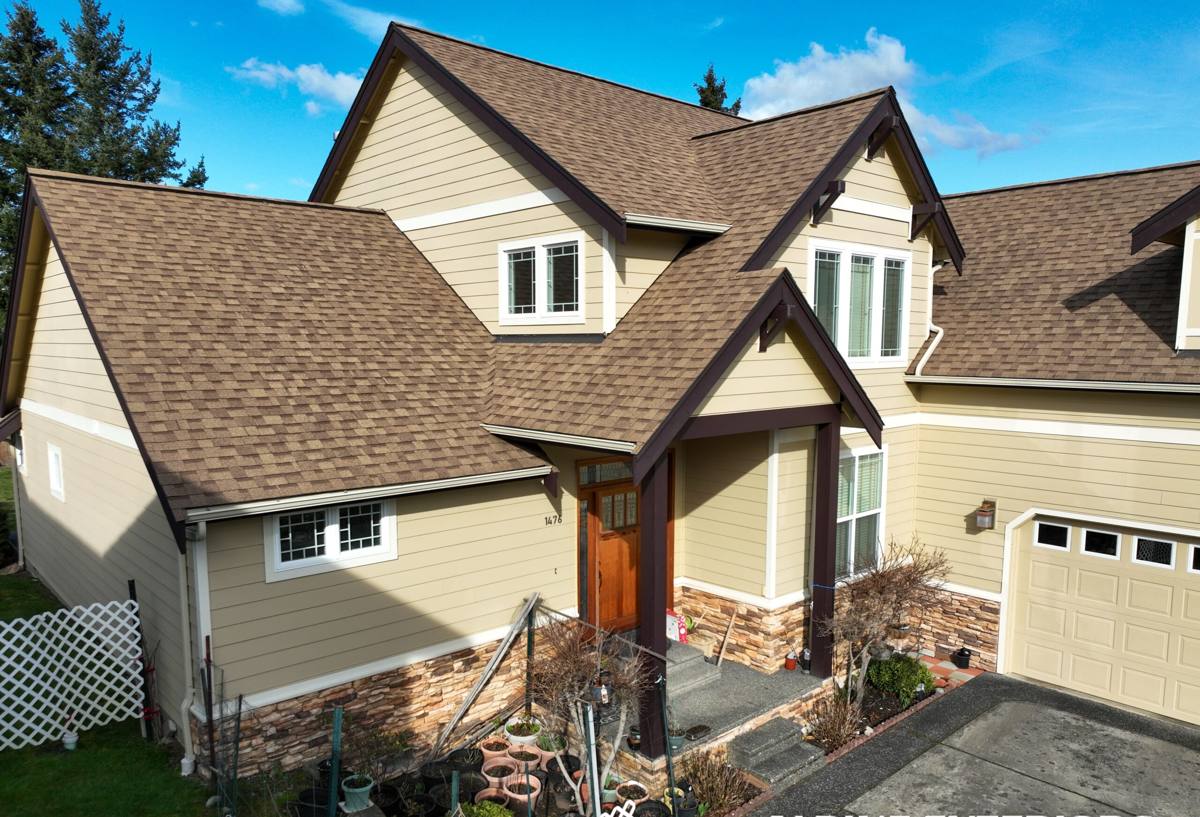
Signs a Riverview Homeowner Shouldn't Ignore
Most roof failures we see didn't start as failures — they started as small, ignored signs. Catching them early is the difference between a repair and a much bigger bill later.
- Water stains on interior ceilings or the tops of walls, even faint ones that seem to have "dried up"
- Missing, cracked, curling, or lifted shingles, especially after any named storm or high-wind event
- Granules collecting in gutters or at downspout outlets — a sign the shingle surface is wearing thin
- Soft or spongy spots when walking the roof (we check this safely; homeowners shouldn't)
- Rusting or lifted flashing around chimneys, skylights, and roof-to-wall transitions
- Visible daylight through the attic decking, or a musty smell in the attic space
- Sagging sections of roofline, which usually points to deck or structural moisture damage
If you're seeing any of these, the roof is already telling you something. A repair now is almost always cheaper and less disruptive than waiting for it to show up as an interior ceiling stain.
What a Correct Roof Repair Actually Involves
A roof repair done right is a diagnostic process first and a fix second. A lot of "repairs" fail within a year or two because the crew patched the symptom — a stain, a curled shingle — without finding where water was actually entering.
Finding the Real Point of Entry
Water travels. A stain on a bedroom ceiling might trace back to a flashing failure ten feet away, following a rafter or the underside of the decking before it shows up inside. A correct repair starts with tracing that path from the interior sign back to the actual roof-level cause, not just resealing whatever is closest to the stain.
Matching Materials, Not Just Colors
Shingles fade with UV exposure over time, so a patch using brand-new shingles next to five-year-old ones will always look slightly different — that's normal and unavoidable with any repair. What matters more is matching the shingle type, weight, and wind rating so the repaired section performs the same as the surrounding roof in the next storm, not just that it looks close from the street.
Flashing and Underlayment Come First
Most leaks trace back to flashing — around chimneys, vents, skylights, and roof-to-wall junctions — or to underlayment that's failed underneath intact-looking shingles. A repair that only replaces surface shingles without addressing the flashing or underlayment underneath is a repair that will leak again, usually in the same spot.
Fastening for Wind, Not Just for Now
Given how often this area sees high-wind events, we fasten repaired sections to current wind-resistance practice — correct nail placement and count — rather than just tacking a shingle back down. A repair that isn't secured properly is often the first thing to fail in the next storm.
Common Riverview Roof Types and What They Mean for Repairs
Riverview has a mix of home ages and roof types, and the right repair approach depends on what's up there.
| Roof Type | Common Failure Points | Repair Considerations |
|---|---|---|
| Architectural asphalt shingle | Wind-lifted tabs, worn granules, nail pops | Widely repairable if shingles are in stock to reasonably match; check underlayment condition too |
| 3-tab asphalt shingle | Cracking and brittleness from UV/age, wind loss | Older 3-tab roofs may be harder to color-match; sometimes a section reroof makes more sense than a patch |
| Concrete or clay tile | Cracked or slipped tiles, failed underlayment beneath intact tile | Tiles themselves often outlast the underlayment — repair may mean pulling tile to redo underlayment, not just replacing tile |
| Metal panel | Fastener backout, sealant failure at seams and penetrations | Repairs focus on refastening and resealing penetrations; salt-air corrosion on fasteners is a real factor here |
This is why we don't quote a repair over the phone. A wind-lifted architectural shingle and a failed tile underlayment are both "roof repairs," but they're different jobs with different costs and different urgency.
How Our Repair Process Works
1. Inspection
We get on the roof, not just in the attic or on a ladder from the ground. We check the suspected problem area and the surrounding field, flashing, and penetrations, because storm and UV damage rarely stays confined to one spot.
2. Straight Answer and Written Estimate
We tell you what we found, what's causing it, and what it will take to fix — in plain terms, with a written scope before any work starts. If a repair isn't the right call and a partial or full reroof would serve you better, we say that too, and explain why.
3. The Repair Itself
We match materials as closely as available stock allows, replace underlayment and flashing where it's compromised (not just the visible shingles), and fasten to current wind-resistance practice. We don't leave a job "mostly" sealed.
4. Cleanup and Walkthrough
Nails and debris get cleared from the roof, gutters, and yard — a magnetic sweep for nails is standard, not an upsell. We walk you through what was done before we consider the job finished.
Repair vs. Replacement: How We Decide
Not every damaged roof needs a repair, and not every damaged roof needs a full replacement. We look at three things: how old the roof is relative to its expected service life, how widespread the damage is versus isolated to one area, and whether the underlying deck and underlayment are still sound. A five-year-old roof with one wind-damaged section is almost always a repair. A twenty-year-old roof with granule loss across multiple slopes and a repair history is usually closer to the end of its useful life, and we'll tell you that honestly instead of stacking patches on a roof that's simply worn out.
What Roof Repair Typically Costs — and What Drives the Range
Costs vary based on the cause, the roof type, and how much of the underlying structure needs attention — not just the size of the visible damage. Below are the general factors that move a repair estimate up or down; we'll give you an exact number after inspecting the roof in person.
| Cost Factor | Why It Matters |
|---|---|
| Extent of underlayment/deck damage | A small shingle patch is inexpensive; rotten decking underneath adds material and labor |
| Roof pitch and access | Steep or hard-to-access roofs take longer and require more safety setup |
| Material match availability | Discontinued or older shingle lines can be harder to source, which can affect scope |
| Number and type of penetrations involved | Chimneys, skylights, and multiple vents each add flashing work |
| Storm-related demand | After a significant wind event, material and scheduling demand across the region can affect timing |
Broadly, a straightforward, isolated repair is a modest expense; a repair involving flashing rebuilds, deck replacement, or multiple roof planes costs more. We'll always walk you through why the number is what it is.
Why Hiring a Crew That Already Works in Riverview Matters
Roofing crews that work regularly in this part of Hillsborough County already know how local roofs age — which shingle lines hold up to the UV load here, which flashing details fail first in wind-driven rain, and what a salt-air-accelerated fastener failure looks like before it becomes a leak. That's not a marketing point; it changes how fast a crew can correctly diagnose a problem instead of guessing. It also means someone is available and familiar with the area after storm events, when roof repair demand spikes across Tampa Bay and response time matters.
We also stand behind repair work with a workmanship warranty and keep you informed at every step — what we found, what we're doing about it, and why. No pressure, no scare tactics about damage that isn't there.
Ready for an Honest Look at Your Roof?
If you're dealing with a leak, storm damage, or just want a professional opinion on a roof that's showing its age, we're happy to take a look. Fill out the form below for a free, no-pressure estimate — we'll tell you exactly what we find and what it would take to fix it right.