 Tampa Roofing
 Siding Repair Built for Town 'n' Country's Weather
Town 'n' Country sits in the thick of Hillsborough County's toughest exposure zone — close enough to Tampa Bay and the Gulf to catch salt-laden air, open enough to take a direct hit from hurricane-force wind gusts, and baked by the same relentless year-round UV that ages every exterior surface in this part of Florida faster than homeowners expect. Siding here isn't just cosmetic. It's the layer standing between your home's structure and wind-driven rain, humidity, and storm debris. When it's compromised — a cracked panel, a lifted seam, a soft spot near a window — it stops doing that job, and the damage underneath keeps growing quietly until it's a much bigger repair.
We do siding repair work throughout Town 'n' Country regularly, which matters more than it sounds like it should. A crew that already knows this neighborhood's housing stock, common siding failures, and typical storm exposure moves faster and diagnoses problems more accurately than someone seeing the area for the first time.
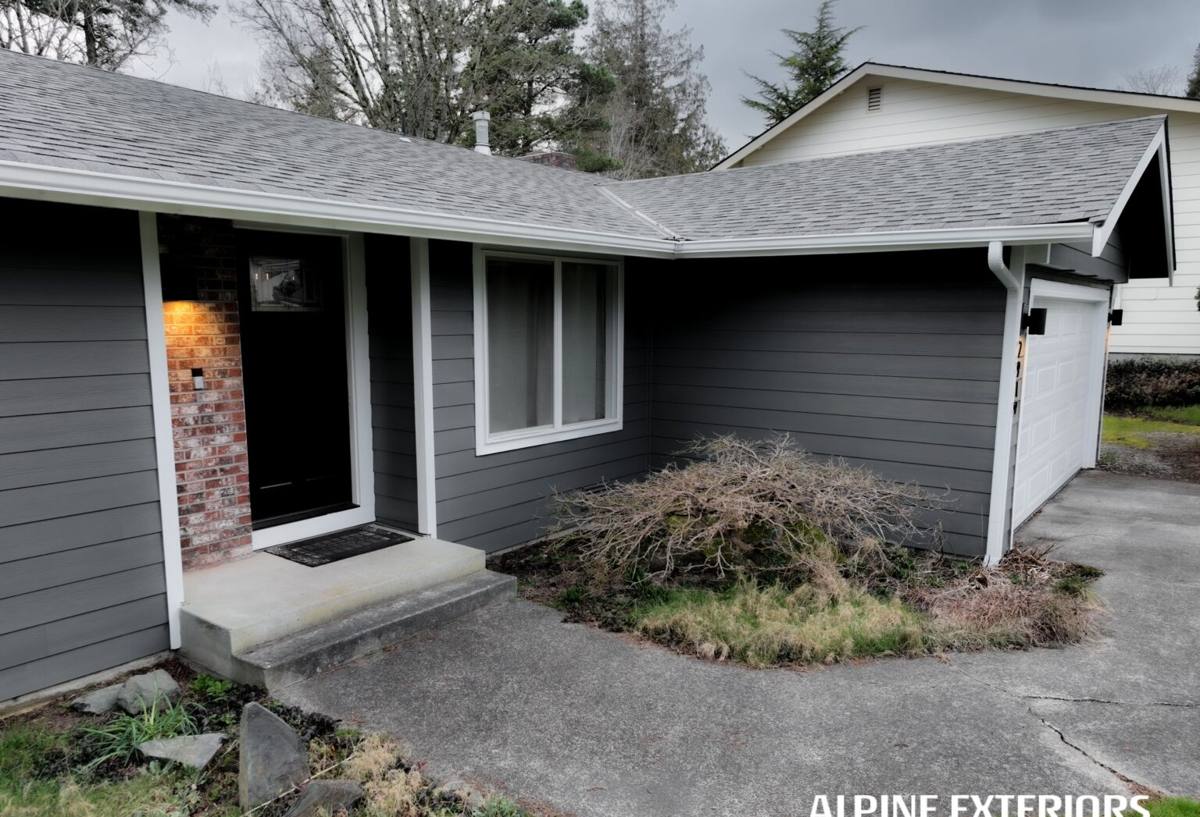
What Tampa's Climate Actually Does to Siding
Before we talk repair, it helps to understand why siding fails here differently than it does in drier, milder climates.
Hurricane and Tropical Storm Wind Loads
Hillsborough County sees tropical systems that push sustained wind and gusts capable of prying siding loose at fastener points, cracking brittle panels, or driving debris straight through a wall covering. Even storms that don't make landfall directly often send outer wind bands through Tampa, and repeated wind-loading over years works fasteners loose and stresses seams even when nothing looks obviously "damaged" after any single event.
Wind-Driven Rain and Moisture Intrusion
Florida storms rarely fall straight down — wind pushes rain sideways, forcing water into any gap, crack, or failed seam in a wall system. Once moisture gets behind siding, it doesn't dry out quickly in Tampa's humidity, and that's when sheathing rot, mold, and structural damage start, often invisible until the siding itself is pulled back.
Constant UV Exposure
Tampa gets sun intensity most of the year, not just in summer. UV breaks down pigments, softens certain siding materials, and accelerates the failure of caulking and sealant around trim, windows, and panel joints. Faded, chalky, or brittle siding is usually a UV story as much as an age story.
Salt Air Influence
While Town 'n' Country isn't immediately waterfront, it's close enough to the Bay that salt-laden air is a real factor, particularly for fasteners, trim metal, and any siding material prone to corrosion-accelerated wear at the edges and seams.
Signs Your Siding Needs Repair, Not Just a Look
- Visible cracks, splits, or holes in panels, especially after a storm
- Panels that have pulled away from the wall or show gaps at seams
- Soft, spongy, or discolored areas — often a sign of moisture behind the siding
- Peeling, bubbling, or heavily faded paint/finish in patches
- Warping or buckling, particularly on sun-exposed elevations
- Mold or mildew streaking that keeps coming back after cleaning
- Rising energy bills with no other explanation — often a sign of compromised wall insulation from moisture
- Insect activity around siding edges or trim, which usually means wood-based material underneath has softened
If you're seeing more than one of these, it's worth having someone look at the whole elevation, not just the obvious spot — storm and moisture damage tends to spread wider than the visible symptom.
What a Correct Siding Repair Actually Involves
A repair that just patches the visible damage without checking what's underneath is a repair you'll be paying for again in a year or two. Here's what we actually do:
1. Diagnose Before Touching Anything
We remove the damaged section and inspect the sheathing, house wrap, and framing behind it. This is the step that gets skipped by crews trying to move fast, and it's the step that determines whether this is a simple panel swap or a moisture problem that needs to be addressed first.
2. Address the Underlying Cause
If there's rot, saturated sheathing, or a failed water barrier, that gets fixed before any new siding goes back on. Replacing siding over a wet or compromised substrate just hides the problem for a while.
3. Match and Replace
Whenever possible we match existing siding profile, reveal, and finish so the repair blends in rather than standing out as a patch. Where a full match isn't available or the existing material has reached the point of diminishing returns, we'll tell you honestly rather than forcing a mismatch.
4. Reseal and Re-flash Properly
Every repair gets proper flashing and sealant detailing around penetrations, seams, and trim — done to the standard that actually holds up against wind-driven rain, not just cosmetically caulked over.
5. Final Check
We walk the repaired area and the surrounding siding with you, so you know exactly what was found, what was fixed, and what (if anything) is worth keeping an eye on going forward.
Repair vs. Replacement: How We Help You Decide
| Factor | Repair Usually Makes Sense | Replacement Worth Considering |
|---|---|---|
| Extent of damage | Isolated to one or two areas | Widespread across multiple elevations |
| Underlying moisture | Localized, caught early | Recurring rot or mold in several spots |
| Age of existing siding | Mid-life, otherwise sound | Near or past expected service life |
| Material condition | Panels still structurally solid | Widespread cracking, warping, or fading |
| Match availability | Profile/color still obtainable | Discontinued or badly weathered mismatch |
Our goal on every visit is to give you the honest answer, not the more profitable one. Plenty of Town 'n' Country homes just need a targeted repair. Others have enough underlying damage that repeated patching is the more expensive path over time.
Why We Only Repair With and Replace Into James Hardie Fiber Cement
When a repair does call for replacing a full section or panel run, we use James Hardie fiber cement siding — it's the only siding product we install, period. That's a deliberate standard, not a default. We don't install vinyl, LP SmartSide, Cemplank, Allura, or primed wood siding, because each of those carries trade-offs — moisture sensitivity, maintenance demands, UV-driven fading, or lower resistance to Florida's wind and heat cycles — that we've decided aren't worth putting on a home in this climate.
James Hardie fiber cement is non-combustible, engineered specifically for high-humidity, high-UV climates through its HZ10 product line, and finished with the factory-applied ColorPlus finish system, which resists the fading and chalking that plain-painted siding suffers under Tampa sun. It also carries a strong, transferable manufacturer warranty when installed to spec — which matters both for your peace of mind and for resale.
Using Hardie for repairs also means better long-term matching. Because it's a stable, widely available product line with consistent color and profile options, a repair section today is far more likely to blend seamlessly with an existing Hardie installation than a discontinued vinyl or wood profile would.
What Correct Hardie Repair Installation Requires
- Proper fastener type, spacing, and penetration depth per manufacturer specification
- Correct clearances from grade, roofline, and adjacent surfaces
- Intact, continuous water-resistive barrier behind the panel
- Factory-cut or properly sealed field cuts to prevent raw-edge moisture absorption
- Caulking and flashing detail that matches Hardie's published installation guidelines
Fiber cement is a forgiving, long-lasting material — but only when installed correctly. Repairs done off-spec are one of the most common reasons a homeowner ends up with a recurring problem in the exact same spot.
Our Process for Town 'n' Country Homeowners
- Inspection: We assess the damaged area and check adjacent sections and trim for related issues.
- Honest assessment: You get a clear explanation of what's causing the damage, not just what it looks like on the surface.
- Written estimate: Scope, materials, and cost laid out before any work starts — no surprises mid-job.
- Repair or replacement: Damaged sections are removed, underlying issues addressed, and new Hardie material installed to manufacturer spec.
- Walkthrough: We review the finished work with you and flag anything worth monitoring.
Why Hiring a Crew That Already Works Town 'n' Country Matters
Siding repair quality depends heavily on whether the crew understands the specific stresses local homes face. A contractor unfamiliar with Hillsborough County's storm patterns, humidity behavior, and typical construction ages in this neighborhood is more likely to miss underlying moisture damage or under-spec a repair for the wind loads this area actually sees. Working in Town 'n' Country regularly means we're not guessing at how local homes were built or how they've weathered — we've already seen the patterns.
It also means faster response after storms, when timing matters most. Wind-driven rain finding its way through a cracked panel doesn't wait for a convenient appointment slot, and a delayed repair after a named storm can turn a patch job into a full sheathing replacement.
Maintaining Your Siding Between Repairs
- Rinse siding periodically to remove salt residue and organic buildup, especially after storms
- Inspect caulking around windows, doors, and trim annually, and re-seal as needed
- Trim vegetation back from siding to reduce moisture retention and physical abrasion
- Walk the exterior after any significant wind event to check for loosened panels or new cracks
- Address small damage promptly — a small crack today is a moisture pathway next rainy season
If your Town 'n' Country home has storm damage, soft spots, cracked panels, or siding that's simply had enough of Tampa's sun and salt air, we're happy to take a look. Reach out for a free, no-pressure estimate using the form below — we'll tell you honestly what your siding needs, whether that's a targeted repair or something more.