 Tampa Roofing
 Why Wesley Chapel Decks Wear Out Faster Than People Expect
Wesley Chapel sits inland from the coast, but it doesn't escape what Tampa Bay's climate does to exterior wood and hardware. Between the intense year-round UV exposure, the daily summer humidity swings, and the wind-driven rain that comes with Hillsborough County's frequent thunderstorms and occasional hurricane threats, an outdoor deck here works harder than the same structure would almost anywhere up north. Add in salt-laden air that drifts inland on Gulf breezes, and you've got a combination that speeds up corrosion on fasteners and connectors even miles from the water.
Most decks don't fail all at once. They fail slowly, from the inside out — a ledger board that's been trapping moisture against the house for years, joists that look fine on top but are soft underneath, or galvanized nails that have quietly rusted through their holding power. By the time a deck feels "bouncy" or a board finally gives way, the underlying structure has usually been compromised for a while. That's the pattern we see over and over on decks in this area, and it's why replacement — done correctly the first time — is often the more honest recommendation than another round of patch repairs.
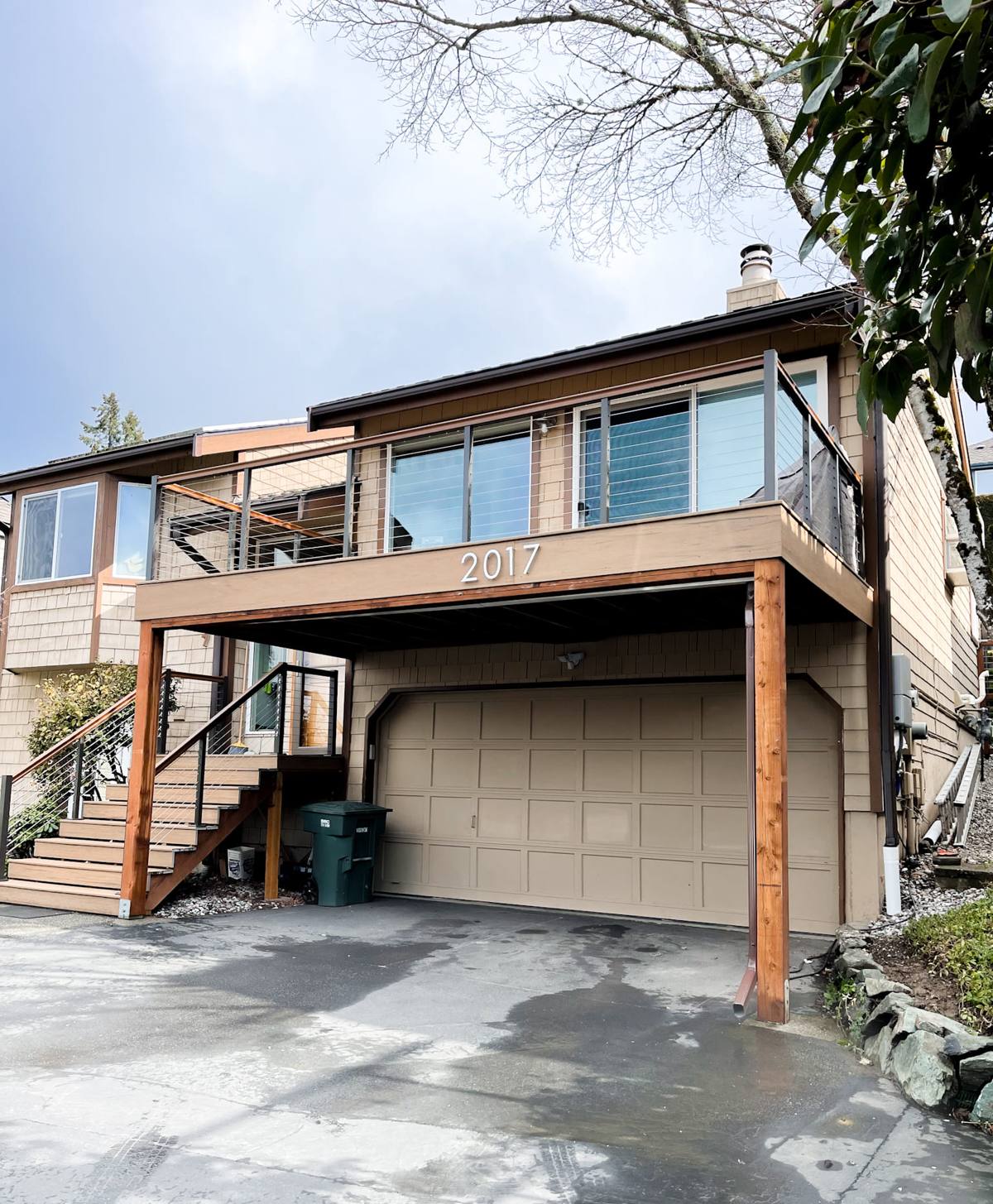
Repair or Replace? Knowing Which One You Actually Need
Not every deck needs a full teardown. But in a climate like ours, it's worth being honest about when repairs are just delaying the inevitable. Here's what we check before we tell a homeowner which direction makes sense.
- Soft, spongy, or discolored spots in decking boards, especially near the house or around posts
- Rust streaks running down from screws, nails, or joist hangers
- Visible gaps, cracking, or separation where the deck attaches to the house (the ledger board)
- Wobble in the railing posts or handrail when you push on them
- Wood that's gone gray and fibrous, or that a screwdriver sinks into easily
- Standing water or slow drainage on the deck surface after rain
- Structural framing more than 15-20 years old, especially if it's never been inspected underneath
- Any sign of insect activity, sawdust trails, or soft spots near ground contact posts
When Repair Still Makes Sense
If the framing underneath is sound and the problem is limited to a handful of surface boards, a section of railing, or a stair tread, targeted repair is the right call — no reason to replace a whole deck over a localized issue. We'll tell you that plainly if that's what we find. The trouble starts when homeowners keep replacing individual boards on a deck whose ledger board or joists are already compromised. That's spending money on cosmetics while the structure underneath keeps failing.
Choosing Decking Material for Tampa Bay Conditions
Material choice matters more here than in drier, milder climates, because UV and humidity punish some products faster than others. There's no single "best" material for every budget and every homeowner — each option comes with real trade-offs.
| Material | How It Handles Our Climate | Maintenance | Typical Lifespan |
|---|---|---|---|
| Pressure-treated pine | Affordable, but prone to warping, checking, and graying under constant UV and humidity cycling | Needs sealing/staining every 1-2 years | 10-15 years |
| Composite (capped) | Resists moisture and UV fading much better than wood; won't splinter or rot | Occasional washing, no sealing | 20-30 years |
| PVC/vinyl decking | Fully synthetic, handles humidity and salt air well; can run hotter underfoot in direct sun | Very low — periodic cleaning | 25-30+ years |
| Tropical hardwoods (e.g., ipe) | Naturally dense and rot-resistant, but installation is unforgiving and pre-drilling is required for every fastener | Periodic oiling to maintain color | 25+ years with upkeep |
Our Take on Uncapped Composite and Bare Wood
We'll install what a homeowner wants, but we're upfront about trade-offs. Older uncapped composite products can absorb moisture at the core over time in humid climates like ours, which shows up as swelling or surface texture changes years down the line — capped composite solves that by wrapping the board in a protective shell. Pressure-treated pine is a fine budget option, but it demands real upkeep: skip a sealing cycle or two in Florida's UV and you'll see checking and graying faster than the product literature suggests. We size expectations to the material, not the other way around.
What a Correct Deck Replacement Actually Involves
A deck is only as good as what's underneath the boards. Most of the failures we get called out to inspect trace back to shortcuts taken in the framing stage, not the decking itself.
Framing and Footings
Posts need to bear on properly sized footings set below grade, not sitting on a paver or resting on grade in Florida's shifting, often sandy soil. Joist spacing has to match the span and the load the deck will actually see — a grill and a crowd of people is a very different load than four patio chairs. We size framing to the actual use, not just the minimum.
The Ledger Board and Flashing
This is the single most common failure point on decks in wet, humid climates. The ledger board bolts the deck to the house, and if it isn't properly flashed to shed water away from the house's wall assembly, moisture gets trapped between the ledger and the siding or sheathing. Given how much wind-driven rain this region sees, correct flashing here isn't optional — it's the difference between a deck that lasts decades and one that rots from the attachment point outward within a few years.
Fasteners and Hardware
Salt air corrodes standard fasteners faster than people expect, even at inland distances like Wesley Chapel's. We use stainless steel or coated fasteners and joist hangers rated for exterior and coastal-adjacent exposure, not bargain hardware that looks fine in the box but starts rusting within a couple of seasons outdoors.
Railings and Stairs
Railing posts need to be through-bolted into the framing, not just screwed to the rim joist — that's a common shortcut that leads to wobbly railings and, eventually, a safety issue. Stair stringers need correct rise-and-run spacing and solid attachment at both the top and bottom.
Permits and Wind Load: What Hillsborough County Requires
Deck replacement in unincorporated Hillsborough County — which covers Wesley Chapel — generally requires a permit, and for good reason: the framing has to be able to withstand the wind loads this region is rated for. Skipping the permit process might save time up front, but it leaves you without an inspection record, which can complicate a home sale or an insurance claim down the road if there's ever storm damage. We handle the permit and inspection process as part of the job, so it's built into the timeline rather than an afterthought.
Our Deck Replacement Process
Every deck replacement we do follows the same basic sequence, adjusted for the size and design of the deck:
- On-site assessment — we inspect the existing structure, including framing and footings where accessible, and tell you honestly whether repair or full replacement makes sense
- Design and material selection — we walk through decking, railing, and fastener options that fit your budget and how you actually use the space
- Permitting — we pull the required permit and design to the applicable wind load and code requirements for the county
- Demolition and disposal — the old deck comes out, including footings and framing that don't meet current standards, not just the surface boards
- Framing rebuild — new footings, posts, ledger flashing, and joists sized to the deck's real use
- Decking, railing, and stairs installed — with fasteners and hardware suited to Florida's humidity and salt exposure
- Final walkthrough and inspection — we confirm everything passes inspection and walk the finished deck with you before calling the job done
What Deck Replacement Costs and What Drives the Price
Cost varies a lot based on size, material, and how much structural rework is needed. Rather than quote a number that won't mean much without seeing the site, here's what actually moves the price up or down.
| Cost Factor | Why It Matters |
|---|---|
| Deck size and footprint | More square footage means more framing, decking, and labor hours |
| Decking material | Pressure-treated is the low end; composite and PVC cost more upfront but less over time |
| Height and grade | A raised or multi-level deck needs more framing, footings, and stair work than a low ground-level deck |
| Condition of existing footings | Reusing sound footings can save cost; undersized or shifted footings need replacement |
| Railing style | Cable, glass, or composite railing systems cost more than standard baluster railing |
| Site access | A deck with limited access for equipment or material staging adds labor time |
We give a written estimate that breaks these factors down so you know what you're paying for, not a single lump number with no explanation behind it.
Why Hiring a Crew That Already Works in Wesley Chapel Matters
Deck framing that's correct for a dry inland climate isn't automatically correct here. A crew that regularly builds and replaces decks around Tampa knows to flash ledger boards for wind-driven rain, to spec fasteners that won't corrode in humid, salt-touched air, and to size framing for the wind loads Hillsborough County inspectors actually check for. That local repetition matters — it's the difference between a deck built to a generic national standard and one built for what this specific climate does to a structure year after year. It also means we're familiar with the county's permitting process, so that part of the job doesn't turn into a delay.
Keeping a New Deck in Good Shape
A correctly built deck still needs some basic upkeep to get its full lifespan out of Florida's conditions.
- Rinse off pollen, dirt, and organic debris a few times a year — buildup traps moisture against the surface
- Check railing posts and stair connections annually for looseness
- Reseal pressure-treated wood decking on a regular cycle; composite and PVC don't need this
- Keep gutters and downspouts near the deck clear so water isn't dumping directly onto or under it
- After any major storm, do a quick visual check of footings, posts, and the ledger board attachment
If you're weighing whether your current deck needs a repair or a full replacement, we're happy to take a look and give you a straight answer. We offer free, no-pressure estimates for deck replacement in Wesley Chapel and the surrounding Tampa area — fill out the form below and we'll get back to you.